Debbie says farewell to Pilgrims Hospices after 37 years as a hospice nurse
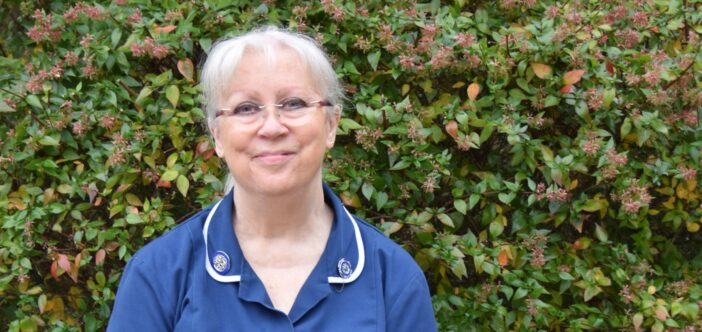
Debbie Corke from Whitstable joined the community nursing team at Pilgrims in 1989, following in the footsteps of nursing colleagues who had worked in intensive care units at local east Kent hospitals.
Retiring from her role after 37 years, Debbie reflects on her career – what she has enjoyed, what she will miss, and the many changes she has seen.
Born in Birmingham, Debbie moved to Canterbury as a teenager due to her dad’s military career:
“When I was a teenager, there wasn’t a lot of choice; the job options were secretary or nurse. I’d always liked people; my mum said I used to talk to old ladies on the bus! So, it just seemed natural for me to choose nursing.
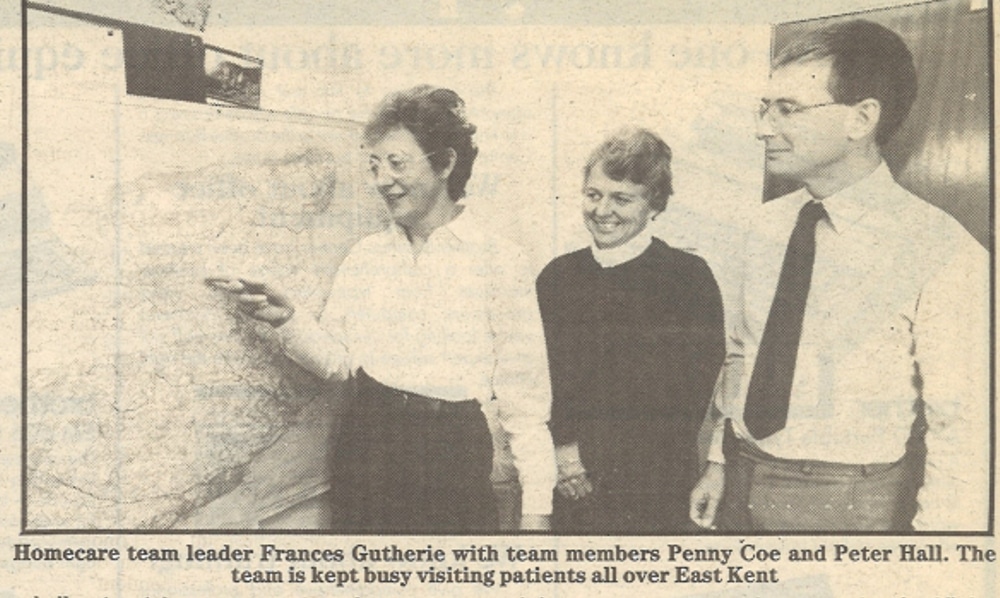
“I qualified at Kent & Canterbury Hospital and worked in the intensive care unit (ITU) and recovery. The senior sister, Frances Guthrie, started the community team at Pilgrims in 1982, alongside another ITU nurse, Penny Coe, who worked at William Harvey Hospital in Ashford.”
After working in Australia for a year, Debbie returned home and applied for a job at The King’s School, Canterbury as a house matron, but then she saw a job come up at Pilgrims and got an interview for it:
“I think Frances put a word in for me, which was nice! Myself and Jenny Farran, another ITU nurse from Canterbury, both got the job at the Canterbury hospice.
“I saw it as my dream job because I’d heard all about it from Frances – seeing patients in their own homes, nursing them one-to-one – I just thought that was the ideal job for me. You see a lot of death in ITUs, so I was familiar with that.”
Debbie turned down the interview at King’s and started her career at Pilgrims; for 37 years, she has nursed patients in the community, enjoying the freedom, flexibility and variety that comes with her role:
“You’re independent – you can make decisions, plan your own time. It’s very variable, too; each day is different. It’s just so interesting; you never know who’s behind a front door until you get there, how they’re going to be. Some people are terrified, some are really welcoming, some are utterly depressed – there’s a whole range of emotions and types of people.
“And you learn so much every day about palliative care – pain control, symptom management… you never stop learning, it’s endless.”
A nurse’s day-to-day looks a little different now than it did when Debbie was new in post; advances in technology have transformed many aspects of the role:
“When I first started – if you can imagine this – we didn’t have mobile phones or computers, and all our notes were handwritten; we’d come back to office and write our notes up, and you’d have to take a great big file to meetings.
“I don’t know how we found our way, either – we used to have street maps. If you got lost, you had to use a phone box to ring the patient. I suppose we just got on with it, but I just don’t know how we did it, when you look at how things are now. It makes me feel really old!”
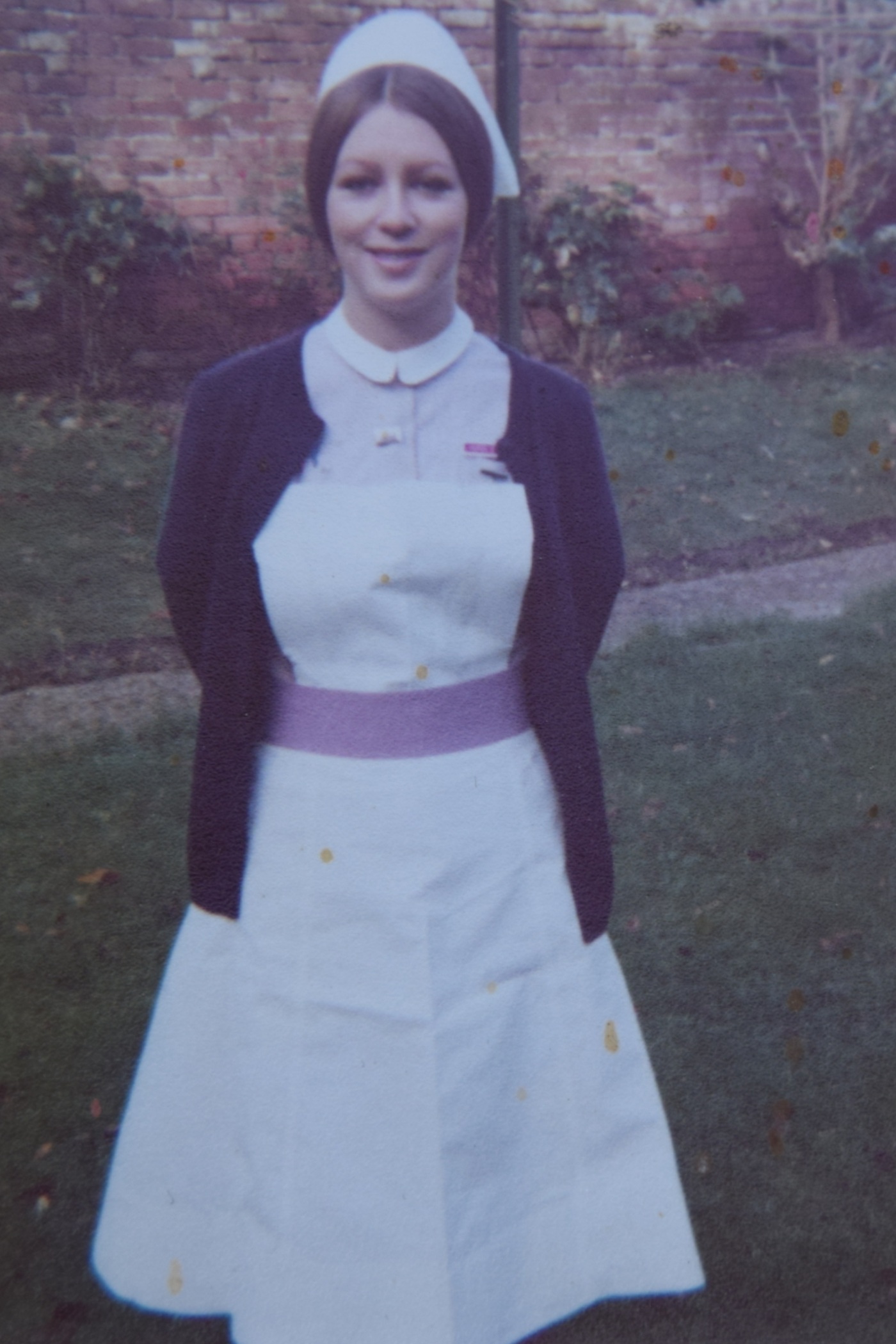
Reflecting on what she has enjoyed about her time at Pilgrims, Debbie comes back to the many people she has met during her career, and it’s them she will miss the most:
“I feel I can talk to anybody, and I can sense and adapt to how people are; some people want a lot of sympathy and empathy, and others just want to be practical. You judge how people present themselves, and I’m good at that.
“If I’d had another career, I might have perhaps gone into counselling – I don’t pretend that I’m a counsellor in my role, but a bit of that does come into it.
“I’ve had so many really deep conversations with hundreds of people; it’s a very unique position to be in, when people unload and tell you their life story when they’re in such a difficult situation. I feel very privileged to be allowed to talk to people like that.
“I’ll really miss talking to patients; after getting a referral and meeting the person for the first time, either in their own home or at clinic, you try to find out what their biggest concerns are and listen to their story.
“A lot of people are very frightened of coming to Pilgrims, but sometimes you can achieve a breakthrough if you find common ground that you can work with, and you can feel their anxiety calm down a little bit.”
Looking forward to the future, Debbie has some nice plans for her retirement:
“My daughter, Lauren, is getting married in October 2027, so I’m really excited for that, and I’m sure I’ll be kept busy with the planning! I’ve also got several house projects to work on, and I’d like to join a regular Pilates class.”
Kate White, Senior Nurse Manager at Pilgrims, added:
“After an incredible 37 years with the hospice, we are saying farewell to a core member of our community nursing team.
“Over nearly four decades, Debbie has been a constant presence through periods of growth, challenge, and change. She has supported countless patients, families, volunteers, and colleagues, often providing reassurance, kindness, and practical help when it was needed most. The number of compliments, thank you messages, and positive comments received about her over the years speaks volumes about the impact she has had on so many lives.
“A true mainstay of the office, Debbie is someone people turn to for her wisdom and good counsel. Her knowledge, dedication, and commitment to the hospice has made her an invaluable member of the team and a trusted source of support for colleagues old and new.
“Whether offering wise advice, keeping everyone grounded, or ensuring that a steady supply of coffee was never too far away, she has left a lasting impression on everyone who has worked alongside her.
“Debbie’s contribution cannot be measured solely by the work she has done, but by the relationships she has built, the lives she has touched, and the difference she has made every single day.
“On behalf of all of us, thank you for your dedication, loyalty, friendship, and unwavering support. We wish you every happiness in your retirement and hope it is filled with all the things you enjoy most (and, of course, plenty of coffee!)
“Debbie, you will be greatly missed, fondly remembered, and always remain part of the hospice family.”