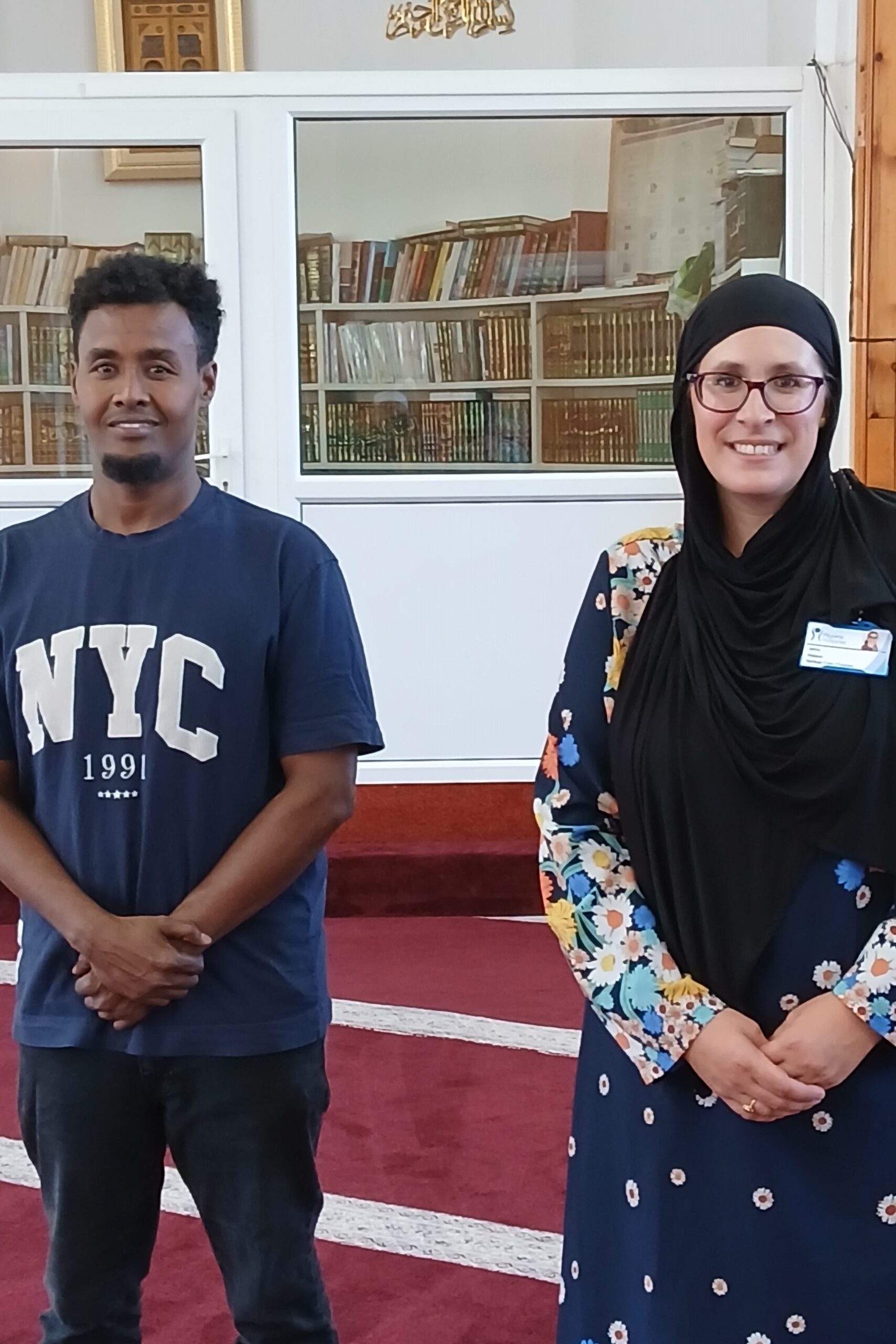
My first visit to Al-Birr Mosque in Margate to meet with Imam Ashraf Salah
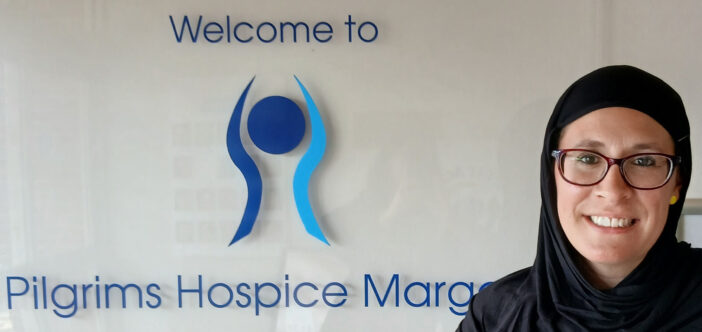
Photograph: Jen Watson, Spiritual Care Chaplain at Pilgrims Hospices
Spiritual care is an essential part of the holistic care offered by Pilgrims Hospices to patients and families across east Kent.
Every day in our hospices, we see how faith helps people find peace and connection, with gentle support from our Spiritual Care Chaplains.
Jen Watson, Spiritual Care Chaplain at Pilgrims Hospice Thanet, visited Al-Birr Mosque in Margate to meet with Imam Ashraf Salah and find out how they can work together to support their local community.
As the new Spiritual Care Chaplain for Pilgrims Hospice Thanet, I’m keen to build connections with faith leaders across Thanet and develop stronger inter-faith relationships within our local community.
These connections are important in helping us provide thoughtful and appropriate Spiritual Care for patients and their families, as well as supporting our staff and volunteers.
So, when I had the opportunity to visit Al-Birr Mosque in Margate and meet with my local imam, I couldn’t miss it!
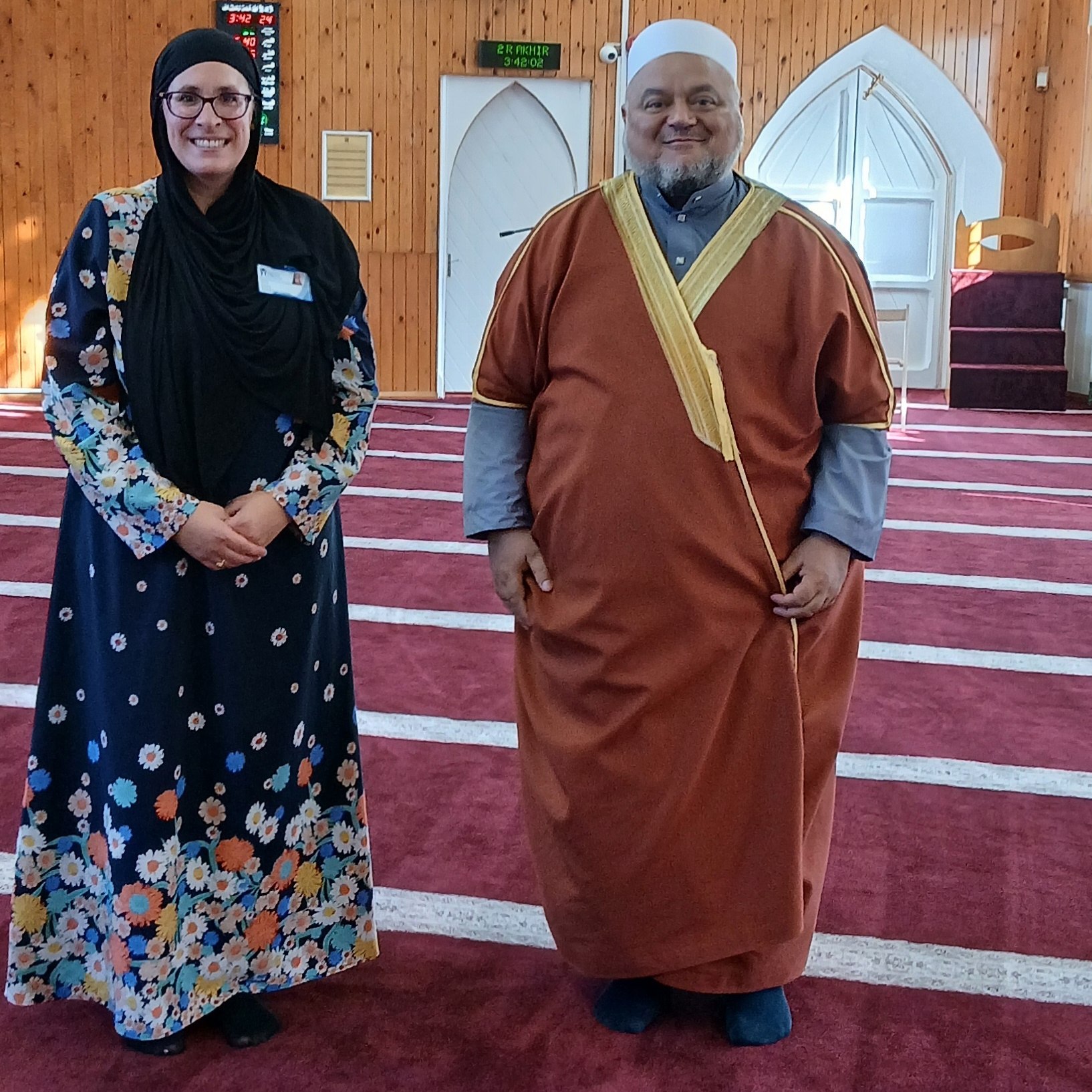
Imam Ashraf Salah said: “I was very pleased and grateful that Pilgrims reached out to us. It was a warm and thoughtful gesture, and I felt that it showed a genuine desire to understand our community and to build a positive relationship with us.”
Before leaving my office, colleagues helped me to secure my headscarf and check I was dressed appropriately and respectfully, before I then travelled to Al-Birr Mosque a few minutes down the road. I removed my shoes upon entry, and was warmly greeted by Imam Ashraf with a big smile, tea and biscuits – such an example of hospitality!
Imam Ashraf spoke over me the phrase “Assalamu alaykum” (meaning “Peace be upon you”).
We had an insightful discussion about his community and how they support each other’s needs, both practically and spiritually – especially those who are ill, elderly and dying.
As Imam Ashraf spoke, he often wove into our conversation “Alhamdulillah” to vocalise his praise and gratitude to God; appreciating his divine blessings, community guidance, and now a connection with his local Pilgrims hospice and spiritual care chaplain.
He showed me:
- The spotlessly clean large, open prayer hall (“musalla”) covered with very soft carpets with lines oriented toward Mecca
- The washing stations where Muslims perform “wudu” (the ritual cleansing of the hands, face, arms, and feet) before praying
- The separate women’s and children’s prayer spaces
He explained to me his community’s practices when someone is ill and dies, and how Gore Brothers funeral directors help his team of volunteer ‘sisters or brothers’ to administer “ghusl” (ritual washing) to ceremonially clean the deceased.
Many from the community then attend special prayers “Salat al-Janazah” (the Islamic funeral prayer) at the mosque for the person who died, before their burial.
I shared with Imam Ashraf how, at Pilgrims, there is a sanctuary, and within the space there is access to a Quran (the central holy text of Islam), prayer mat, compass and head scarf, and how each Chaplain also has access to a Muslim app on their mobile. The app can audibly play the Quran to patients, before a community member arrives, to support their Declaration of Faith “Shahada” (“There is no god but Allah, and Muhammad is His messenger”), so that it is their final utterance.
Imam Ashraf was grateful for our thoughtful considerations at the hospice for his community.
He added:
“Inter-faith connection is very important to us. It gives people of different faiths the opportunity to know one another, understand each other better, and build relationships based on respect, kindness and cooperation. It also helps our community to contribute positively to the wider society and to work together for the good of everyone. Thank you again for visiting us, and I look forward to staying in touch and welcoming you again in the future.”
I look forward to our connection strengthening.
Jen Watson
Spiritual Care Chaplain, Pilgrims Hospice Thanet

Visit pilgrimshospices.org/culture to discover how people across the world respond to and mark death and dying within different cultures.