Civic Imagination and the Creative Rites We Need – A conversation with Mortal Made
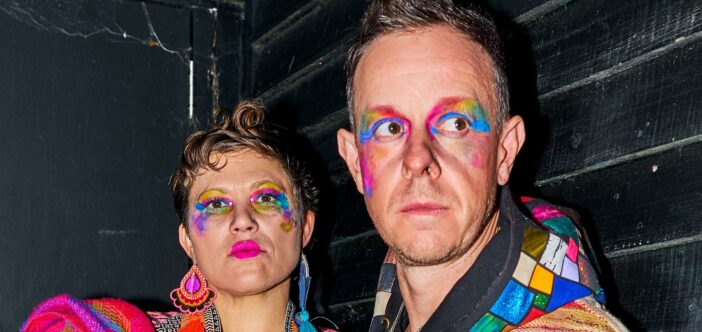
Photograph: Chloe Osborne and Steven Aron Williams
Mortal Made is a project created by artists Steven Aron Williams and Chloe Osborne, alongside a community of death practitioners based in east Kent. Together, they’re building creative and communal ways to engage with death, dying, and grief.
This is a conversation about what happens when death stops being something that happens to us, and starts being something we know how to hold.
Steven: When I began to travel and encounter how other cultures deal with their dead, something profoundly shifted in me. The burning ghats in Nepal. The vibrant, town-like graveyards of Mexico, where people celebrate and grieve their dead not just at funerals but woven into the fabric of everyday life, in ways that are open, honest and unapologetically colourful. Death held by communities rather than handed over to them once it was already packaged and processed. I kept coming back to the same thought: what do we lose when we lose that? Can it be reclaimed?
Chloe: What we lose, I think, is the permission. And the practice.
In 2020, when death got very close, very fast, for a lot of people, what I kept noticing was not sadness, exactly. It was disorientation. A kind of homesickness with nowhere to go. People did not have the language, the permission, the room. One person told me: “Grief is like being in a room by yourself, without the words to describe it or a way in or out. You can sense there are other rooms. You can feel the bigness of the house. But you can’t find the door.”
I will never forget that. It said everything about what is missing.
Steven: The door exists, though. It’s just not always verbal, and it is not always arrived at through the mind. I grew up in a family where death was something that happened to adults, elsewhere, and by the time I finally encountered it directly I found myself thinking: why has nobody prepared us for this?
It was travel that began to show me what preparation could look like. Not grief as a problem to be solved, or a process to be managed, but death as something that genuinely belongs to everyone. Something you could practise. Something a community could hold together.
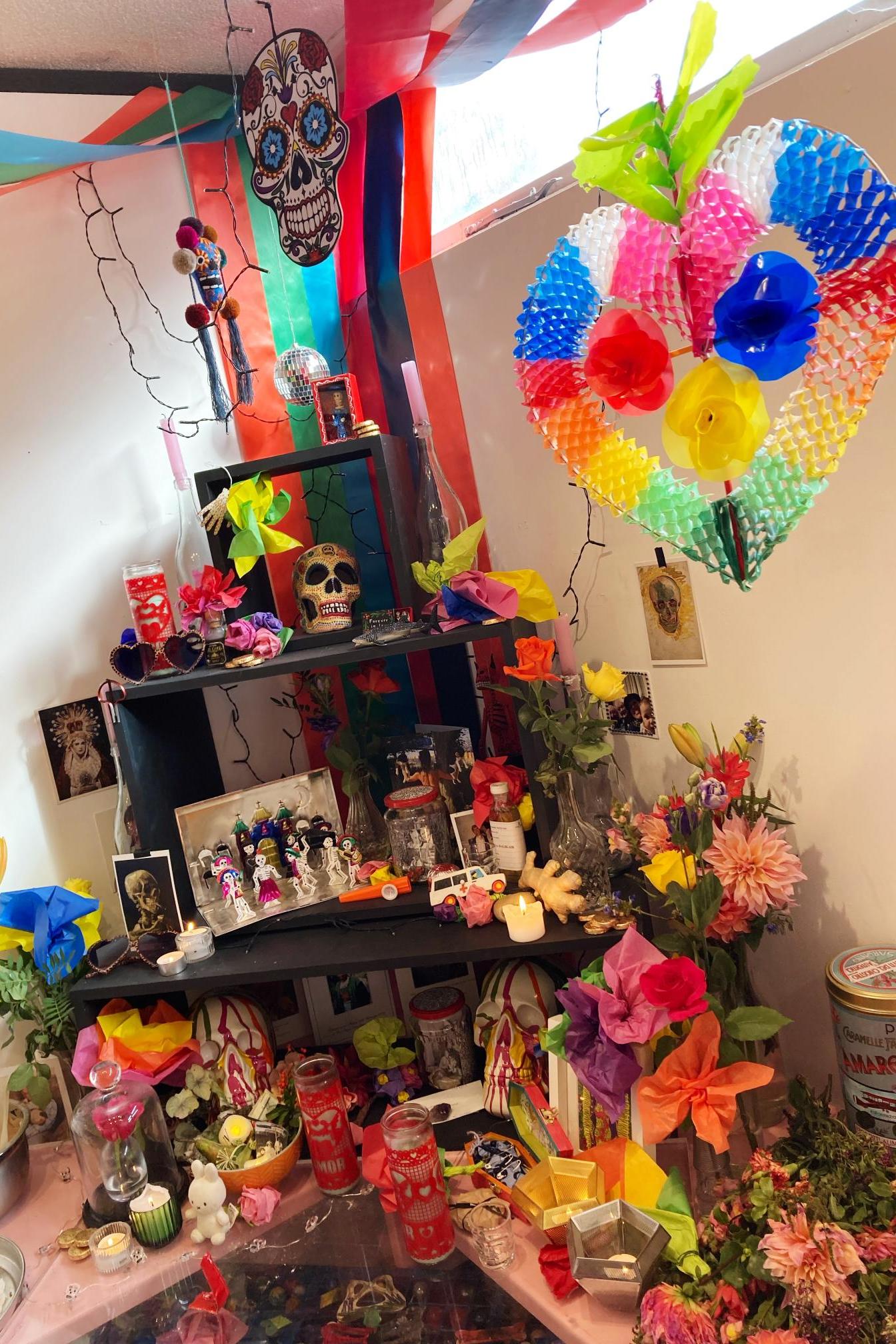
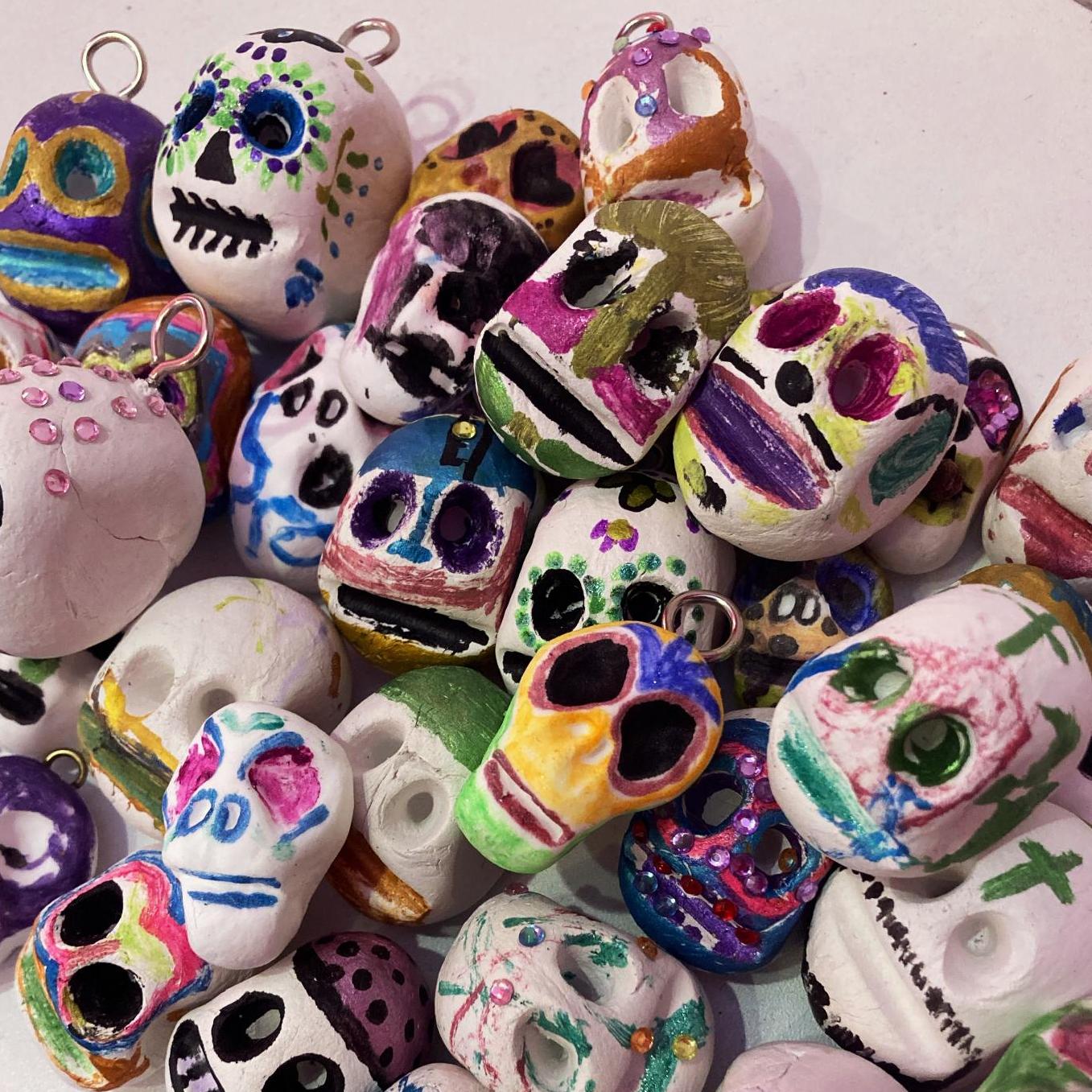
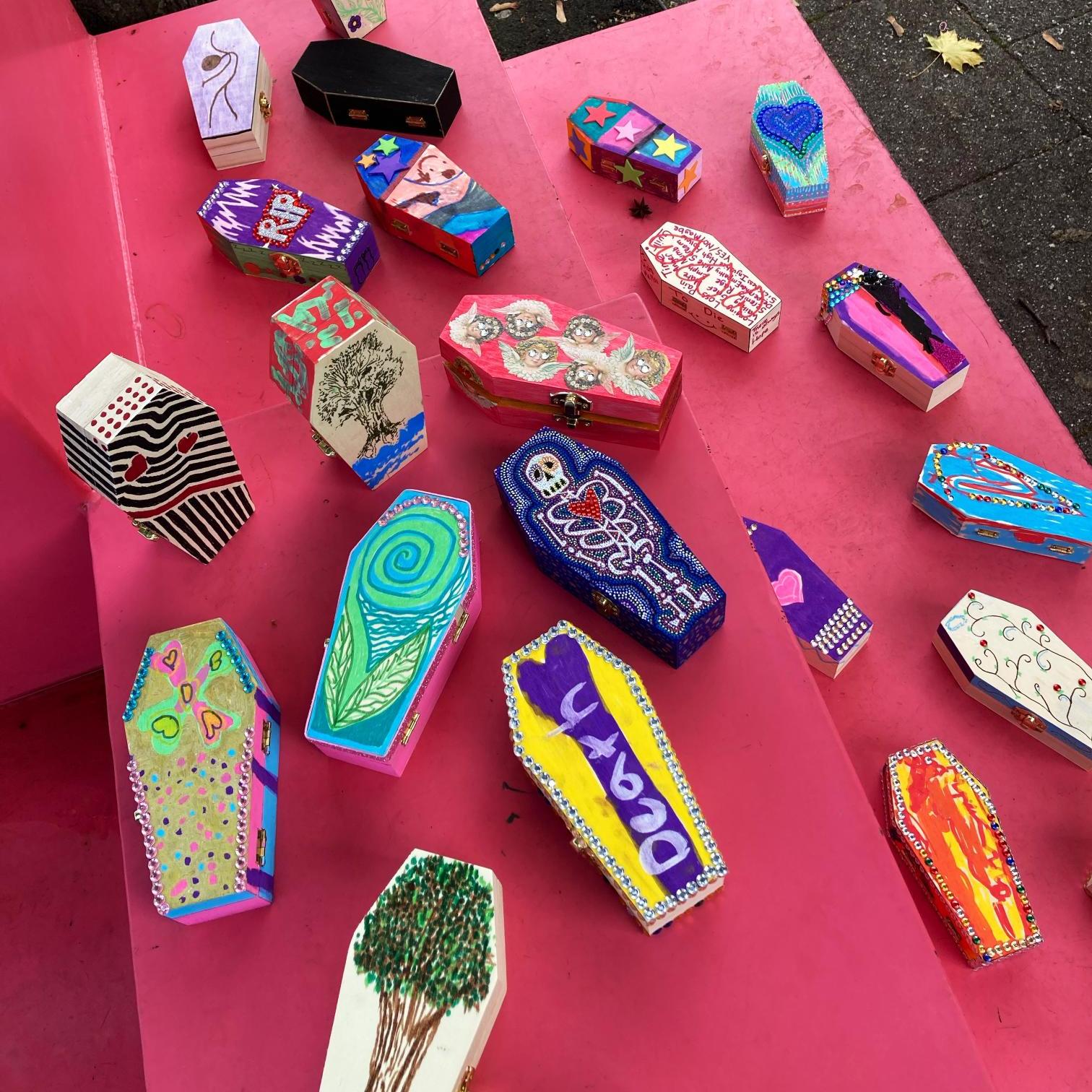
Chloe: That is where our creative practices come in. Steven and I both understand, from years of making, that making is a form of knowing and not simply an illustration of it. When you put your hands into clay, or sit inside the weight of a shroud. When you weave dead organic matter into a wreath for an ancestor you never met or sewing with inherited materials you are not expressing something you already understood.
You are arriving somewhere you could not have reached any other way. The material thinks with you, it can hold what words refuse to carry.
Grief lives in the body before it lives in the mind, sitting in the chest, the throat, the hands, and moments of genuine contact rarely happen through speech alone. They happen when the hands are occupied, when the body is moving, when the eye is caught by something unexpected. Sideways, through the senses, through the peripheral vision of the self. You cannot always talk your way to the door. Sometimes you have to make your way there, stumbling.
Steven: We also needed to understand the practicalities. We sat down with Toby from Simple Kent Funerals, a bottle of wine, and a whole bag of curiosities, beginning with “your person is dead” and working outwards from there through the steps and permutations, the practicalities and the possibilities, the things you are told and the many more things you are not. Three hours later we had the foundations of a Death Architecture guide, a practical map through all the choices nobody tells you exist. Apparently you can be buried in your own garden, which the neighbours might have thoughts about, but still.
Informed choice, it turns out, is an act of care.
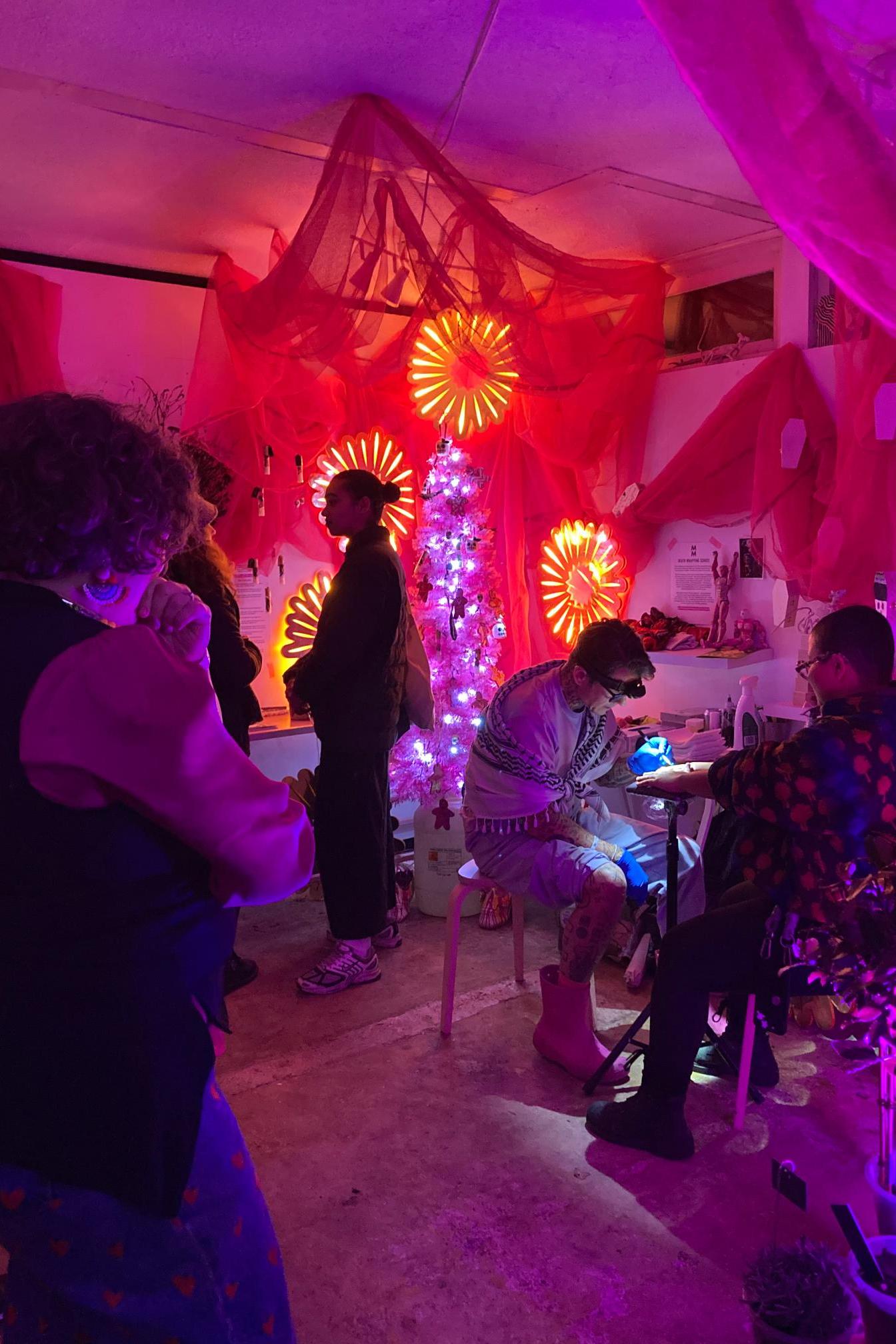
Chloe: That guide matters because communities that understand death make better deaths, better funerals, and better lives. But the practical and the poetic need each other, and that is why, alongside it, we built the Send Off Social Club: an experiment in what grief space looks like when it is led by the senses rather than the agenda. Opening late, offering mezcal, playing music you can move your body to. No requirement to name what you are carrying.
One person came because a friend had died in Melbourne and they had not been able to get there for the funeral. They left an offering on the community altar and buried a letter they had written. “It was beautiful and deep and healing,” they told us afterwards. “A goodbye I wouldn’t have been able to make.” They did not need a ceremony with the right words. They needed a container, permission, somewhere to put it. That is what we are trying to build. Not the correct ritual. Just the space where you can find your own.
Steven: What stays with me is how the ridiculousness comes out once people feel safe enough to let it. People laughed. People cried, often at the same time, about the same thing, and that permission to be both at once is everything. We are not built to be tidy about death and we should stop pretending otherwise.
Mortal Made came from personal curiosity and a penchant for mixing things up, but it was never designed just for us. It is for everybody, and we are looking for co-authors to join us and help shape what comes next. It does not take much.
Create the space. Offer the experience. Let people contemplate the inevitable.
They will bring the rest.
Mortal Made returns in 2026.
To find out more or to help shape what comes next, visit whitepaperpen.com/mortal-made and follow @whitepaperpen on Instagram.
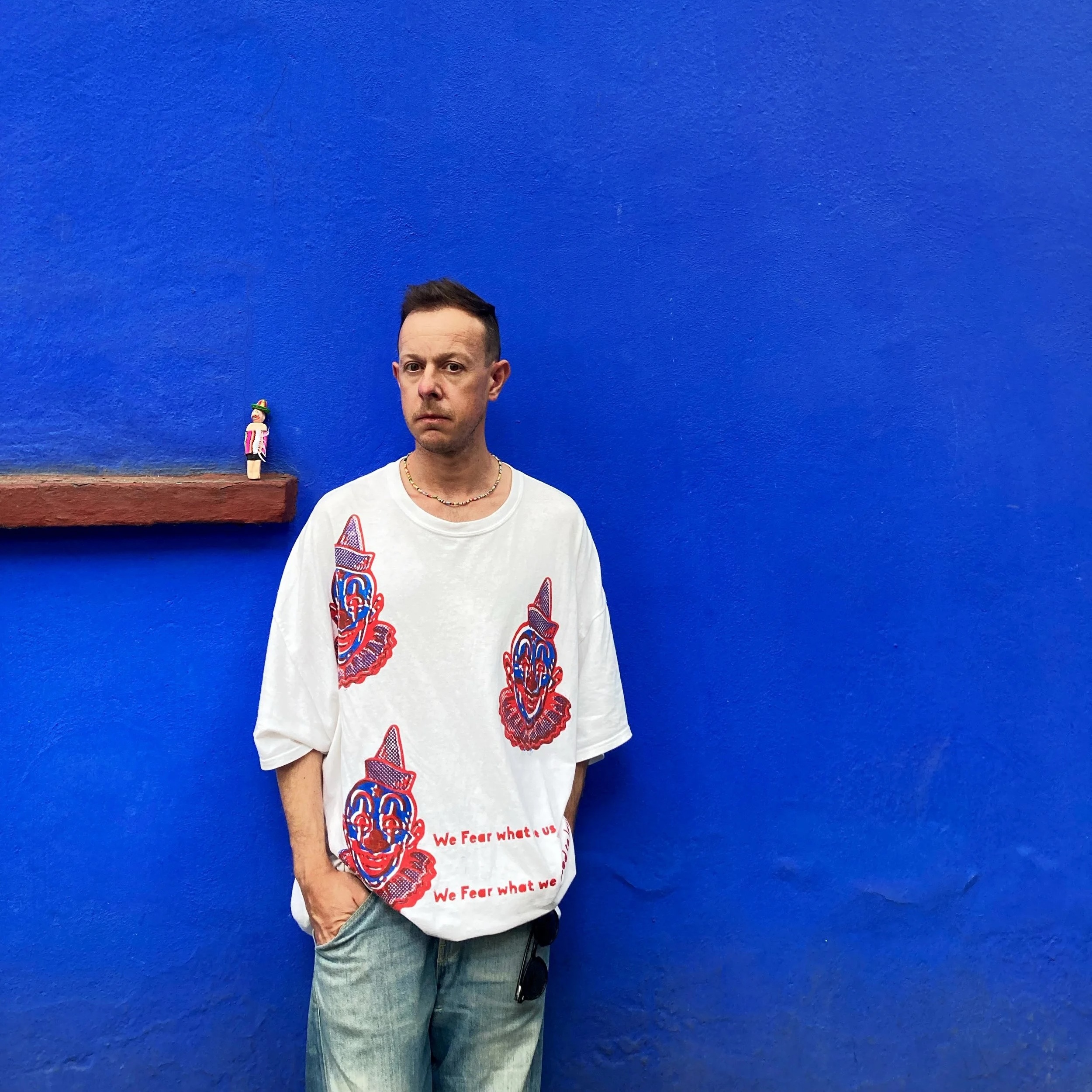
Steven Aron Williams is a visual artist whose curiosity with death stems from what he sees as a cultural paralysis that afflicts the society he grew up in. Death and grief are swept under the carpet, stoicism prevails. Everything is just dealt with efficiently, the colourful craziness of life discarded. There is such a massive disconnect between the living and the dead.
His traveling has opened his eyes to the attitudes, rituals and traditions of other cultures that feel more honest and human; perhaps too honest in some instances, but he believes there is so much we can learn and take solace in.
It has also led him to contemplate his own inevitable exit. The funerals he has attended over the years (he avoids them if possible) each had a prescribed monotony that didn’t seem to really reflect the people lost. It’s such a shame and made the occasions far more traumatic than they already were.
If our exits were really contemplated, planned and shared whilst we’re still full of life, perhaps they would be more life-affirming experiences for those left behind?
- Email: [email protected]
- Instagram: @stevenaronwilliams
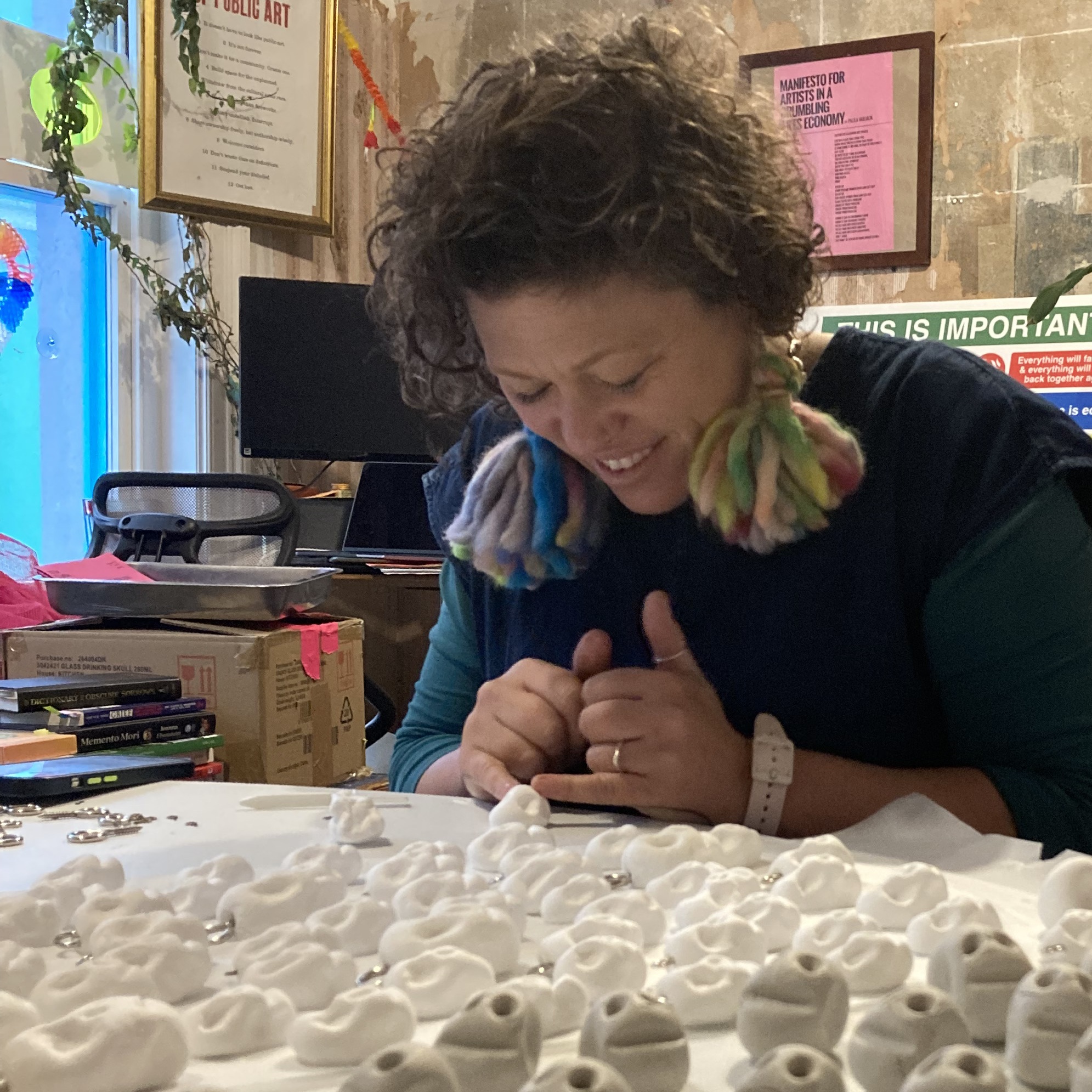
Chloe Osborne has been holding arts-led spaces to explore grief and death since 2020, when for many it felt that death got so much closer. It sat differently, crouching on handrails and drifting in the air, infecting thoughts and ways of being. It was no longer an ostracised relative in a far-flung land but a close family member, sharing a bathroom.
Chloe is becoming a serial eulogist and doesn’t like it. There aren’t enough words.
What if we, as makers, doers, thinkers, sleepers and eaters, we found ways to hold ourselves and each other in grief?
What if we found and shared ways to fit the rage and grief, of genocide far away and arms made next door, inside our bodies? What if we could do this and still keep moving?
- Instagram: @chloe_does_stuff