The difference research makes: Helping us improve care for people with delirium
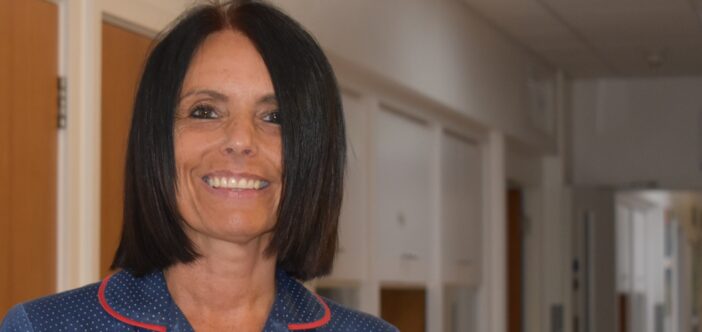
Photograph: Mandy Timms, Advanced Clinical Practitioner, who leads on a delirium project at Pilgrims Hospices
Did you know that delirium affects around one in three people when they are admitted to a hospice or palliative care unit?
A further third may develop it during their stay.
Delirium can cause confusion, drowsiness, agitation, or changes in awareness, and people may seem unlike themselves. It can be frightening and upsetting, not only for the person experiencing it, but also for the family and friends around them. It can also be difficult to spot, as the signs are not always obvious.
That’s why improving how we recognise and care for people with delirium is such an important part of our work at Pilgrims Hospices.
A Pilgrims project is already making a difference
Five years ago, a specialist working group at Pilgrims, led by Advanced Clinical Practitioner, Mandy Timms, developed a Delirium Toolkit to support staff in preventing, recognising and managing delirium in the inpatient unit.
The toolkit includes:
- A simple step-by-step checklist for staff
- Guidance on the right assessments and questions to ask
- Making delirium part of daily team discussions
- Information leaflets and posters to help patients and loved ones understand what delirium is
Since introducing the toolkit, we’ve seen fewer people experiencing delirium, and staff tell us it has made a real difference to the care they provide.
Taking part in national research
Even with this success, we want to do more. That’s why Pilgrims Hospices is now part of an important national research study called Dampen-Delirium II.
Being led in the hospice by Mandy, this study is exploring new ways to support hospice staff to work together in recognising and managing delirium. The aim is to improve care and comfort for patients even further.
This study is being undertaken by a research team at the Wolfson Palliative Care Research Centre at the University of Hull, and funded by the National Institute of Health and Care Research (NIHR 161360).
Pilgrims is one of 20 hospices across the UK taking part.
Researchers will compare how this new learning approach works in different hospices and explore:
- How it fits into busy care settings
- What helps it work well
- Whether it offers good value
- How it could be used in places like care homes or people’s own homes
Why this matters to you
By taking part in national studies, we are not only improving care here in east Kent, but also helping shape hospice care for people and families across the UK.
Eye donation – What do you know?
Did you know that many people cared for in hospices are able to donate their eyes after death, even if they’re not eligible to donate organs?
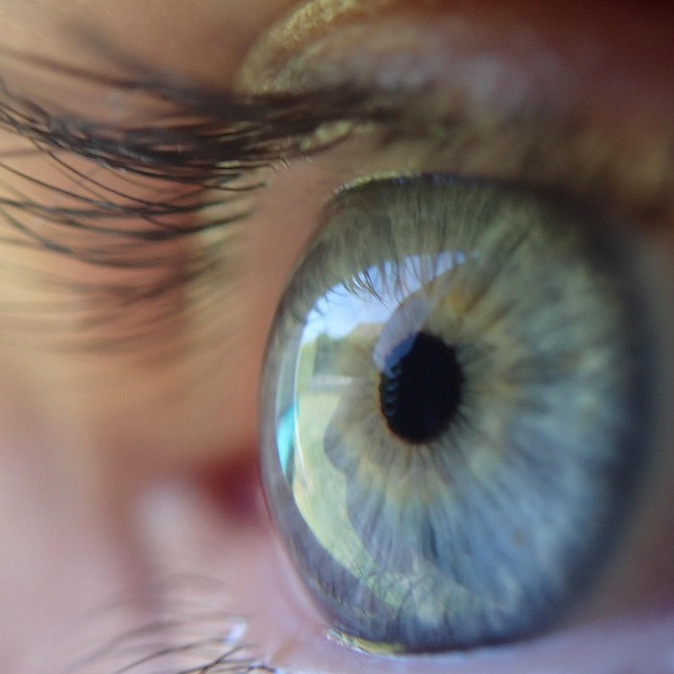
Research funded by the National Institute for Health Research (NIHR 174942) and led by the University of Southampton, working with NHS Blood and Transplant, found that eye donation is possible for many hospice patients. Yet these conversations don’t always happen, even though evidence shows people are often open to discussing it.
Eye donation can help restore sight for people living with serious eye disease, injury, or conditions present from birth. Donated tissue is used in delicate operations that can transform someone’s quality of life.
Pilgrims Hospices is now working alongside NHS Blood and Transplant to ensure patients who wish to donate are given the opportunity to talk about it and patients and families are provided with clear, sensitive information as part of end-of-life care planning.
It’s all about choice, ensuring that anyone who wants to leave this special gift has the chance to do so.
To find out more, visit the NHS Organ Donation website.