We’re excited to share the latest news from our Research team, who support Pilgrims Hospices in delivering compassionate end-of-life care across east Kent.
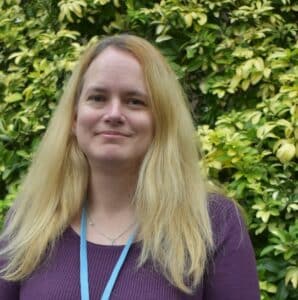
Lisa Gower
Celebrating our first internship awardee to support future research leadership and improve patient care
One of our trainee AdvancedClinical Practitioners, Lisa Gower, has been successful in winning a funded award to undertake a Research Internship with the NIHR Applied Research Collaboration.
Lisa is one of 24 in the first cohort of interns across the Kent, Surrey and Sussex region who started their nine-month placement in March 2026.
The initiative is designed to help more health and care staff build research skills, support evidence-based improvements to services, and widen access to research opportunities across the region. Interns gain valuable experience through placements, mentorship, academic modules, and small-scale research projects. Lisa plans to undertake some palliative care research modules and networking time with Kings College London, and develop a research project to help support referral of patients with end- stage liver disease to the hospice.
Well done, Lisa!
For further information about the Applied Research Collaboration, visit:
Research to understand biological changes in cancer patients to improve their care
Towards the end of life, the body undergoes a profound shift in metabolism. Dr Coyle and researchers at The Clatterbridge Cancer Centre in Liverpool have organised the METEL research study to look at changes in the body of cancer patient’s as their disease progresses and towards the end of life. There is very little known about these changes in a person’s body at this incredibly important time, and they will be using urine samples to look at these changes.
The aim of the study is to help accurately predict when someone is nearing the end of life, which is currently hard for clinicians to do, and often occurs only hours or a few days before death. Knowledge of these changes will help clinicians with decision making about care and help avoid treatments that may be unnecessary or burdensome.
In the future, the researchers may also be able to use the samples for other research, for example to help develop various tests and/or treatments that will hopefully improve the care future patients receive.
Pilgrims Hospice Thanet inpatient unit is one of 30 research sites around England that is collecting samples for this study. Dr Anna John is leading the study at the hospice. If a patient is eligible to take part, the patient/loved one will be approached by the study team at the hospice to see if they would like to participate. Participation is voluntary and will not affect the care they receive.
Watch a short video about the METEL study:
Would you be interested in helping the hospice review its research?
Pilgrims undertake research and receives many requests from researchers to undertake research in the hospice. All projects are reviewed by the hospice Research Facilitation and Governance Forum for their agreement to start, and their oversight whilst projects are running, through quarterly meetings.
We’re currently looking for a public member to join the forum as a volunteer to provide their perspective. This role will help us to ensure the research we do is designed and conducted appropriately for the people we care for.
Interested in this role?
To find out more, please contact our Research Facilitator:
Pilgrims Hospices provides compassionate, specialist care free of charge to thousands of people in east Kent each year who are living with life-limiting conditions. Support is offered in patients’ homes, in the community, and at our three hospice sites in Canterbury, Thanet and Ashford. We also run a 24-hour advice line.
26th March 2026
The difference research makes: Helping us improve care for people with delirium
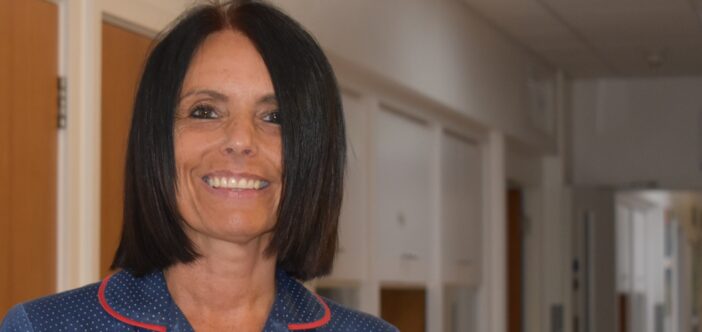
Photograph: Mandy Timms, Advanced Clinical Practitioner, who leads on a delirium project at Pilgrims Hospices
Did you know that delirium affects around one in three people when they are admitted to a hospice or palliative care unit?
A further third may develop it during their stay.
Delirium can cause confusion, drowsiness, agitation, or changes in awareness, and people may seem unlike themselves. It can be frightening and upsetting, not only for the person experiencing it, but also for the family and friends around them. It can also be difficult to spot, as the signs are not always obvious.
That’s why improving how we recognise and care for people with delirium is such an important part of our work at Pilgrims Hospices.
A Pilgrims project is already making a difference
Five years ago, a specialist working group at Pilgrims, led by Advanced Clinical Practitioner, Mandy Timms, developed a Delirium Toolkit to support staff in preventing, recognising and managing delirium in the inpatient unit.
The toolkit includes:
A simple step-by-step checklist for staff
Guidance on the right assessments and questions to ask
Making delirium part of daily team discussions
Information leaflets and posters to help patients and loved ones understand what delirium is
Since introducing the toolkit, we’ve seen fewer people experiencing delirium, and staff tell us it has made a real difference to the care they provide.
Taking part in national research
Even with this success, we want to do more. That’s why Pilgrims Hospices is now part of an important national research study called Dampen-Delirium II.
Being led in the hospice by Mandy, this study is exploring new ways to support hospice staff to work together in recognising and managing delirium. The aim is to improve care and comfort for patients even further.
This study is being undertaken by a research team at the Wolfson Palliative Care Research Centre at the University of Hull, and funded by the National Institute of Health and Care Research (NIHR 161360).
Pilgrims is one of 20 hospices across the UK taking part.
Researchers will compare how this new learning approach works in different hospices and explore:
How it fits into busy care settings
What helps it work well
Whether it offers good value
How it could be used in places like care homes or people’s own homes
Why this matters to you
By taking part in national studies, we are not only improving care here in east Kent, but also helping shape hospice care for people and families across the UK.
Eye donation – What do you know?
Did you know that many people cared for in hospices are able to donate their eyes after death, even if they’re not eligible to donate organs?
Research funded by the National Institute for Health Research (NIHR 174942) and led by the University of Southampton, working with NHS Blood and Transplant, found that eye donation is possible for many hospice patients. Yet these conversations don’t always happen, even though evidence shows people are often open to discussing it.
Eye donation can help restore sight for people living with serious eye disease, injury, or conditions present from birth. Donated tissue is used in delicate operations that can transform someone’s quality of life.
Pilgrims Hospices is now working alongside NHS Blood and Transplant to ensure patients who wish to donate are given the opportunity to talk about it and patients and families are provided with clear, sensitive information as part of end-of-life care planning.
It’s all about choice, ensuring that anyone who wants to leave this special gift has the chance to do so.
Pilgrims Hospices provides compassionate, specialist care free of charge to thousands of people in east Kent each year who are living with life-limiting conditions. Support is offered in patients’ homes, in the community, and at our three hospice sites in Canterbury, Thanet and Ashford. We also run a 24-hour advice line.
26th March 2025
Helping to shape ambulance services for people in the last year of life
Pilgrims Hospices is collaborating with a research team at the University of Southampton, the University of the West of England and South East Coast Ambulance Service NHS Foundation Trust to invite people who have had experiences of ambulance callouts to learn about their views and help shape ambulance services in the future.
The research, called the ParAid Study and funded by Marie Curie, is evaluating how different ways of delivering services influence paramedic practice and experiences of individuals at end-of-life.
Paramedics are often important to patients in the last year of life (end- of-life). We know that 999 calls are increasing for individuals and their families at end-of-life, which may be because services in the community are under pressure e.g. those provided by family doctors and community nurses.
Little wide-scale research has been carried out to understand the contribution played by paramedics in these situations and how this might be improved.
From practice, it is known that paramedics attending patients at end-of-life face complex issues, such as:
Not knowing the patient or their family
Lack of availability of patient history
Fear of doing wrong
Issues with family conflict
A lack of healthcare professionals to handover to out-of-hours, if the patient is to remain at home.
These issues can mean people are admitted to hospital when circumstances mean they could be cared for at home.
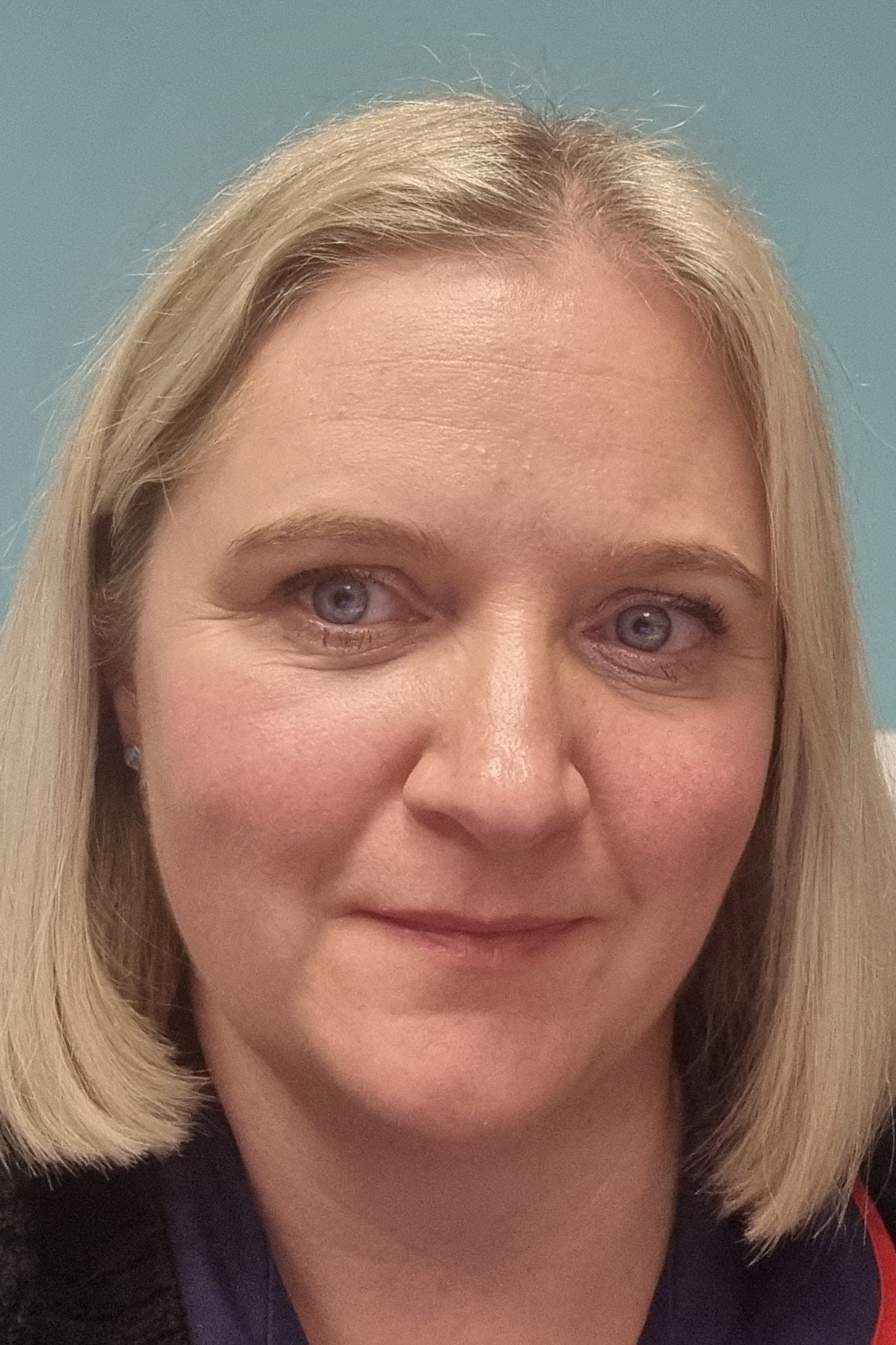
Natasha Campling
Dr Natasha Campling (Associate Professor, School of Health Sciences, University of Southampton), who is leading the research, said:
“We have already carried out a large-scale survey of paramedics throughout England to understand their professional practice and what factors influence this, and are now conducting in-depth case studies (collecting information from patients, carers and healthcare professionals) to examine different ways of delivering services. It is important to evaluate ambulance service delivery and understand how the best parts of service provision can be incorporated into other services to improve the quality of care and support provided to patients and their families during this crucial period of time. This may prevent unnecessary hospital admissions at end-of-life, which often leads to people dying in hospital.”
If you have had an ambulance callout in recent months, are aged 18+, living in your own home, in the last year of life, or a current or bereaved carer for someone in this situation, you may be eligible to take part in a one-off interview about your experience. A £25 voucher will be offered to those who take part.
If you are interested in taking part, please contact the Research team (and see the study poster for further information):
Each year, Pilgrims Hospices care for thousands of people across east Kent, with services provided from its three hospice sites in Ashford, Canterbury, and Thanet, as well as in patients’ own homes. It costs over £17.2 million annually to run these services, much of which comes from the generous support of the local community.
18th March 2024
Pilgrims Hospices wins prestigious Joanna Mugridge Research Award
The announcement, made during the conference in early February, marked a significant achievement for the ‘Talk’ evaluation team at Pilgrims Hospices, working with the Centre for Health Services Studies, University of Kent on evaluating the pilot. The team’s poster was one of 67 at the conference, reviewed by a panel of judges.
The Joanna Mugridge Research Award, established in memory of Joanna, a dedicated nurse at the Marie Curie Hospice in Caterham, serves to honour her legacy and unwavering commitment to serving individuals and families affected by cancer. Created by her family, following Joanna’s passing in May 2000, the award aims to support the vital work of Marie Curie and its researchers in advancing palliative care.
We are delighted to have received this recognition for the poster, it will inform the development of our Talk project within our region, moving forward, which supports earlier identification and referral of patients who need our hospice services”
Charlotte Brigden – Pilgrims Hospices Research Facilitator
Presented annually at the Marie Curie Palliative Care Research Conference, the award recognises outstanding contributions to research in the field of palliative care. It not only celebrates excellence but also provides recipients with resources to further their research, education, and professional development.
Doctor Andrew Thorns, Pilgrims Hospices Consultant in Palliative Care and Research Lead, expressed: “I’m so pleased for the project team, this is recognition of a great idea, lots of work, and the start of things to come—well done!”
Pilgrims Hospices extends heartfelt gratitude to Joanna Mugridge’s family for their invaluable support in perpetuating research efforts aimed at enhancing end-of-life care. The recognition received for their “Talk” pilot project underscores the team’s dedication to improving patient outcomes and fostering compassionate care practices. Pilgrims hope to share this information more widely moving forward.
For those interested in learning more about Pilgrims Hospices’ impactful work in end-of-life care, please visit www.pilgrimshospices.org.
Care is provided from three hospice sites in Ashford, Canterbury, and Thanet, as well as in patients’ own homes. To offer these services to patients and their families, the charity must raise £11 million each year from the generous local community.
13th November 2023
Win cash prizes and make a difference with Pilgrims Hospices’ Fun Festive Superdraw 2023
By participating in Pilgrims Hospices’ Fun Festive Superdraw 2023, you have the chance to win exciting cash prizes, in time for some extra Christmas treats, while contributing to vital hospice care in east Kent.
Did you know? All proceeds from the Superdraw directly support our patients, enabling them to manage symptoms, such as pain, and access a wide range of services and facilities. It empowers them to spend quality time with their loved ones, live as normally as possible for as long as they can, and create cherished memories in their own way.
Charlotte Brigden, Pilgrims Research Facilitator
Every £1 ticket purchased not only helps patients in our care on the hospice wards and in their homes, but also supports innovative and vital research to help ensure we are providing the best care that we can. Led by Dr. Andrew Thorns and supported by Charlotte Brigden, Pilgrims Research Facilitator, this research strives for a greater understanding of the best end-of-life care and treatments and how to treat patients more effectively. Charlotte expressed her gratitude to Superdraw players for their invaluable contributions to care and resources, all while having a chance to win some lovely Christmas cash prizes!
Recently, the hospice provided valuable research into a treatment for managing symptoms of fatigue and also research on care provided in the home out of hours. Such important work is only possible with the continued support of Pilgrims Lottery players and supporters who purchase the special Fun Festive Superdraw tickets.
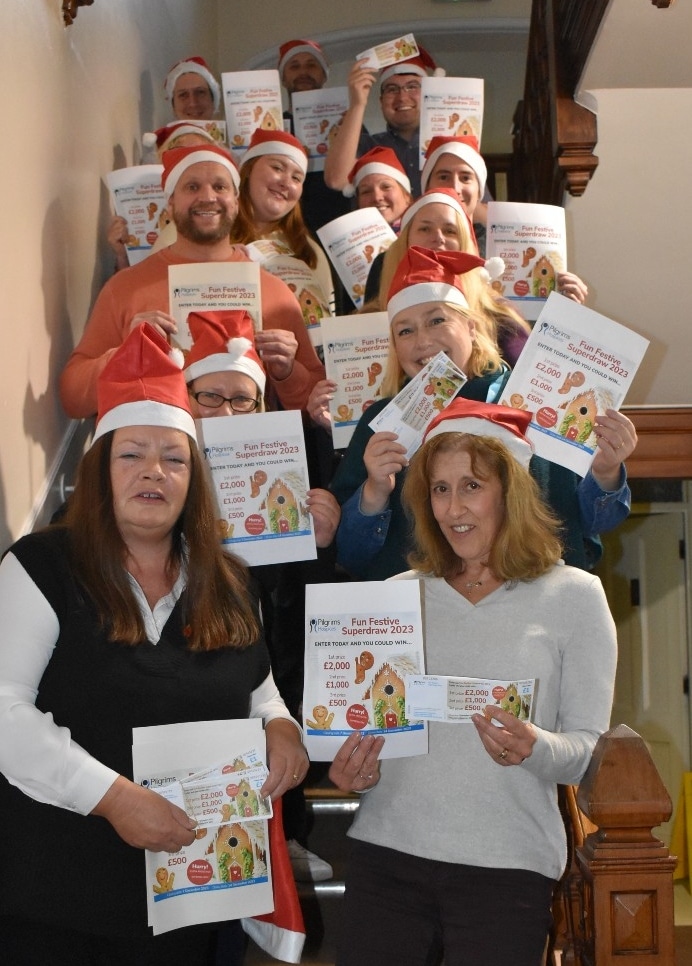
Pilgrims Hospices staff join in with Superdraw fun
Participating in the Superdraw offers the opportunity to win incredible prizes, including: First Prize: £2,000; Second Prize: £1,000; and Third Prize: £500. You can purchase tickets at the hospices’ receptions or call the Pilgrims Lottery ticket hotline at 01227 379741.
Pilgrims Hospices in East Kent extends its heartfelt gratitude for your generous support. Your contributions make a significant difference in the lives of those who rely on our care.
Please take part in the Fun Festive Superdraw 2023; you will be making a difference in the lives of those in need. while also having the chance to win exciting prizes!
Pilgrims Hospices in East Kent is dedicated to enhancing its services to better serve the local community. Our vision is to provide comprehensive support for individuals with terminal illnesses and their families, helping them live well in mind and body until their very last moments. By purchasing tickets for the Fun Festive Superdraw 2023, you are joining all those dedicated to ensuring that Pilgrims Hospices can provide expert care and guidance every step of the way. Your support is crucial to making this vision a reality.
Each year, Pilgrims support thousands of local people coping with a life-limiting illness and their families. The charity offers a range of services, from end-of-life care given on its wards to its Wellbeing Programme, which supports people after they are diagnosed to live well and stay independent.