Civic Imagination and the Creative Rites We Need – A conversation with Mortal Made

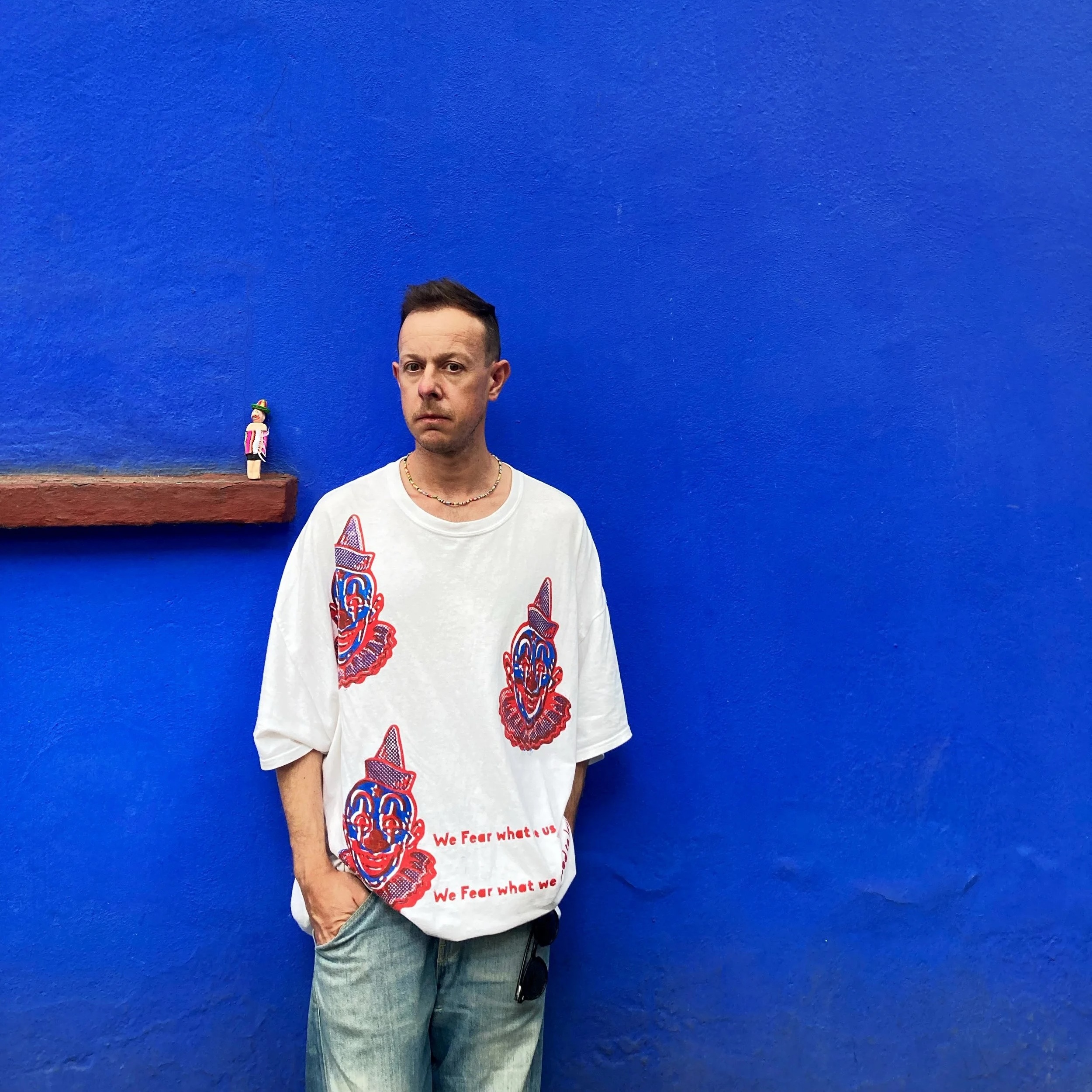
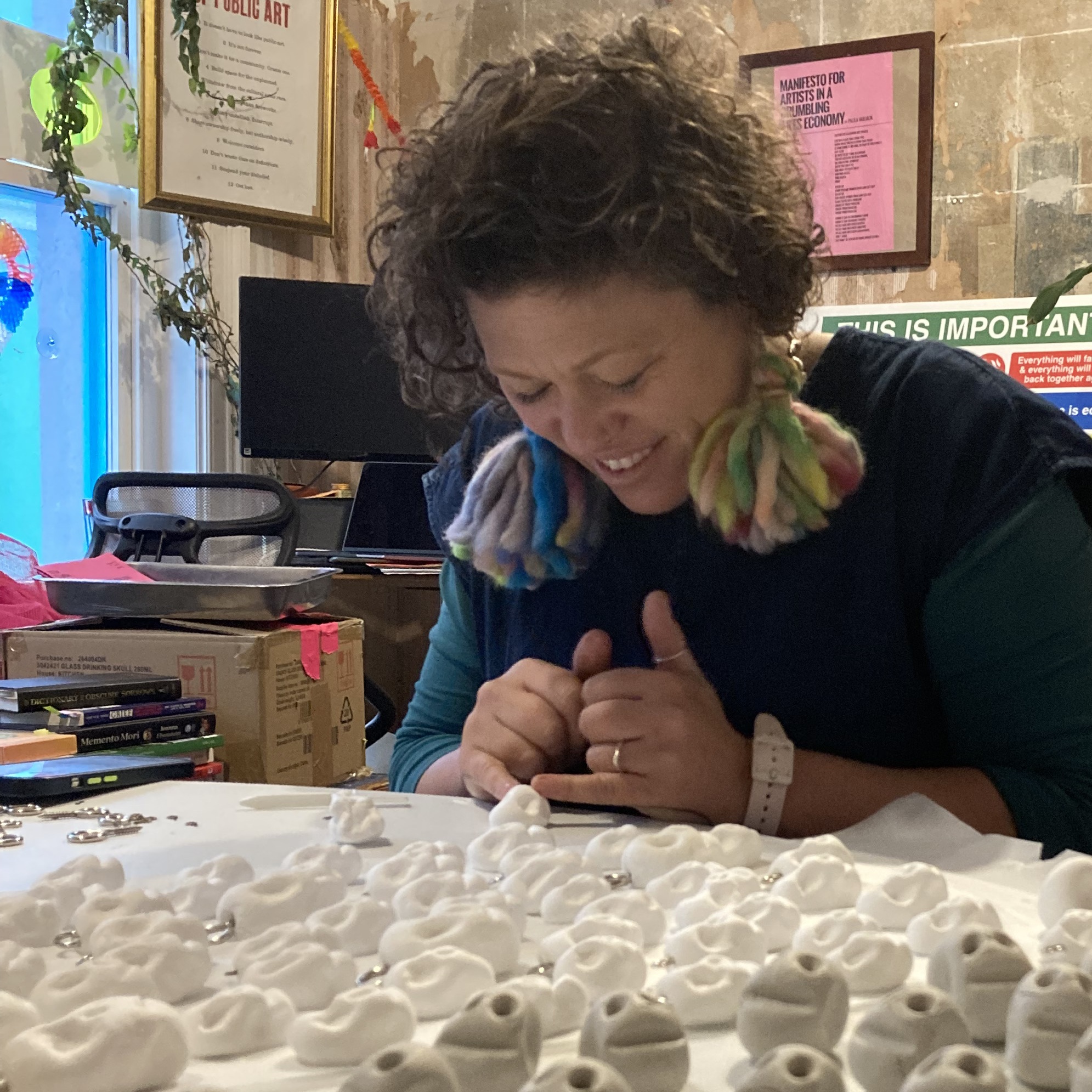
Photograph: Chloe Osborne and Steven Aron Williams
Mortal Made is a project created by artists Steven Aron Williams and Chloe Osborne, alongside a community of death practitioners based in east Kent. Together, they’re building creative and communal ways to engage with death, dying, and grief.
This is a conversation about what happens when death stops being something that happens to us, and starts being something we know how to hold.
Steven: When I began to travel and encounter how other cultures deal with their dead, something profoundly shifted in me. The burning ghats in Nepal. The vibrant, town-like graveyards of Mexico, where people celebrate and grieve their dead not just at funerals but woven into the fabric of everyday life, in ways that are open, honest and unapologetically colourful. Death held by communities rather than handed over to them once it was already packaged and processed. I kept coming back to the same thought: what do we lose when we lose that? Can it be reclaimed?
Chloe:What we lose, I think, is the permission. And the practice.
In 2020, when death got very close, very fast, for a lot of people, what I kept noticing was not sadness, exactly. It was disorientation. A kind of homesickness with nowhere to go. People did not have the language, the permission, the room. One person told me: “Grief is like being in a room by yourself, without the words to describe it or a way in or out. You can sense there are other rooms. You can feel the bigness of the house. But you can’t find the door.”
I will never forget that. It said everything about what is missing.
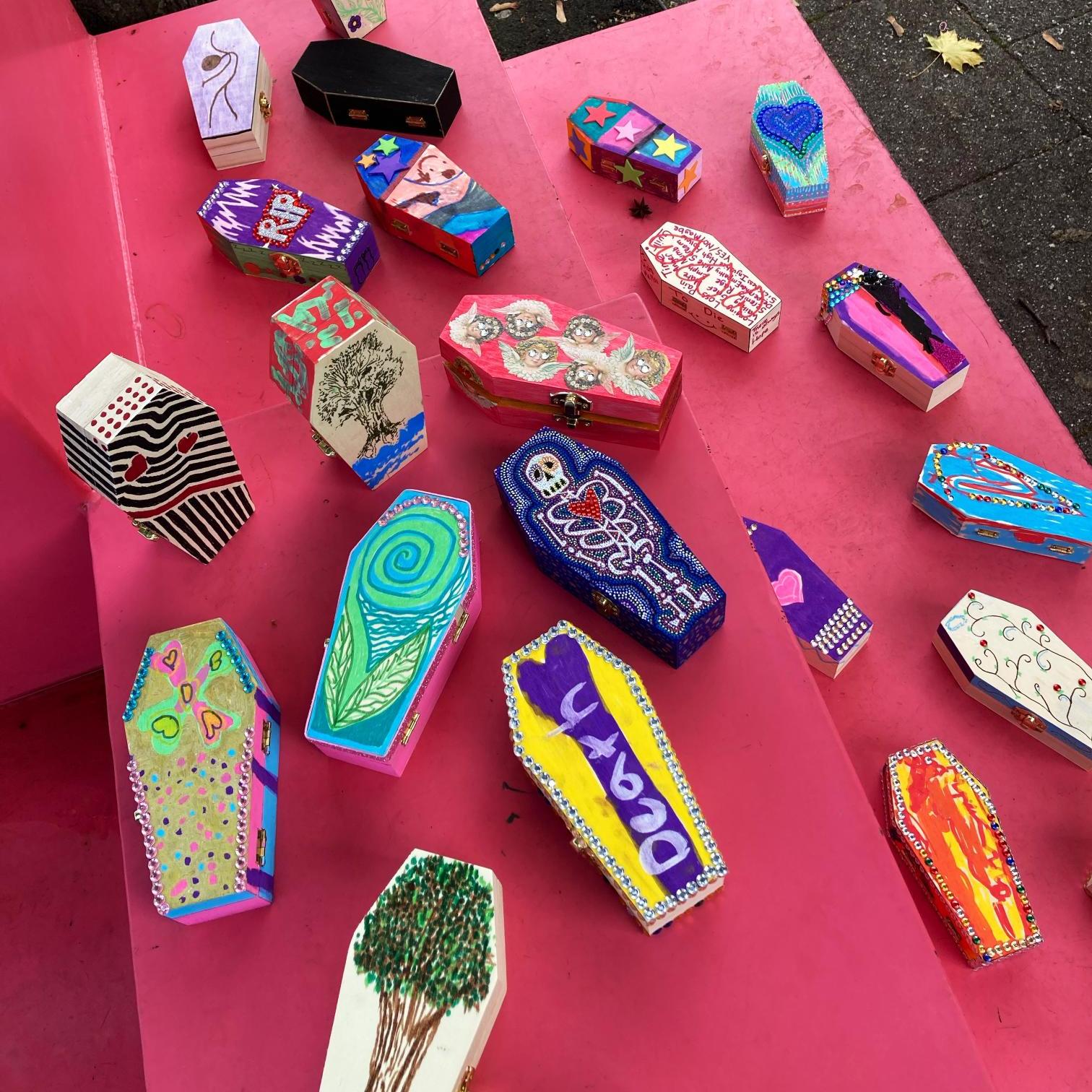
COFFINS Sq
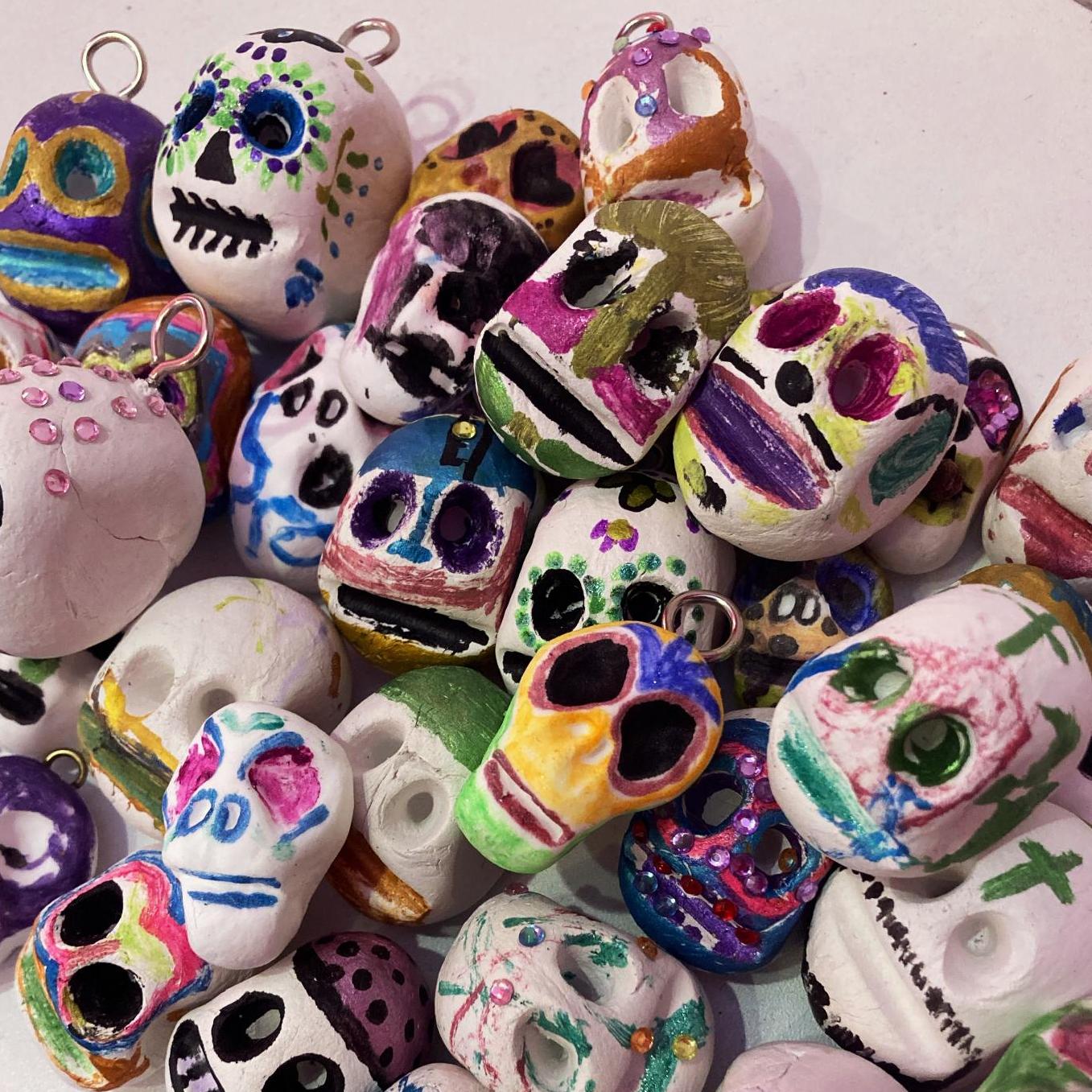
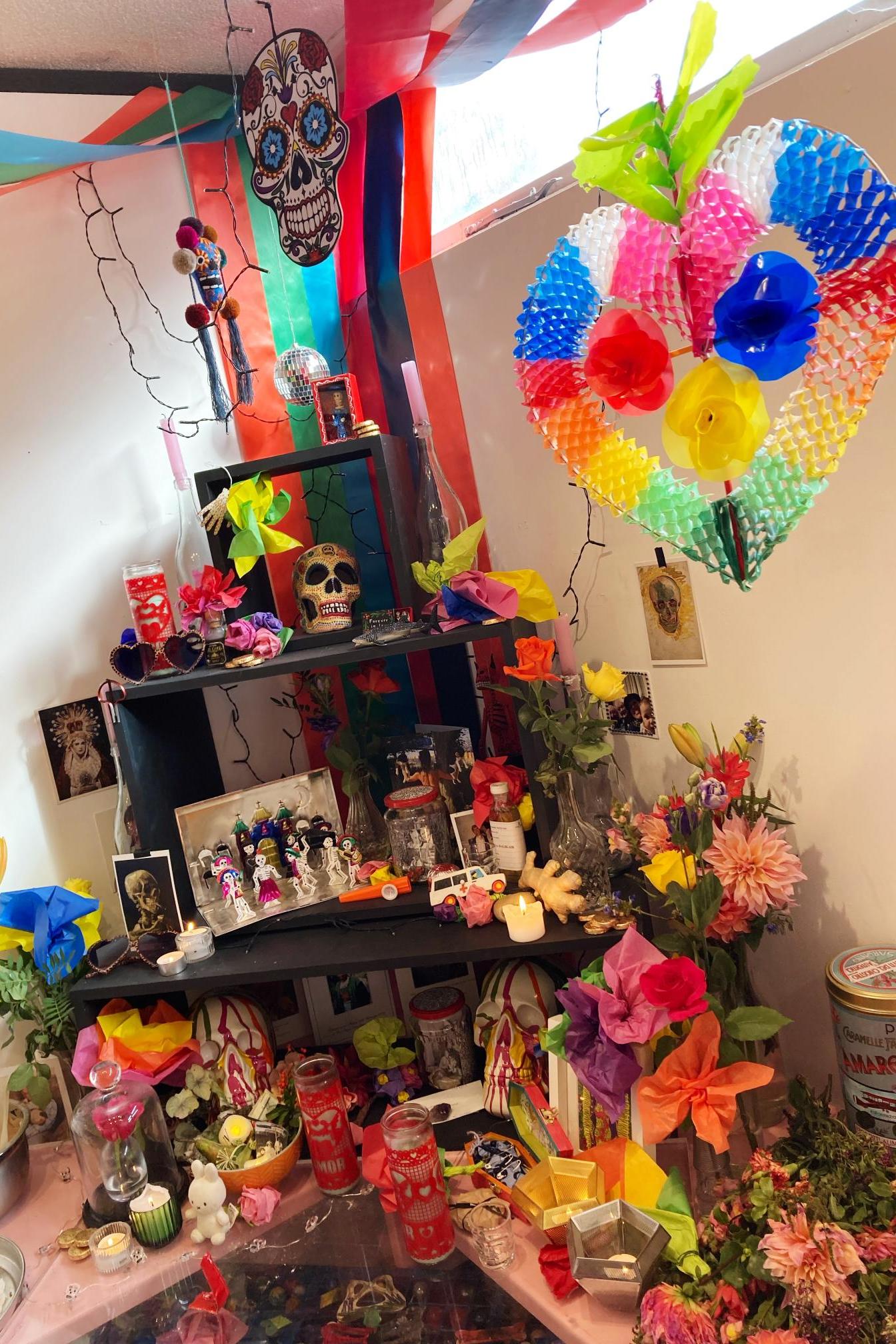
SKULLS & SOULS Sq
Steven: The door exists, though. It’s just not always verbal, and it is not always arrived at through the mind. I grew up in a family where death was something that happened to adults, elsewhere, and by the time I finally encountered it directly I found myself thinking: why has nobody prepared us for this?
It was travel that began to show me what preparation could look like. Not grief as a problem to be solved, or a process to be managed, but death as something that genuinely belongs to everyone. Something you could practise. Something a community could hold together.
Chloe:That is where our creative practices come in. Steven and I both understand, from years of making, that making is a form of knowing and not simply an illustration of it. When you put your hands into clay, or sit inside the weight of a shroud. When you weave dead organic matter into a wreath for an ancestor you never met or sewing with inherited materials you are not expressing something you already understood.
You are arriving somewhere you could not have reached any other way. The material thinks with you, it can hold what words refuse to carry.
Grief lives in the body before it lives in the mind, sitting in the chest, the throat, the hands, and moments of genuine contact rarely happen through speech alone. They happen when the hands are occupied, when the body is moving, when the eye is caught by something unexpected. Sideways, through the senses, through the peripheral vision of the self. You cannot always talk your way to the door. Sometimes you have to make your way there, stumbling.
Steven: We also needed to understand the practicalities. We sat down with Toby from Simple Kent Funerals, a bottle of wine, and a whole bag of curiosities, beginning with “your person is dead” and working outwards from there through the steps and permutations, the practicalities and the possibilities, the things you are told and the many more things you are not. Three hours later we had the foundations of a Death Architecture guide, a practical map through all the choices nobody tells you exist. Apparently you can be buried in your own garden, which the neighbours might have thoughts about, but still.
Informed choice, it turns out, is an act of care.
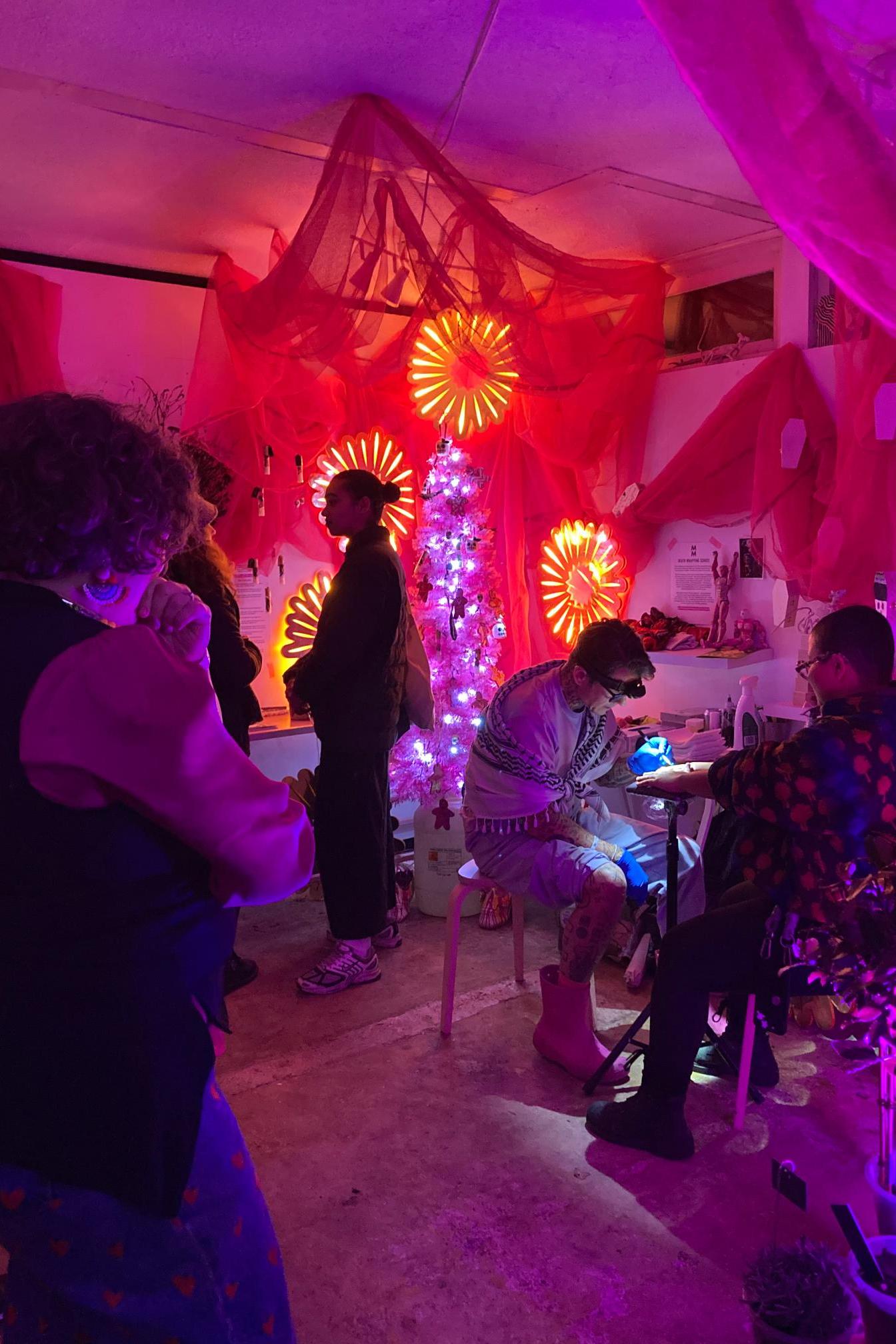
Send Off Social Club
Chloe: That guide matters because communities that understand death make better deaths, better funerals, and better lives. But the practical and the poetic need each other, and that is why, alongside it, we built the Send Off Social Club: an experiment in what grief space looks like when it is led by the senses rather than the agenda. Opening late, offering mezcal, playing music you can move your body to. No requirement to name what you are carrying.
One person came because a friend had died in Melbourne and they had not been able to get there for the funeral. They left an offering on the community altar and buried a letter they had written. “It was beautiful and deep and healing,” they told us afterwards. “A goodbye I wouldn’t have been able to make.” They did not need a ceremony with the right words. They needed a container, permission, somewhere to put it. That is what we are trying to build. Not the correct ritual. Just the space where you can find your own.
Steven:What stays with me is how the ridiculousness comes out once people feel safe enough to let it. People laughed. People cried, often at the same time, about the same thing, and that permission to be both at once is everything. We are not built to be tidy about death and we should stop pretending otherwise.
Mortal Made came from personal curiosity and a penchant for mixing things up, but it was never designed just for us. It is for everybody, and we are looking for co-authors to join us and help shape what comes next. It does not take much.
Create the space. Offer the experience. Let people contemplate the inevitable.
Steven Aron Williams is a visual artist whose curiosity with death stems from what he sees as a cultural paralysis that afflicts the society he grew up in. Death and grief are swept under the carpet, stoicism prevails. Everything is just dealt with efficiently, the colourful craziness of life discarded. There is such a massive disconnect between the living and the dead.
His traveling has opened his eyes to the attitudes, rituals and traditions of other cultures that feel more honest and human; perhaps too honest in some instances, but he believes there is so much we can learn and take solace in.
It has also led him to contemplate his own inevitable exit. The funerals he has attended over the years (he avoids them if possible) each had a prescribed monotony that didn’t seem to really reflect the people lost. It’s such a shame and made the occasions far more traumatic than they already were.
If our exits were really contemplated, planned and shared whilst we’re still full of life, perhaps they would be more life-affirming experiences for those left behind?
Chloe Osborne has been holding arts-led spaces to explore grief and death since 2020, when for many it felt that death got so much closer. It sat differently, crouching on handrails and drifting in the air, infecting thoughts and ways of being. It was no longer an ostracised relative in a far-flung land but a close family member, sharing a bathroom.
Chloe is becoming a serial eulogist and doesn’t like it. There aren’t enough words.
What if we, as makers, doers, thinkers, sleepers and eaters, we found ways to hold ourselves and each other in grief?
What if we found and shared ways to fit the rage and grief, of genocide far away and arms made next door, inside our bodies? What if we could do this and still keep moving?
There’s much more to death than we think; what if it isn’t just an ending, but an event we can plan for? Thinking beyond the four walls of hospices and hospitals, we have the chance to approach it with confidence and plan a good death. After Wards is a collection of insights and ideas from people who can help us all to re-imagine this essential part of life, and to live well until we die.
22nd June 2026
Spectacular sunshine and community spirit shine at Pilgrims Way Challenge 2026
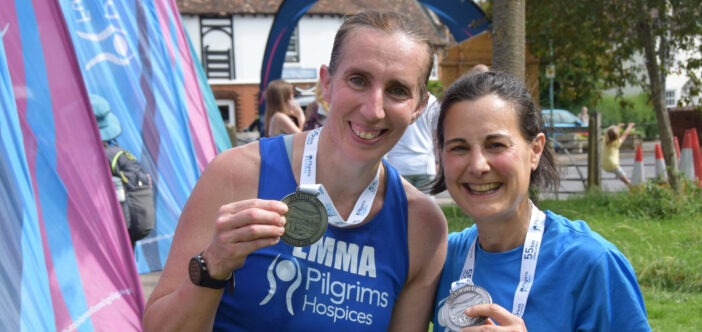
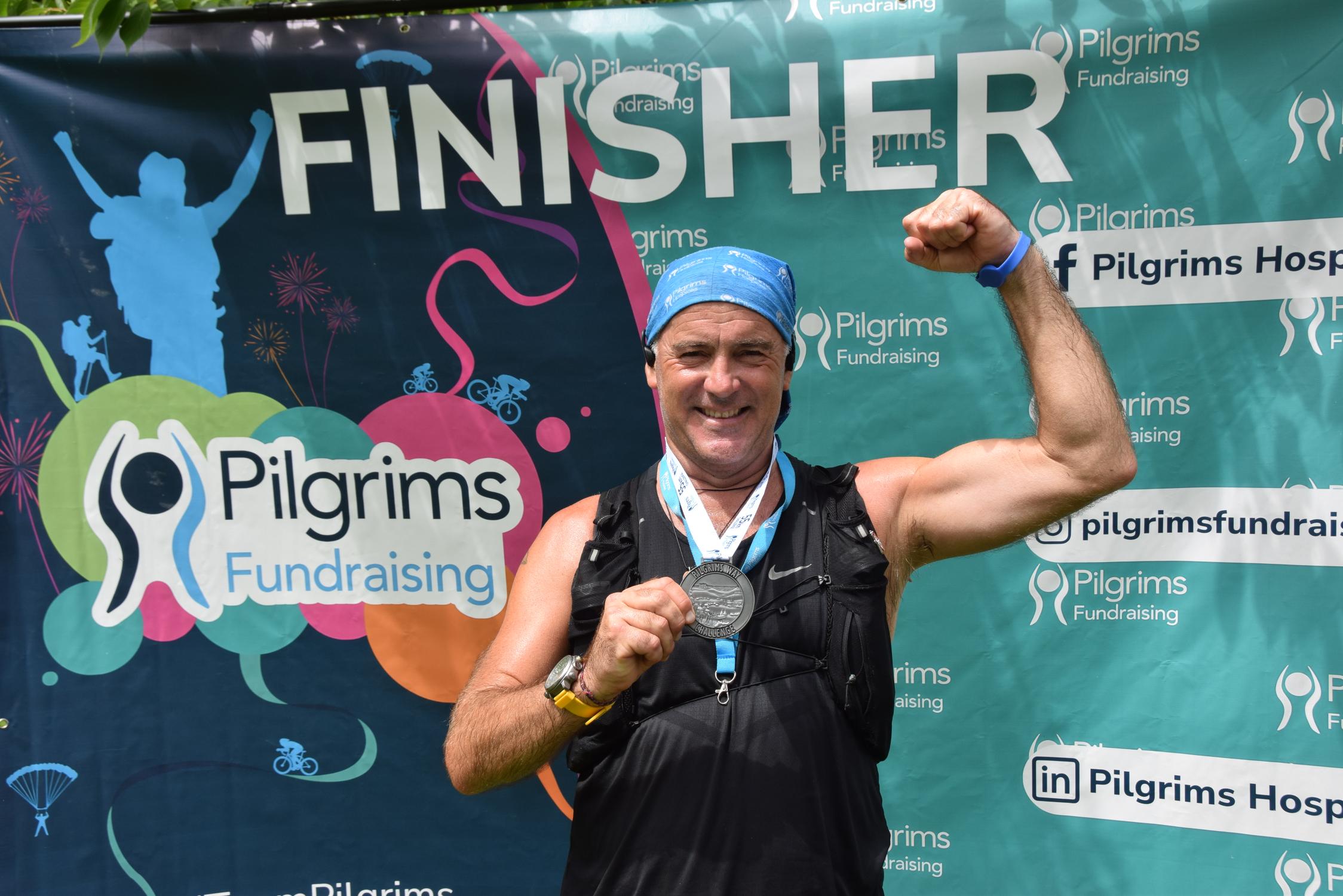
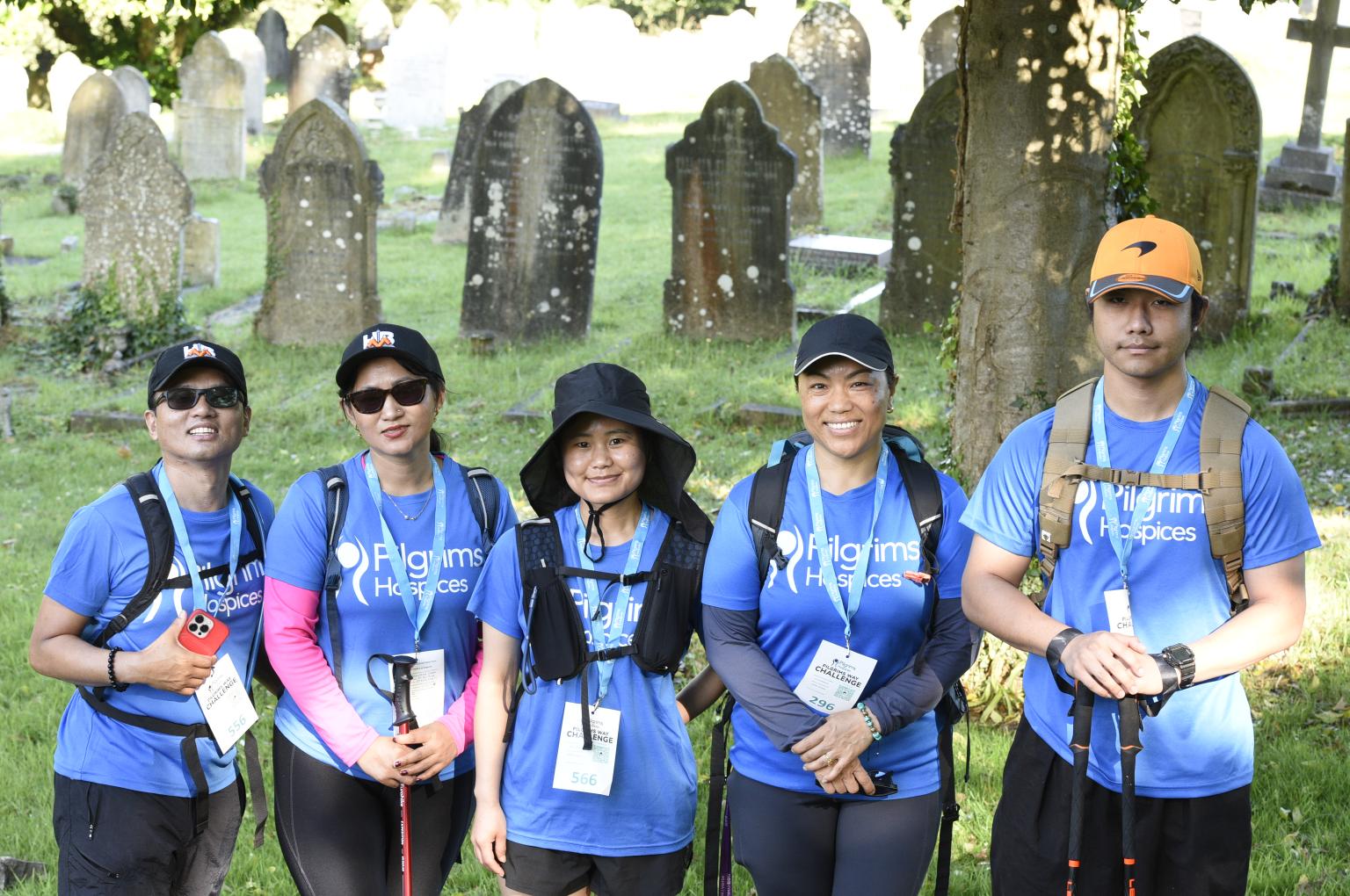
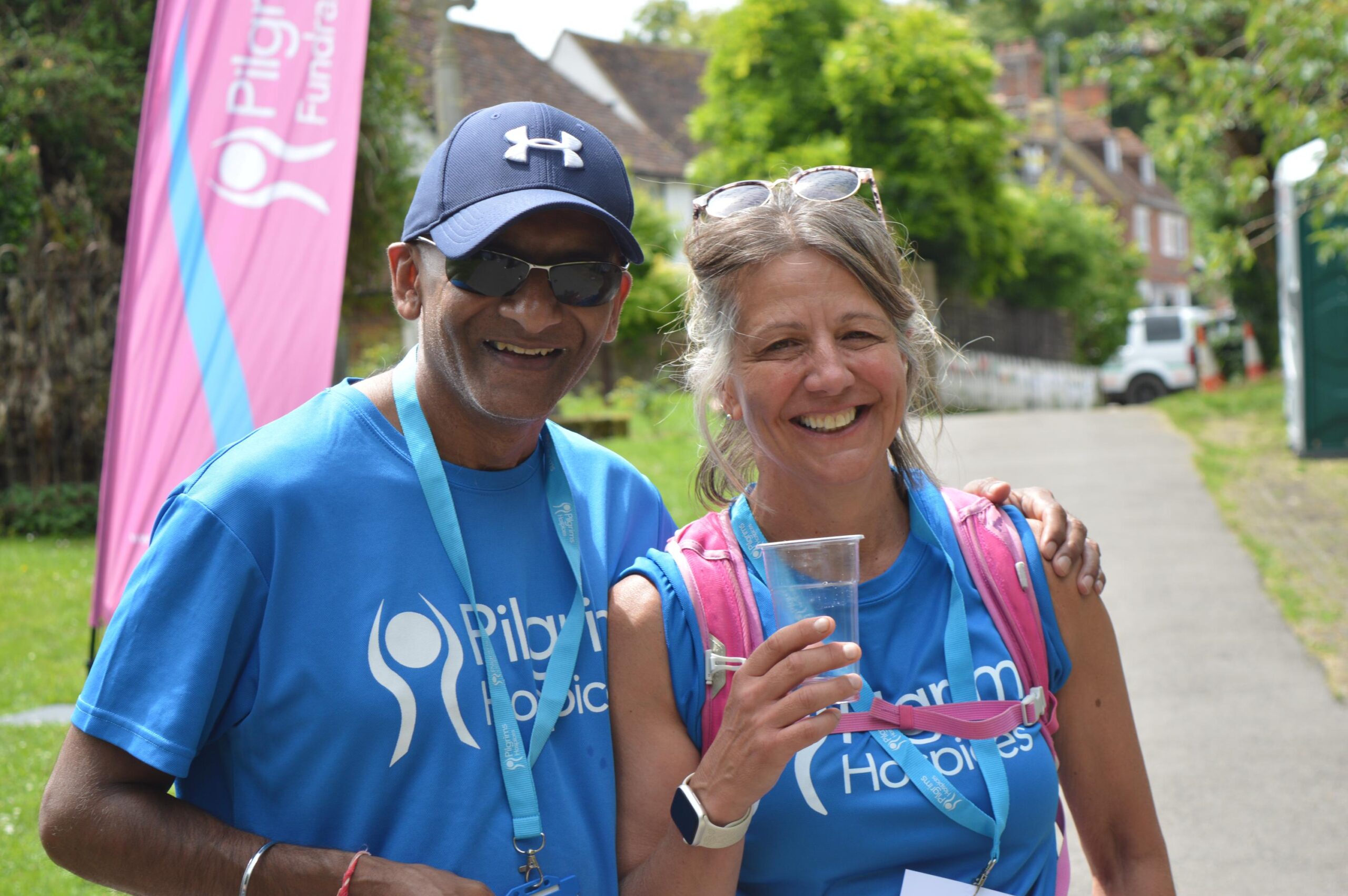
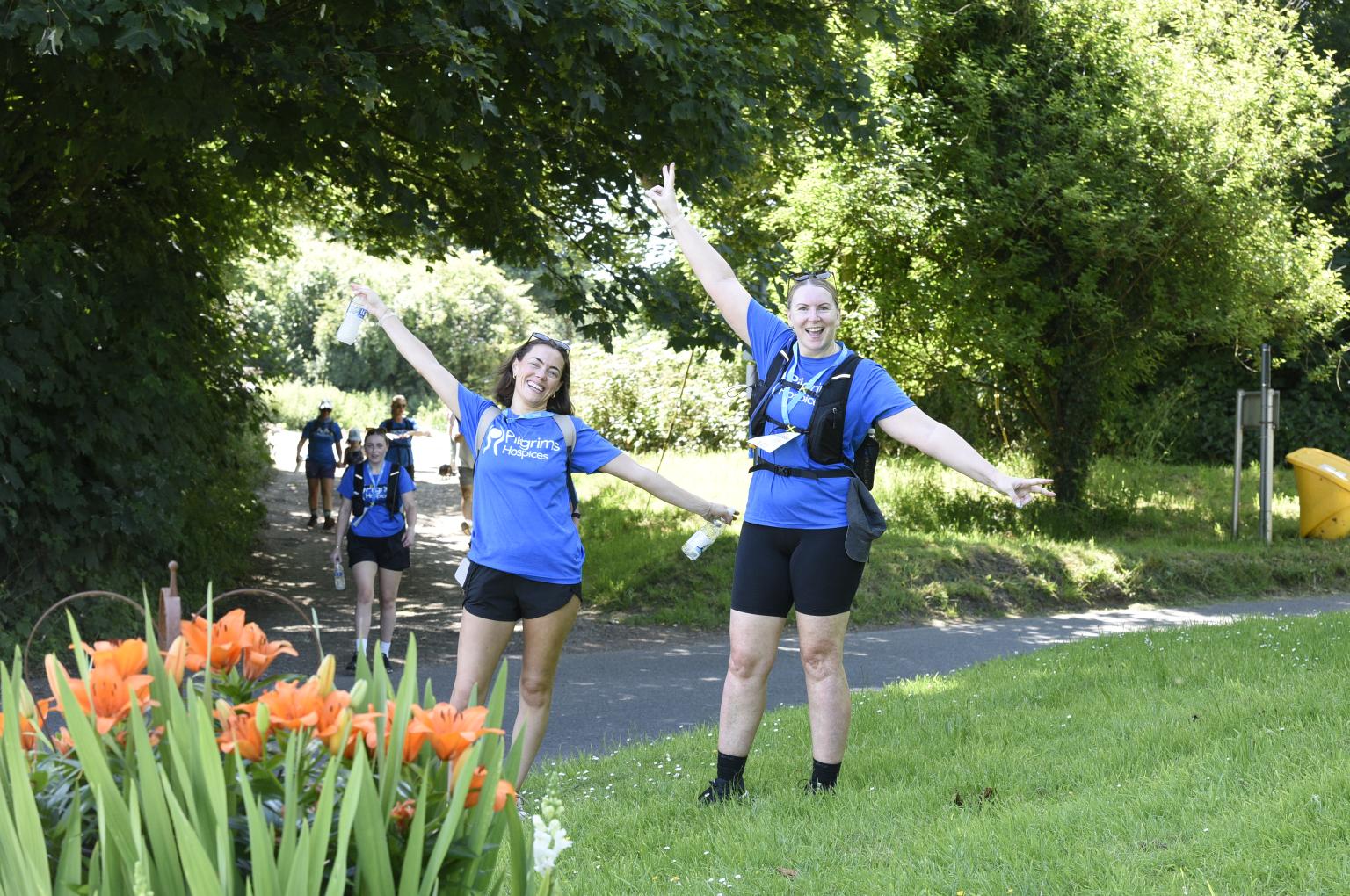
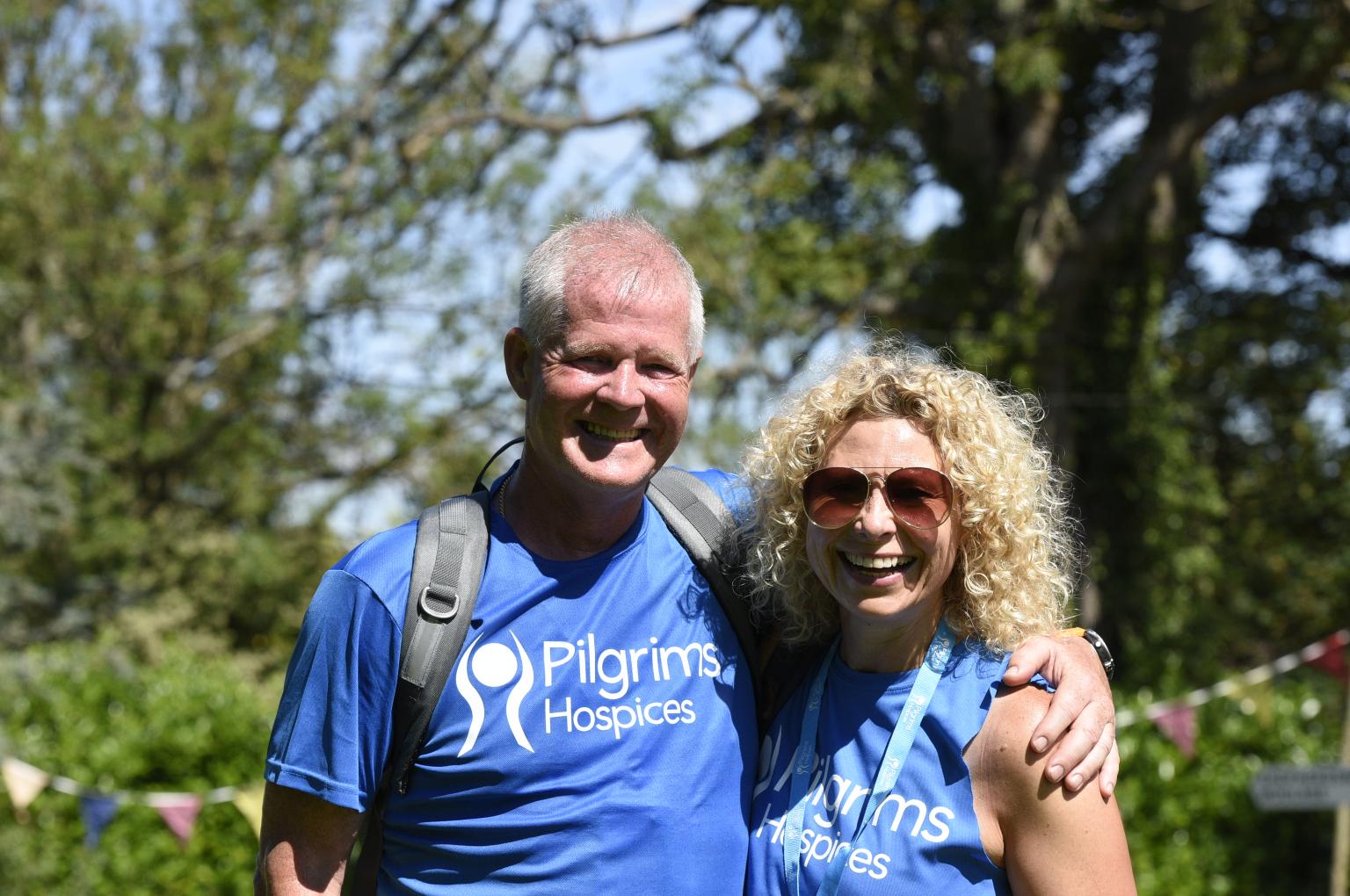
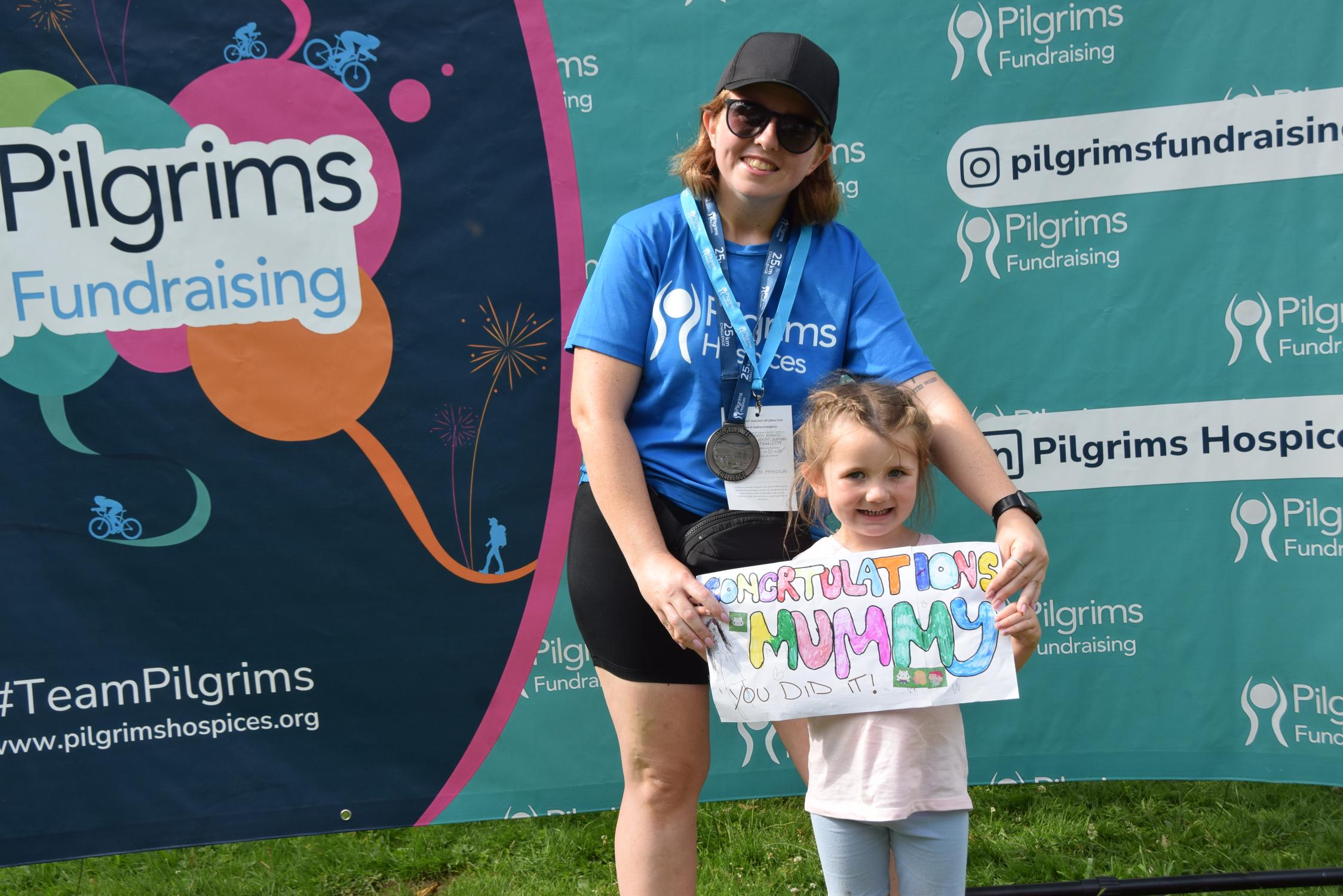
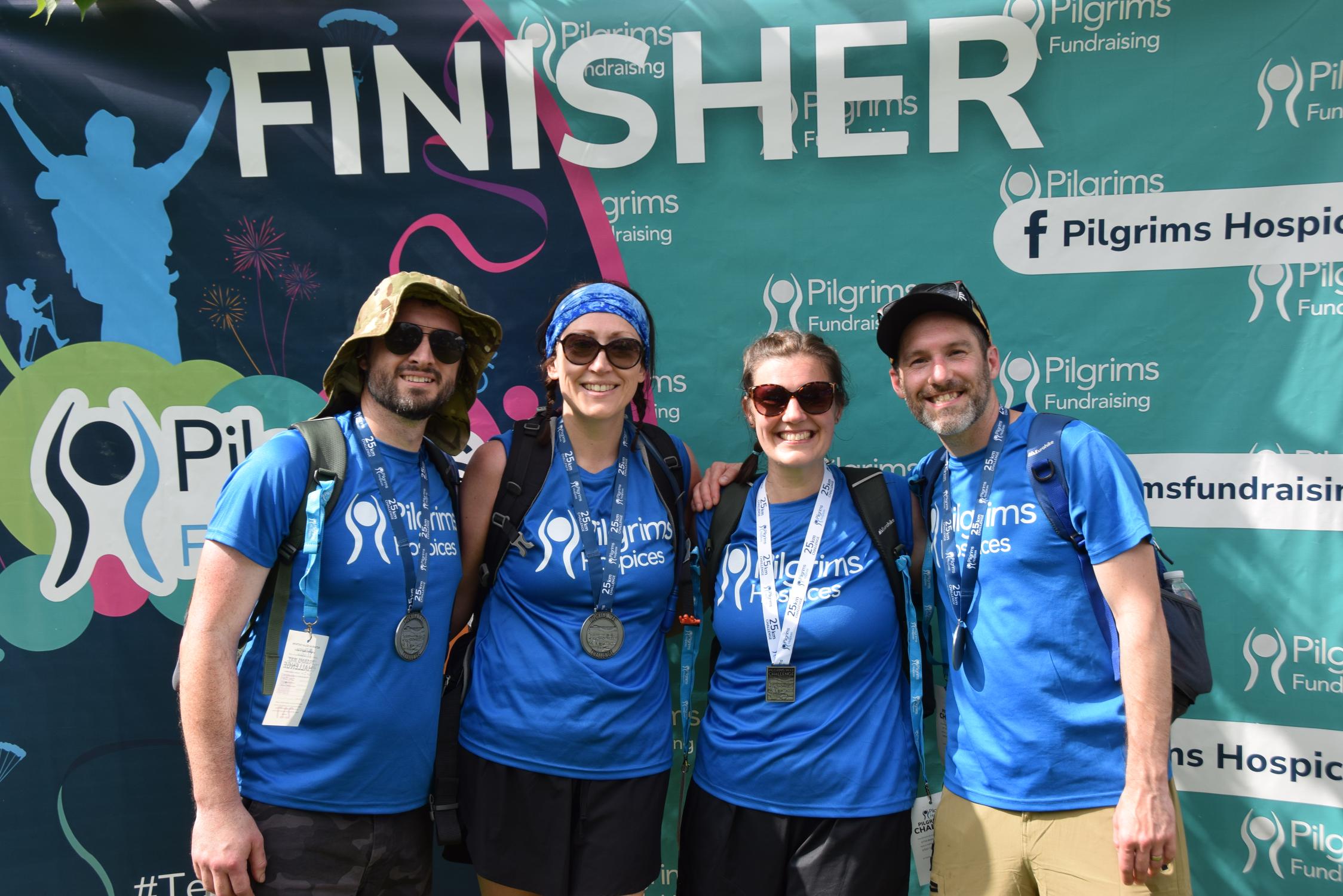
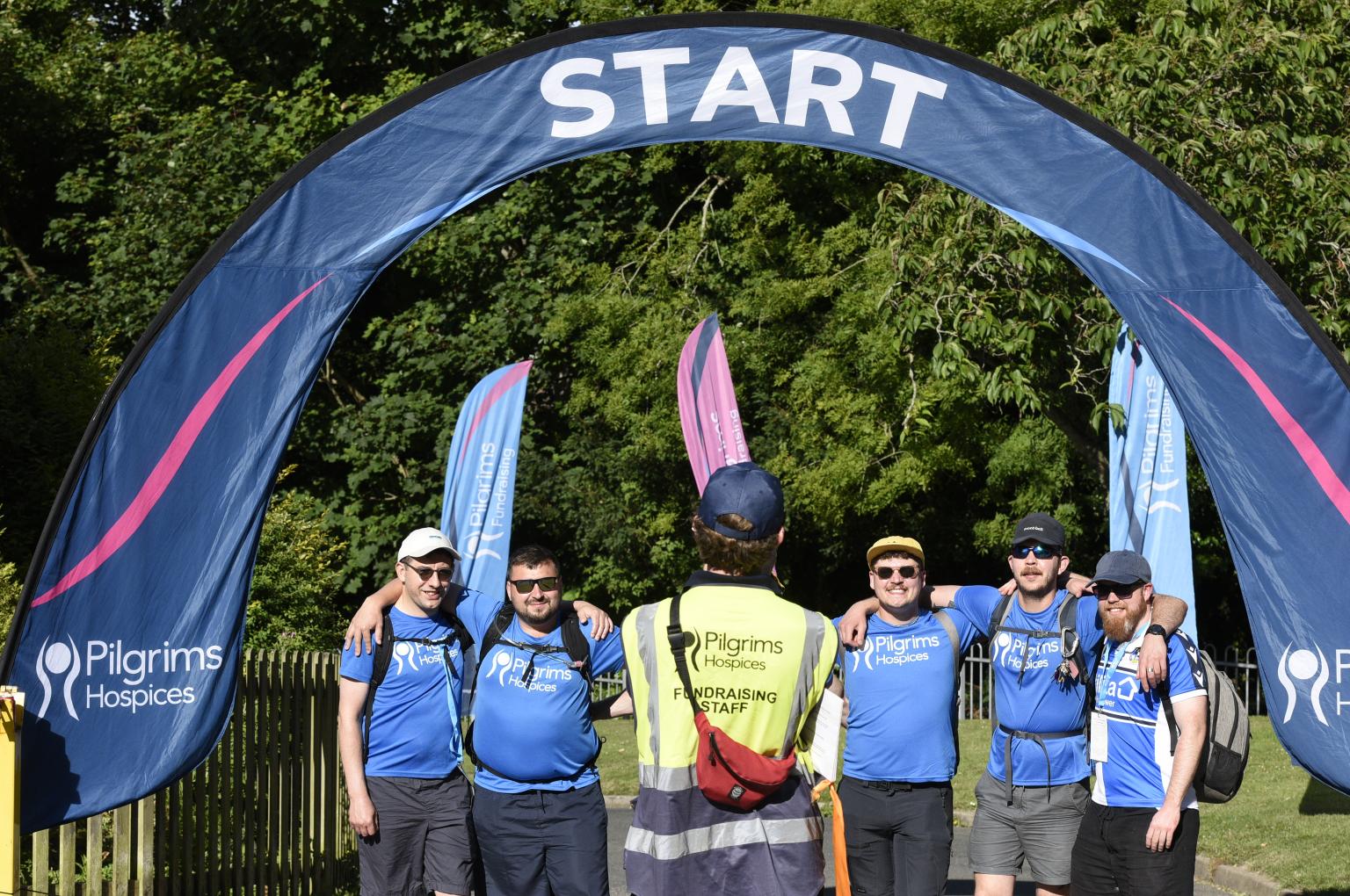
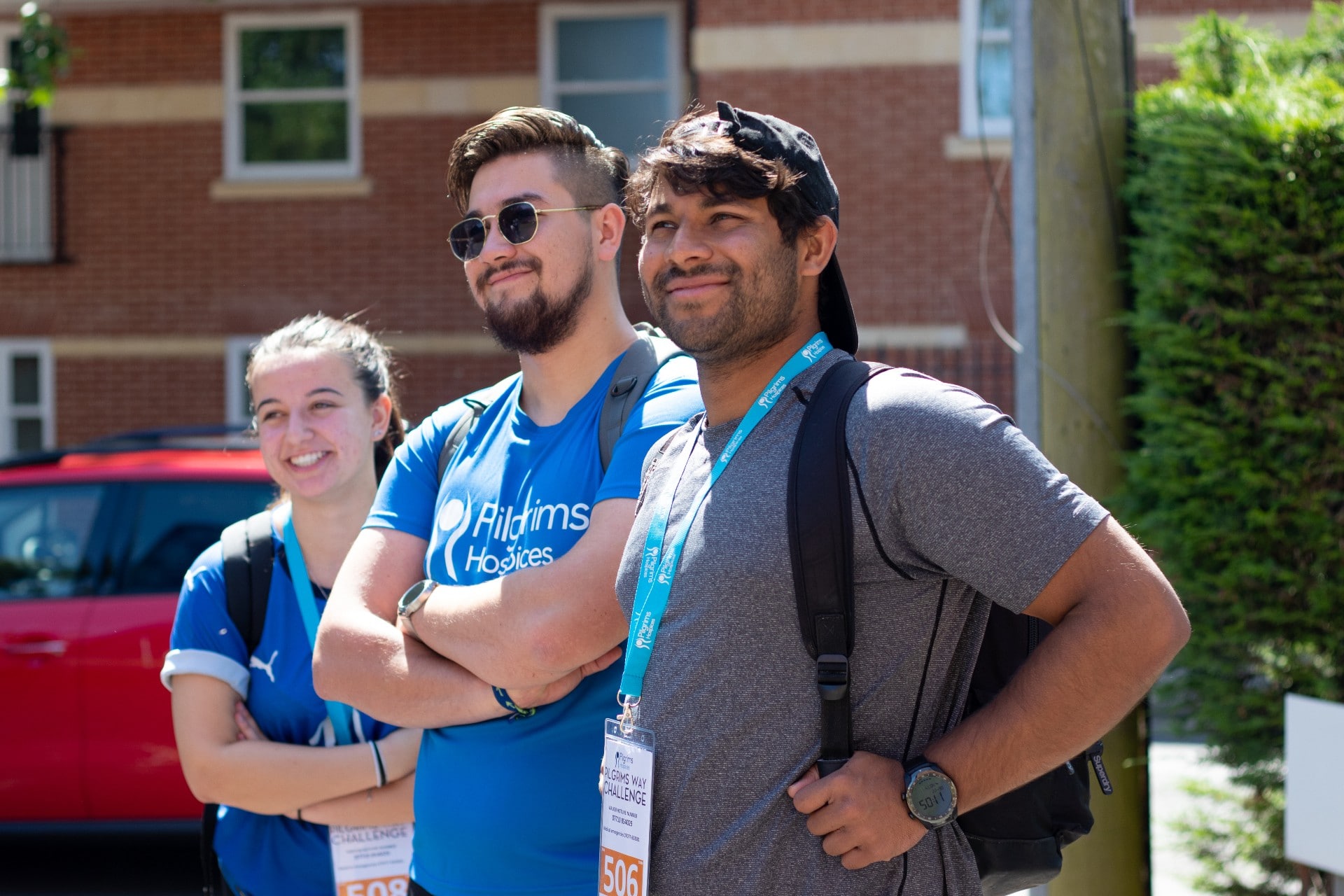
Smiles, determination and spectacular summer weather made for a truly unforgettable day as more than 650 participants took part in the Pilgrims Way Challenge 2026 on Saturday 20 June, raising vital funds for Pilgrims Hospices across east Kent.
In an incredible show of community spirit and generosity, the event has already raised an amazing £135,000 so far, with funds continuing to grow as sponsorship and donations keep coming in. Every mile walked or run and every pound raised will help Pilgrims Hospices continue providing skilled, compassionate end-of-life care to local people and those closest to them.
Oliver Scott from Chilham ran the 55km route
Supporters travelled from across Kent and further afield to enjoy this much-loved annual fundraising event, choosing from three distances – 25km, 35km or the full 55km challenge – along one of England’s most historic and beautiful national trails.
With rolling countryside, picturesque villages and plenty of moments to celebrate along the route, participants embraced the challenge while helping ensure Pilgrims Hospices can continue providing skilled, compassionate end-of-life care to local people and those closest to them.
11
9
8
7
6
5
2
1
Conditions were glorious throughout the day, with sunshine providing the perfect backdrop for the event.
Every effort was made to support participant wellbeing in the warm weather, with plentiful refreshment stops, snacks, drinks, medical support and dedicated event teams helping everyone stay safe and enjoy the experience.
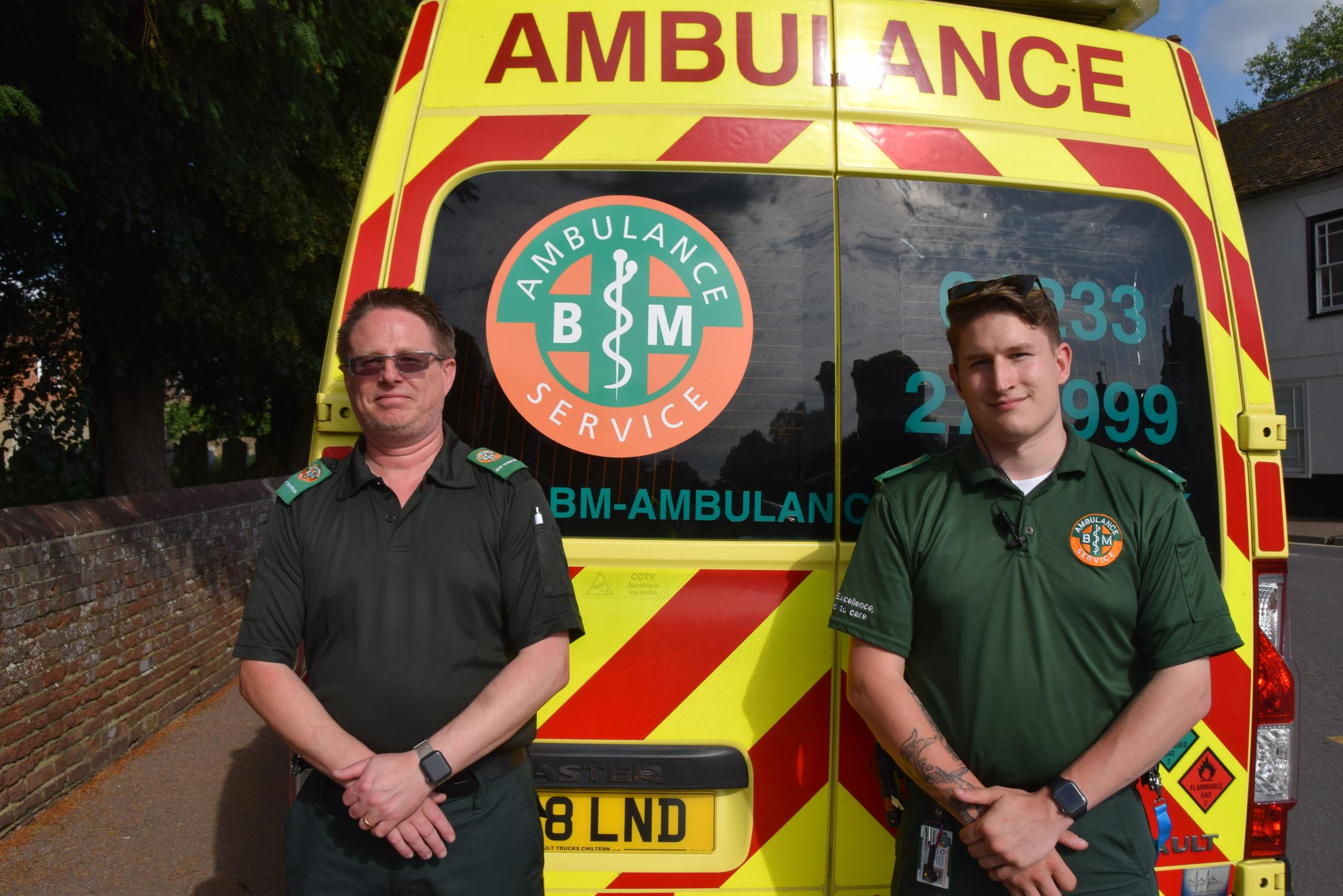
Paul Harris and James Parsons from BM Ambulance Service
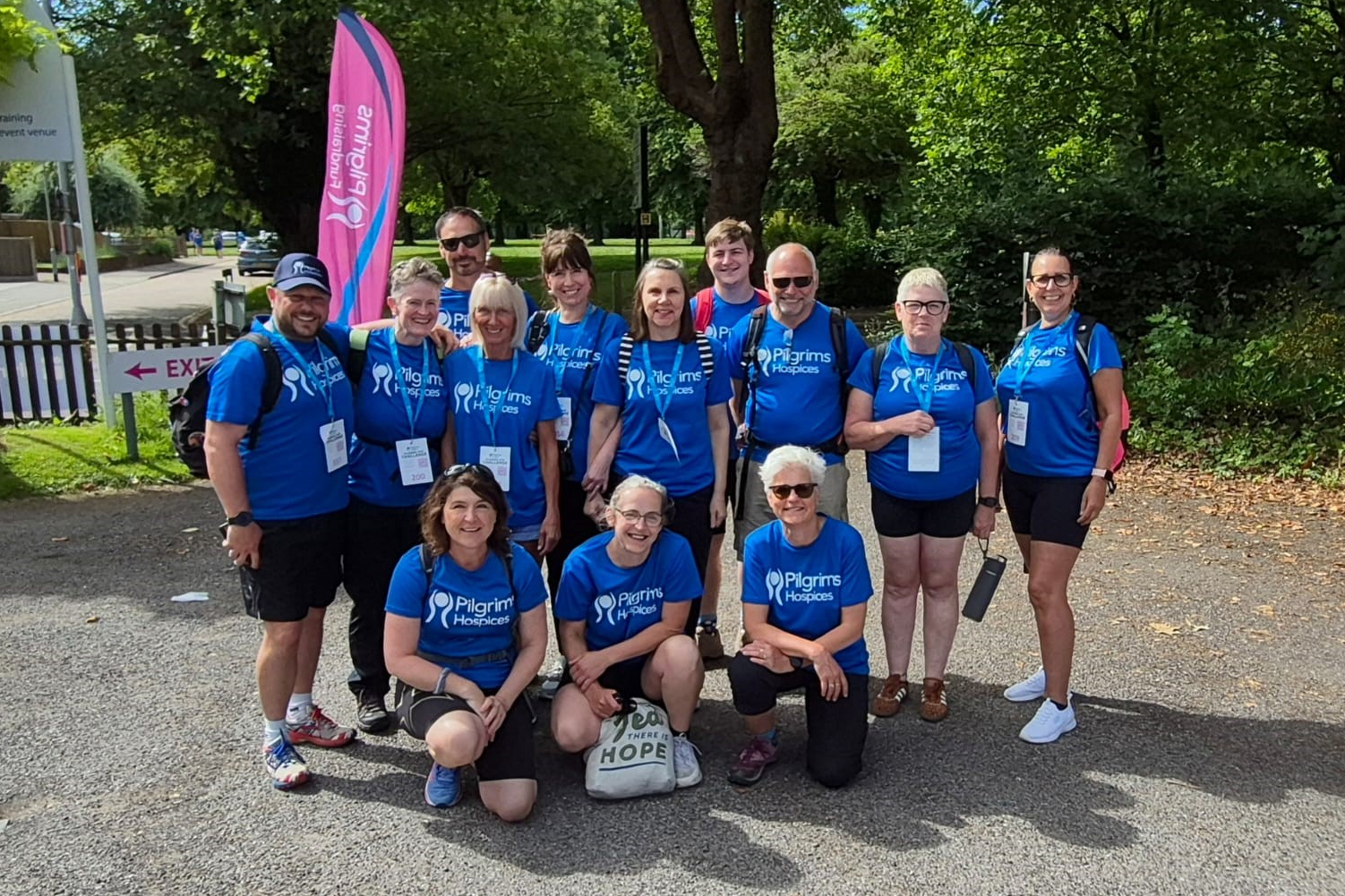
One team making an incredible impact was PHA – Let Loose!, a group of staff from Pilgrims Hospice Ashford, who completed the 25km Canterbury to Wye route together and have raised an outstanding £3,260 so far.
The team said:
“Despite the incredibly hot day, we had the best time! Enjoying each other’s company, we laughed a lot, tackled some challenging inclines and kept each other going, knowing every step was helping make a real difference for our patients and their families. Thank you so much to everyone who sponsored us.”
The Ashford team chose to take on the challenge because they see first-hand every day the difference Pilgrims makes to patients and their loved ones.
Pilgrims Hospices relies heavily on fundraising to help meet annual running costs of £17.5 million.
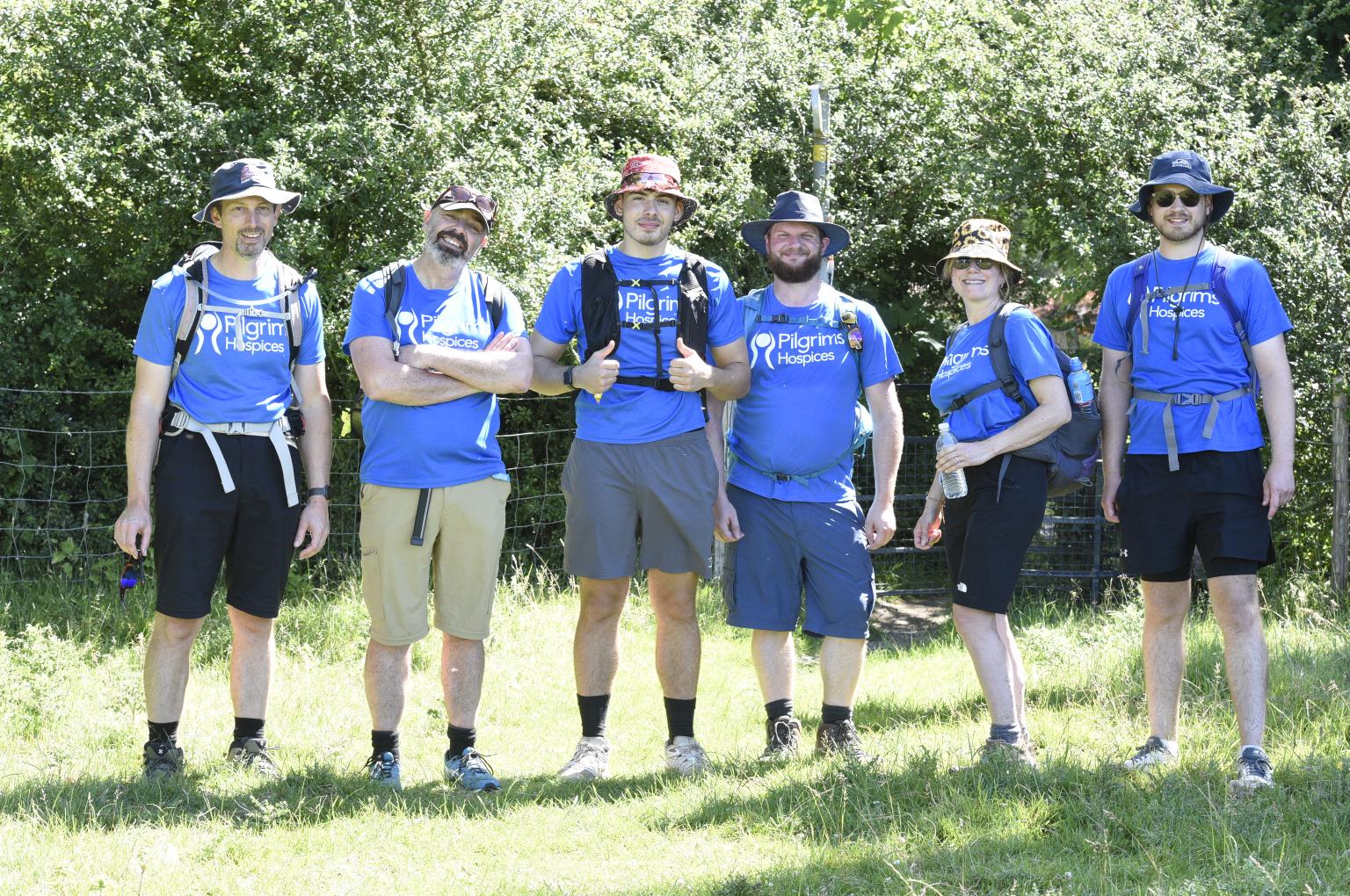
The PHA Let Loose team
Head of Fundraising, Kate Duddell, said:
“What a fantastic day! Seeing so many people come together, challenge themselves and support hospice care across east Kent was incredibly special. The atmosphere was full of encouragement, laughter and determination from start to finish.
“We’re also delighted to announce that since the event began in 2018, it has now surpassed a total of £1 million raised for hospice care in east Kent.
Thank you to every participant who signed up, fundraised and took on the challenge. A very special thank you goes to our amazing band of volunteers, from registration teams and route marshals to those running rest stops, cheering supporters on and helping behind the scenes. We simply could not hold these special fundraising events without their dedication, energy and generosity. They truly make the day possible.”
The Pilgrims Way Challenge continues to be one of Pilgrims Hospices’ most popular fundraising events, helping ensure expert hospice care remains available to local families when they need it most.
Pilgrims Hospices provides compassionate, specialist care free of charge to thousands of people in east Kent each year who are living with life-limiting conditions. Support is offered in patients’ homes, in the community, and at our three hospice sites in Canterbury, Thanet and Ashford. We also run a 24-hour advice line.
19th June 2026
A tribute to Alex Miles: “Pilgrims go above and beyond”
Alex Miles from Folkestone was a family man; a devoted husband to Ruth and father to Millie, Jake, Mason, Layla and Bailey, he served as a sergeant in Kent Police and played football for Folkestone Invicta FC.
In 2019, Alex, then aged 44, was diagnosed with lung cancer, which had spread to his bones. He began treatment and, with his condition managed, was able to live relatively well and even continue working.
But in 2024, Alex suffered two strokes, after which he was admitted to Pilgrims Hospices for end-of-life care.
Alex died at the Ashford hospice in September 2024, aged 49.
Alex and Ruth with family on their wedding dayAlex with his son, Bailey
Ruth shares how Pilgrims helped their family to make the most of their precious final moments with Alex, and supported them in their grief after his death:
“Alex was transferred from hospital; after the second stroke, he wasn’t really conscious, but Pilgrims made him comfortable – it was noticeable as soon as he got to the hospice.
“As a family, we had such a positive experience of Pilgrims’ care. Alex was only in the hospice for a few days, and although it was never going to be easy, it was as comforting as it could possibly have been. We had a family room, so a few of us could sleep in there with Alex. Friends and family could visit any time to say their goodbyes.
“I was breastfeeding our youngest child, Bailey, who was just five months old at the time. The kind nurses and staff were so supportive – they made us countless cups of tea and toast, took Bailey for walks and played with him to give us a break, answered our questions, held our hands and simply listened. They even shared their own stories with us; we learned that so many of them have personal experiences of hospice care, which is what inspired them to work for Pilgrims. They did all this whilst keeping Alex comfortable; they really do go above and beyond.”
“After Alex died, myself and one of Alex’s older children were offered bereavement counselling; we really appreciated that continuity of care. I also had massages from the complementary therapy team, which were lovely.
“I can’t fault Pilgrims, they’re fantastic.”
In April 2025, Alex’s family launched the inaugural Miles Memorial Cup – a football match in honour of Alex to celebrate his life, which they plan to make an annual event. On 18 April 2026, the match was held in aid of Pilgrims, raising £4,000 for local hospice care.
Ruth said:
“We wanted to give back to those that helped us on Alex’s journey; Pilgrims were able to offer the specialist, compassionate care that Alex needed at the end of his life, when no one else could. If our fundraising helps just one other family to have that same support and peace, it will mean so much to us. We’re lucky to have such brilliant hospice care in the UK, but it is only available thanks to peoples’ generous support and donations – that’s why it’s so important for us to fundraise for Pilgrims.
“Any opportunity to talk about Alex and have other people remember him, I’ll take it, because he deserves that. It’s very comforting for me. Although Alex’s life was cut short, this is how we can keep his memory alive.”
Alex Miles With His Wife Ruth
Alex Miles With Family
Alex And Ruth Miles With Their Children Mason, Layla And Bailey
Alex Miles With His Children L R Jake, Mason, Millie And Layla
Alex Miles With His Children Mason And Layla
Top Alex Miles With His Sister Nicola And His Uncle
Follow @milesmemorialcup on Instagram for news and updates about the annual Miles Memorial Cup.
Pilgrims Hospices provides compassionate, specialist care free of charge to thousands of people in east Kent each year who are living with life-limiting conditions. Support is offered in patients’ homes, in the community, and at our three hospice sites in Canterbury, Thanet and Ashford. We also run a 24-hour advice line.
Volunteers’ Week (1–7 June 2026) is a national celebration of the people who give their time, skills and experience to support charities and communities across the UK.
At Pilgrims Hospices, we are proud to recognise not only our volunteers across all our services and shops, but also the dedicated trustees who play a vital role in guiding our charity.
Our trustees are unpaid volunteers who share their time, expertise and leadership to help ensure Pilgrims Hospices can continue to provide compassionate end‑of‑life care across east Kent. They are responsible for the charity’s strategic direction, governance and long‑term sustainability, working alongside our Executive Team to uphold our values and make sure every decision keeps patients and families at the heart of what we do.
Trustees bring a wide range of professional skills, lived experience and personal commitment. As volunteers, they give their time freely to attend meetings, provide challenge and oversight, and support Pilgrims Hospices to remain strong, financially secure and responsive to the needs of our community.
During Volunteers’ Week, we want to say thank you to all our trustees – past and present – for their dedication, governance expertise and unwavering support. Their contribution often happens behind the scenes, but it makes a lasting difference to the care we can provide every day.
Interested in becoming a Volunteer Trustee?
As a trustee with Pilgrims Hospices, you will be responsible for protecting and enhancing our charity’s reputation, whilst also ensuring all service users receive the best possible support at the time they need it the most.
You will provide an invaluable service to your community. You will use your experience to guide the strategic direction of one of the most respected healthcare charities in the country, and be accountable for its delivery in the future.
We are looking to strengthen our Board with a mix of skills and experience and would welcome applications from a range of experiences.
We believe our Board should be truly representative and inclusive of the communities we serve; we welcome applicants of all abilities and backgrounds, and positively encourage applications from under-represented communities, particularly applications from Black, Asian and Minority Ethnic (BAME) and disabled candidates. We are committed to equality and diversity across the charity, including the Board of Trustees.
Whatever your professional background, duty of care will be at the heart of everything you do, and you will be committed to upholding our service standards to the highest level.
Volunteers’ Week celebrates the amazing contributions volunteers make to communities across the UK. The celebration starts on the first Monday in June every year. It’s a chance to recognise, celebrate and thank the UK’s incredible volunteers for all they contribute to our local communities, the voluntary sector, and society as a whole.
Pilgrims Hospices is a charity dedicated to providing expert care and support to patients with life-limiting illnesses in east Kent. Our services ensure comfort, dignity, and quality of life for patients and their families, offering compassionate care both in hospice settings and in the community.