“It’s about being attentive to each person’s needs, religious or not” – Spiritual Care Awareness Month 2022
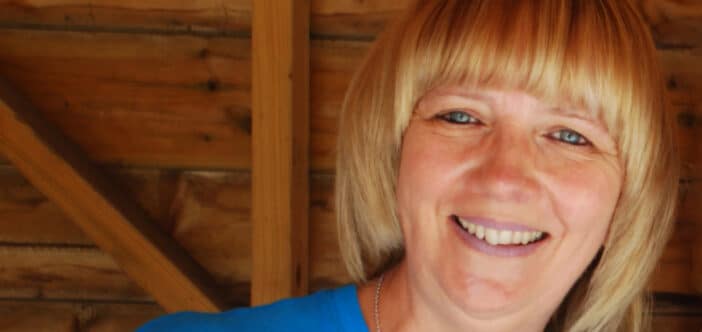
Petra Kerr has been a Spiritual Care Volunteer at Pilgrims Hospices since 2016.
She shares what inspired her to get involved and why she enjoys her role.
In 2015, I felt I was being called to help people in their time of need, so I enrolled on a course called ‘Pastoral Care’ organised by the Diocese of Canterbury. Once completed, I then attended another course, ‘Funeral and Bereavement’. Contemplating where I could develop my skills, I was instantly drawn to Pilgrims Hospices.
I met with Martyn Yates in 2016 and immediately knew that Pilgrims is where I wanted to be; within a couple of weeks, I had become a Spiritual Care Volunteer.
I always remember Martyn saying to me, ‘never be afraid to laugh in here’. At the time, I thought, ‘how very strange’, but I genuinely have had some really funny moments with staff, patients and families.
I was also blessed in 2017 to be given authorisation from the Bishop of Dover to administer the sacraments as and when required; this was a great privilege for me.
I’m often asked if you have to be religious to receive pastoral or spiritual care. I believe not. For me, it’s about being attentive to each person’s needs, religious or not. It’s about being compassionate and considerate. It’s not always about speaking, either; a simple holding of hands is sometimes all it takes.I strongly believe that spiritual care plays a crucial part within hospice care, as it’s about helping the patient and their family manage any uncertainties they may have and listening to and responding to their needs.
I feel honoured and humbled to be a part of the amazing work Pilgrims do.
Would you like to become a Spiritual Care Volunteer for Pilgrims and make a positive difference to people living with an incurable illness in east Kent?
Pilgrims Hospices celebrated Spiritual Care Awareness Month throughout January 2022, showcasing the many ways that spiritual care can make a positive difference to patients, their families, carers and loved ones.
There’s much more to death than we think; what if it isn’t just an ending, but an event we can plan for? Thinking beyond the four walls of hospices and hospitals, we have the chance to approach it with confidence and plan a good death. After Wards is a collection of insights and ideas from people who can help us all to re-imagine this essential part of life, and to live well until we die.
“Human spirituality is complex” – Spiritual Care Awareness Month 2022
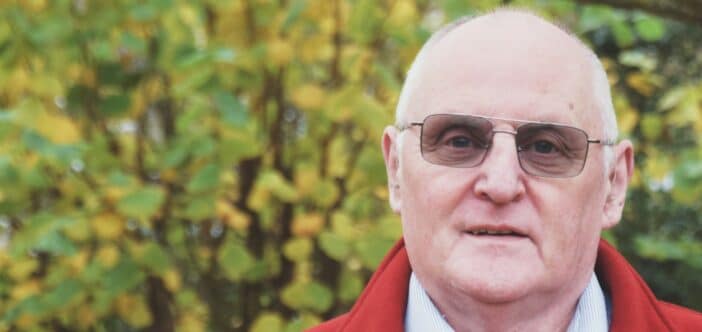
Ken Cox was formerly the Spiritual Care Lead at Pilgrims Hospices; he was based at the Thanet hospice.
Whilst still in post, he shared what he enjoyed about his role, what spirituality means to him and how spiritual care makes an integral contribution to the holistic nature of hospice care.
What does your role involve and how did you come to it?
In my role at Pilgrims, I am called upon to give spiritual care and advice to anyone who needs it; patients, carers and staff are all included within my remit.
During training to become an ordained Church of England priest, we are required to undertake a pastoral placement. As I had no experience of hospice work, I thought it might be good to expand my knowledge and I managed to get a placement at the Canterbury hospice.
From then on, I felt a call that working in a hospice environment would be the area for me to continue in after my curacy was completed. I initially came to the hospice as a volunteer and was appointed to my current role as Spiritual Care Lead at our Thanet hospice in 2016.
I get a high level of satisfaction in helping people through emotionally hard times. I enjoy the interaction between myself and those I meet. Most of my working career has involved working as a team, so I am comfortable with and enjoy working with the other disciplines on the hospice multi-disciplinary team.
What does spirituality mean to you?
Human spirituality is a complex and difficult thing to nail down. The textbooks define it as relationships, values and life purpose. The main thing I concentrate on is relationships between myself and the people I come into contact with; the rest follows on. A basic relationship can grow into one where I can help the person come to terms with what is happening.
My views on spirituality have been informed by study and reading of various books during ordination training. The academic reading is backed up by experience of being at the frontline of peoples’ emotions and raw feelings at a difficult time in their lives. It was a distinct advantage to have been a volunteer for a few months before taking up the role as a paid job.
What role does spiritual care play in hospice care and why is it important?
From my point of view, spiritual care can play a vital part in a patient’s or carer’s pathway whilst being cared for by Pilgrims. It involves being alongside people, lending a listening ear at their darkest time and being a shoulder to lean on, to help smooth things that are getting a bit bumpy.
An integral part of working at Pilgrims is not to be judgemental. Some people suffer from guilt due to past actions as they come to the end of their life, and wish to atone or at least talk about this, which enables them to move forward.
Spiritual distress can happen at any time during a person’s association with the hospice. This is an area where the Spiritual Care Lead can help immensely, talking through what is causing the distress, not offering any solutions but allowing the person to work through things and clear their minds. Often, it is physical and sometimes emotional pain that can be sorted out. We also work with people who have changed their belief system, either losing faith or discovering a dormant belief that comes to the fore. Quite often, people find it difficult to adjust to their new way of thinking, but spiritual care can help with this.
A spiritual care lead is an integral part of Pilgrims’ multi-disciplinary team, which meets daily to discuss patients. At times, the spiritual care lead can have information that helps clinical staff gain an alternative insight into what a patient is feeling. As part of the team, we can be asked to follow up and provide another eye on the subject from a different perspective, which can be of great help.
Pilgrims Hospices celebrated Spiritual Care Awareness Month throughout January 2022, showcasing the many ways that spiritual care can make a positive difference to patients, their families, carers and loved ones.
There’s much more to death than we think; what if it isn’t just an ending, but an event we can plan for? Thinking beyond the four walls of hospices and hospitals, we have the chance to approach it with confidence and plan a good death. After Wards is a collection of insights and ideas from people who can help us all to re-imagine this essential part of life, and to live well until we die.
17th December 2018
Jacky experiences the reality of life in a hospice
Jacky Darling, a minister in training from St Nicholas Church in New Romney, is gaining experience in the reality of life in a hospice with Pilgrims at Ashford.
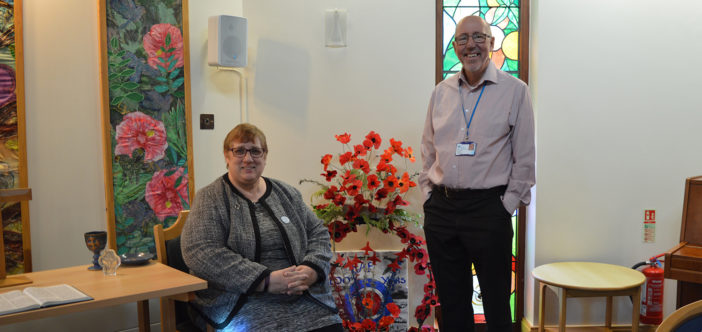
Jacky joined Geoff Walters, Head of Spiritual Care Services for Pilgrims Hospices, as part of her training programme. Geoff said: “By sharing various events and aspects of hospice life, we hope Jacky will have an understanding of what a hospice is and does and can, therefore, be supportive to people she meets in the community facing life-limiting illness.”
Jacky explained: “It’s very important to be knowledgeable and positive for people within the community who may have little or no experience of hospice services, leaving them feeling negative and vulnerable.
“My time with everyone at Pilgrims is proving really inspirational. I’m now confident that I can share my experiences and explain how Pilgrims can offer a variety of services to help people who need care, and their families, to live well in the moment. It’s a privilege to share such important information with our community; the charity is providing a vital service.
“I’ve been given opportunities to spend time with the nurses in their morning meetings, attend the Therapy Centre and get to know day patients, staff and volunteers. There’s so much more to the hospice than a bed on a ward.”
Pilgrims Hospices cannot change what’s happening but they can make a difference to patients and their families in such difficult times.
Jacky Darling
Jacky had a career in teaching, taking early retirement from her role as a Primary Head Teacher in order to pursue a spiritual vocation. She led the Trees of Love service held at St Nicholas Church in New Romney on Saturday 1 December and will be ordained in June 2019.
Jacky added: “I enjoyed the Trees of Love service, it was uplifting and comforting to so many local people whose loved ones or friends have been cared for by Pilgrims (and other bereaved people in the community). I welcomed this opportunity to celebrate their lives and wish everyone a peaceful Christmas.
“Pilgrims Hospices cannot change what’s happening but they can make a difference to patients and their families in such difficult times. It’s a moving experience and I’m grateful to be part of the Pilgrims community. I see the passion that surrounds the staff at the hospice; my experience here will enable me to help people understand the breadth of services available and why the charity needs continued support from the community.”
Pilgrims’ offer support for people of any religion or belief. The term ‘spirituality’ covers a wide range of belief systems, from membership of a faith community to those who follow a more personal philosophy or lifestyle. This pastoral and spiritual care (often known as chaplaincy) is available for people who are religious and can equally be a source of support for people of any belief. Facilitating places like Jacky’s is something that Pilgrims Hospices Spiritual Care team does regularly across all sites. Click here to find out more.
Each year Pilgrims supports hundreds of local people coping with a life-limiting illness and their families. The charity offers a range of services: from end of life care given on its wards to its Wellbeing and Social Programme supporting people after they are diagnosed, to live well and stay independent.