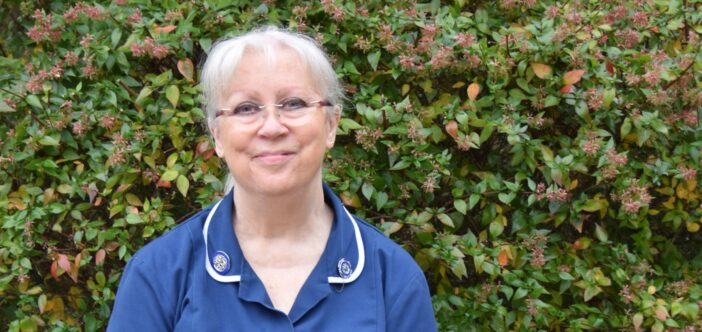
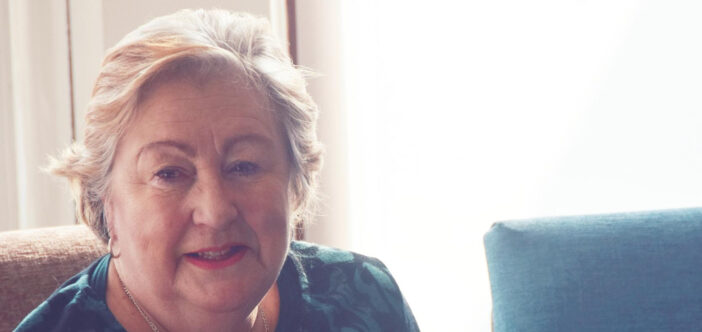
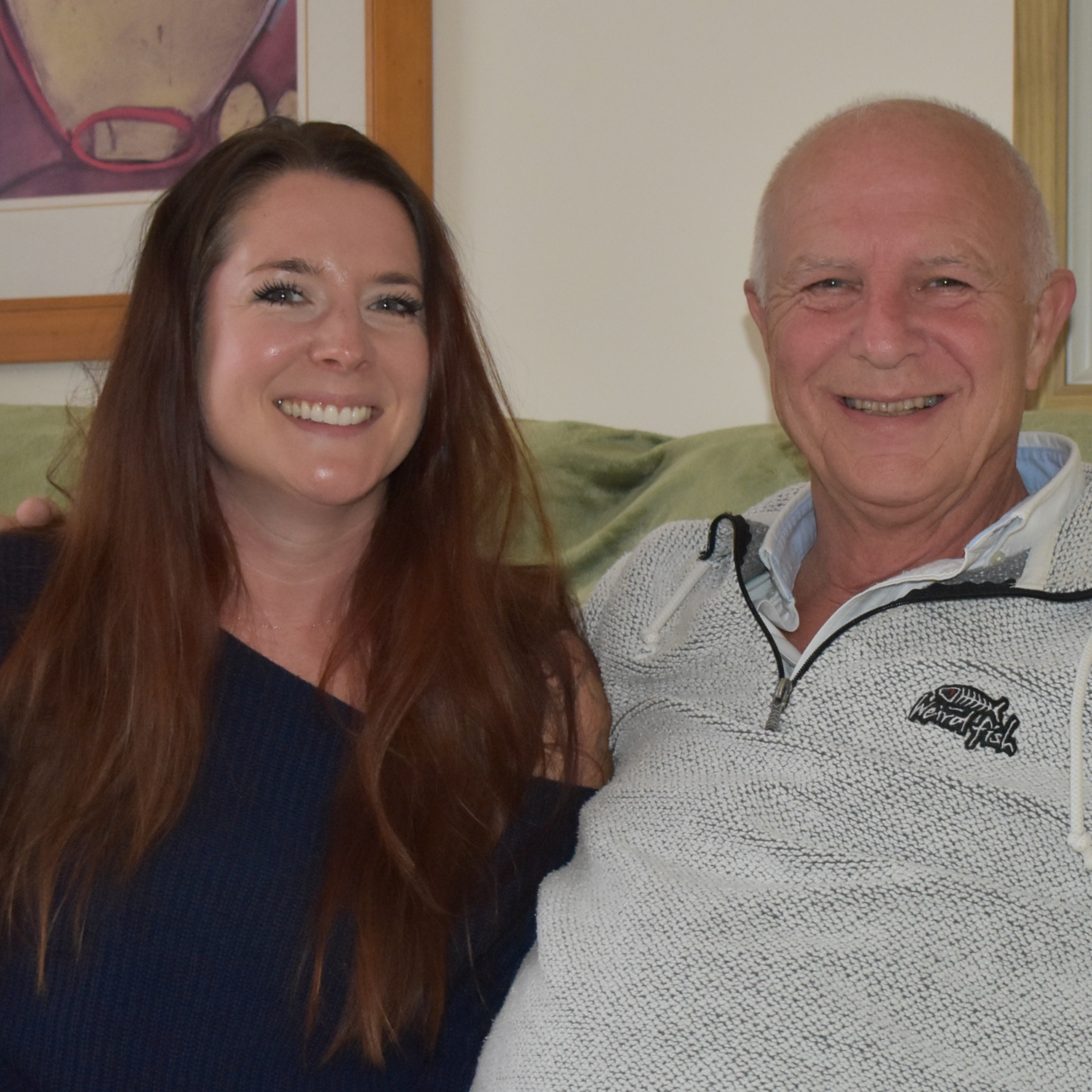
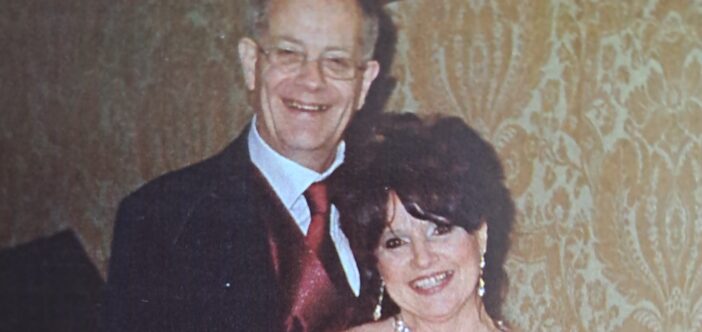
Debbie says farewell to Pilgrims Hospices after 37 years as a hospice nurse
Debbie Corke from Whitstable joined the community nursing team at Pilgrims in 1989, following in the footsteps of nursing colleagues who had worked in intensive care units at local east Kent hospitals.
Retiring from her role after 37 years, Debbie reflects on her career – what she has enjoyed, what she will miss, and the many changes she has seen.
Born in Birmingham, Debbie moved to Canterbury as a teenager due to her dad’s military career:
“When I was a teenager, there wasn’t a lot of choice; the job options were secretary or nurse. I’d always liked people; my mum said I used to talk to old ladies on the bus! So, it just seemed natural for me to choose nursing.
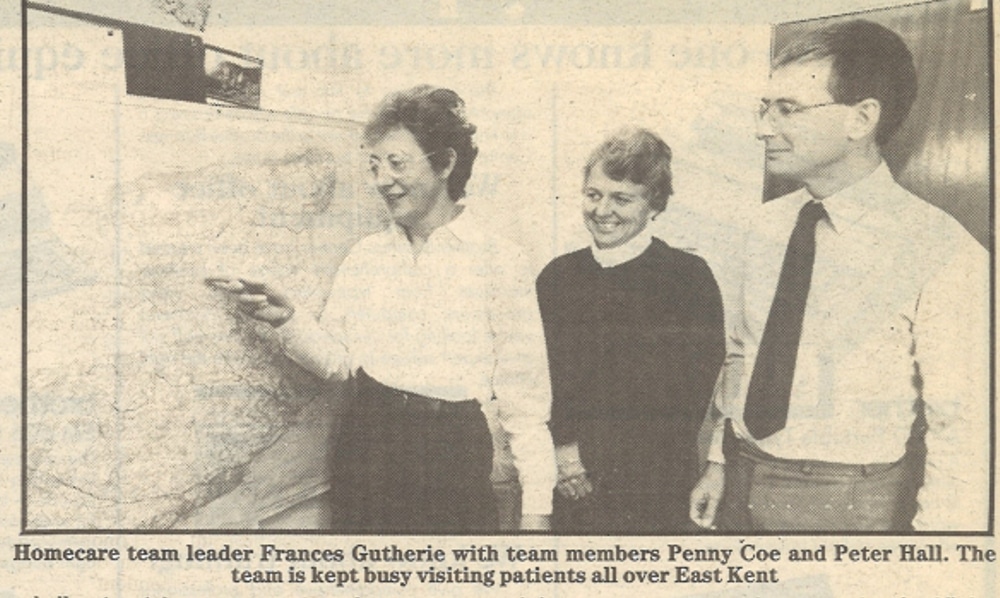
“I qualified at Kent & Canterbury Hospital and worked in the intensive care unit (ITU) and recovery. The senior sister, Frances Guthrie, started the community team at Pilgrims in 1982, alongside another ITU nurse, Penny Coe, who worked at William Harvey Hospital in Ashford.”
Frances Guthrie with fellow Pilgrims team members Penny Coe and Peter Hall
After working in Australia for a year, Debbie returned home and applied for a job at The King’s School, Canterbury as a house matron, but then she saw a job come up at Pilgrims and got an interview for it:
“I think Frances put a word in for me, which was nice! Myself and Jenny Farran, another ITU nurse from Canterbury, both got the job at the Canterbury hospice.
“I saw it as my dream job because I’d heard all about it from Frances – seeing patients in their own homes, nursing them one-to-one – I just thought that was the ideal job for me. You see a lot of death in ITUs, so I was familiar with that.”
Debbie turned down the interview at King’s and started her career at Pilgrims; for 37 years, she has nursed patients in the community, enjoying the freedom, flexibility and variety that comes with her role:
“You’re independent – you can make decisions, plan your own time. It’s very variable, too; each day is different. It’s just so interesting; you never know who’s behind a front door until you get there, how they’re going to be. Some people are terrified, some are really welcoming, some are utterly depressed – there’s a whole range of emotions and types of people.
“And you learn so much every day about palliative care – pain control, symptom management… you never stop learning, it’s endless.”
A nurse’s day-to-day looks a little different now than it did when Debbie was new in post; advances in technology have transformed many aspects of the role:
“When I first started – if you can imagine this – we didn’t have mobile phones or computers, and all our notes were handwritten; we’d come back to office and write our notes up, and you’d have to take a great big file to meetings.
“I don’t know how we found our way, either – we used to have street maps. If you got lost, you had to use a phone box to ring the patient. I suppose we just got on with it, but I just don’t know how we did it, when you look at how things are now. It makes me feel really old!”
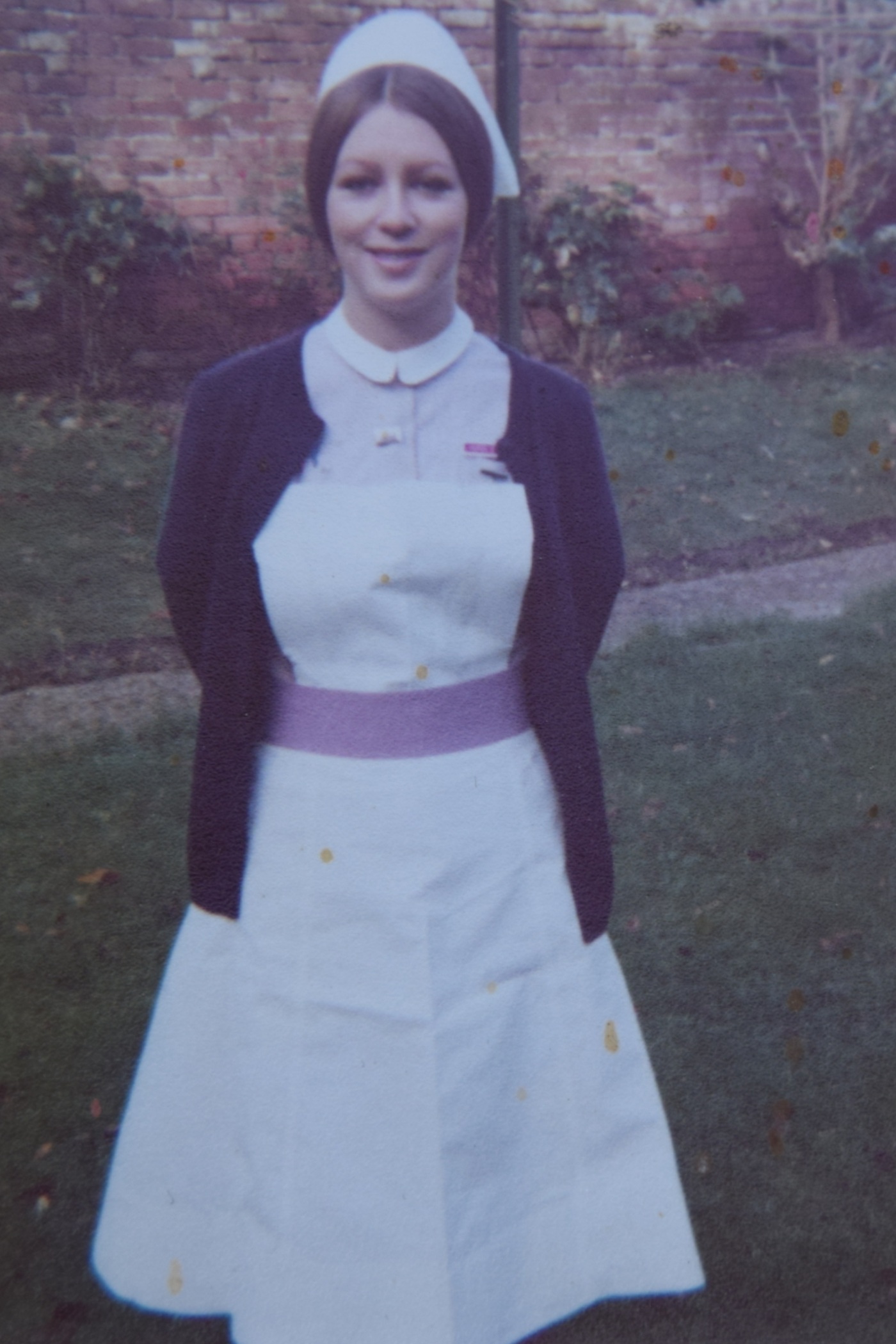
Debbie in her student nursing days in November 1977
Reflecting on what she has enjoyed about her time at Pilgrims, Debbie comes back to the many people she has met during her career, and it’s them she will miss the most:
“I feel I can talk to anybody, and I can sense and adapt to how people are; some people want a lot of sympathy and empathy, and others just want to be practical. You judge how people present themselves, and I’m good at that.
“If I’d had another career, I might have perhaps gone into counselling – I don’t pretend that I’m a counsellor in my role, but a bit of that does come into it.
“I’ve had so many really deep conversations with hundreds of people; it’s a very unique position to be in, when people unload and tell you their life story when they’re in such a difficult situation. I feel very privileged to be allowed to talk to people like that.
“I’ll really miss talking to patients; after getting a referral and meeting the person for the first time, either in their own home or at clinic, you try to find out what their biggest concerns are and listen to their story.
“A lot of people are very frightened of coming to Pilgrims, but sometimes you can achieve a breakthrough if you find common ground that you can work with, and you can feel their anxiety calm down a little bit.”
Looking forward to the future, Debbie has some nice plans for her retirement:
“My daughter, Lauren, is getting married in October 2027, so I’m really excited for that, and I’m sure I’ll be kept busy with the planning! I’ve also got several house projects to work on, and I’d like to join a regular Pilates class.”
Kate White, Senior Nurse Manager at Pilgrims, added:
“After an incredible 37 years with the hospice, we are saying farewell to a core member of our community nursing team.
“Over nearly four decades, Debbie has been a constant presence through periods of growth, challenge, and change. She has supported countless patients, families, volunteers, and colleagues, often providing reassurance, kindness, and practical help when it was needed most. The number of compliments, thank you messages, and positive comments received about her over the years speaks volumes about the impact she has had on so many lives.
“A true mainstay of the office, Debbie is someone people turn to for her wisdom and good counsel. Her knowledge, dedication, and commitment to the hospice has made her an invaluable member of the team and a trusted source of support for colleagues old and new.
“Whether offering wise advice, keeping everyone grounded, or ensuring that a steady supply of coffee was never too far away, she has left a lasting impression on everyone who has worked alongside her.
“Debbie’s contribution cannot be measured solely by the work she has done, but by the relationships she has built, the lives she has touched, and the difference she has made every single day.
“On behalf of all of us, thank you for your dedication, loyalty, friendship, and unwavering support. We wish you every happiness in your retirement and hope it is filled with all the things you enjoy most (and, of course, plenty of coffee!)
“Debbie, you will be greatly missed, fondly remembered, and always remain part of the hospice family.”
Pilgrims Hospices provides compassionate, specialist care free of charge to thousands of people in east Kent each year who are living with life-limiting conditions. Support is offered in patients’ homes, in the community, and at our three hospice sites in Canterbury, Thanet and Ashford. We also run a 24-hour advice line.
9th November 2026
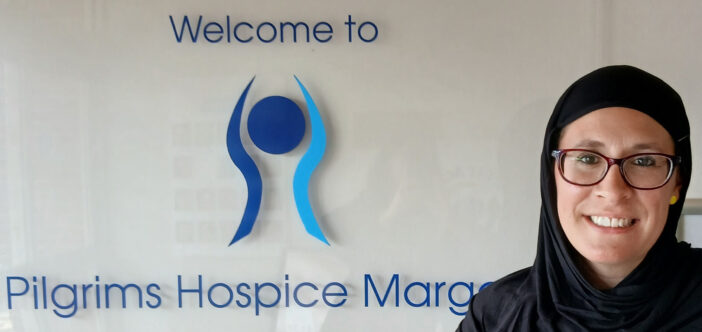
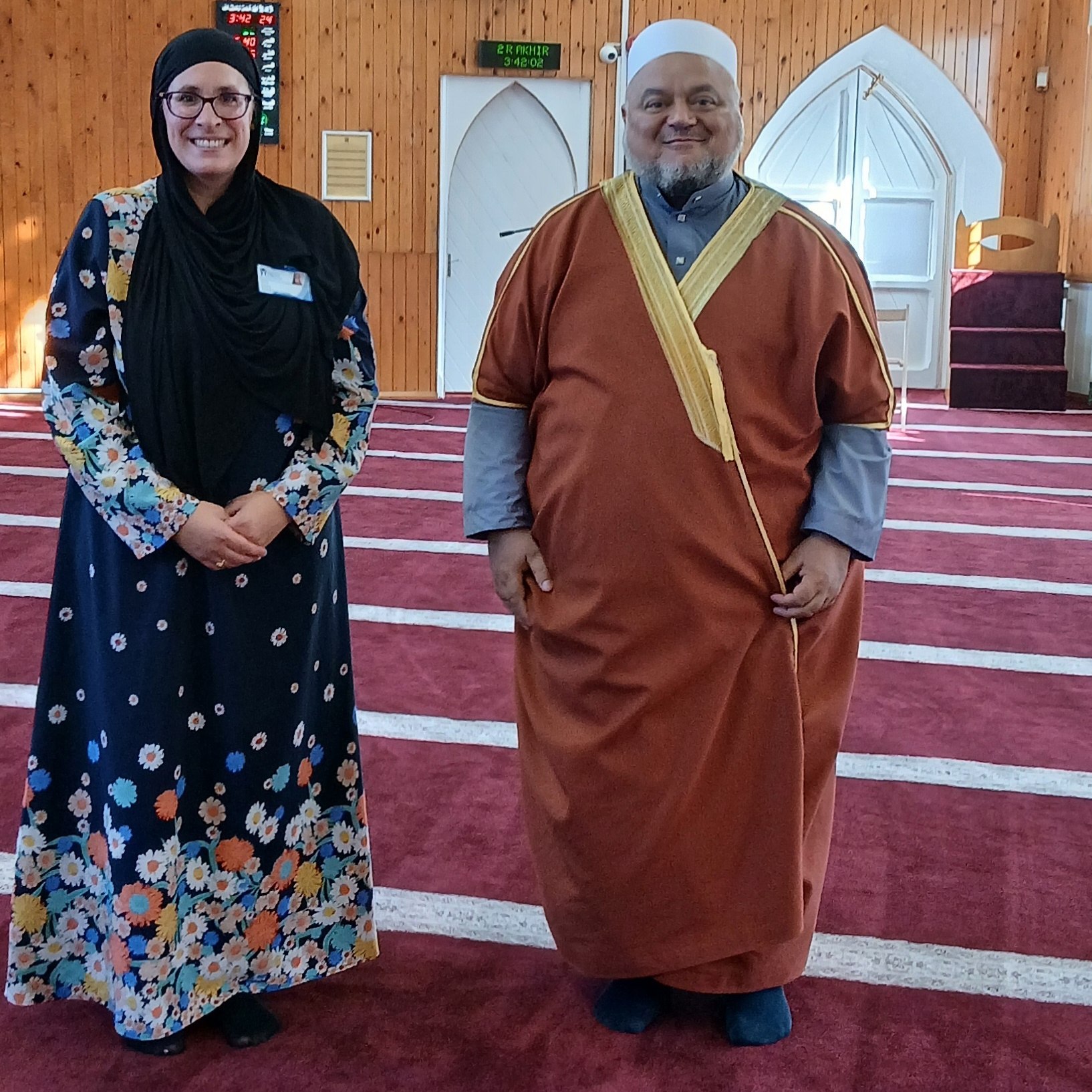
My first visit to Al-Birr Mosque in Margate to meet with Imam Ashraf Salah
Photograph: Jen Watson, Spiritual Care Chaplain at Pilgrims Hospices
Spiritual care is an essential part of the holistic care offered by Pilgrims Hospices to patients and families across east Kent.
Every day in our hospices, we see how faith helps people find peace and connection, with gentle support from our Spiritual Care Chaplains.
Jen Watson, Spiritual Care Chaplain at Pilgrims Hospice Thanet, visited Al-Birr Mosque in Margate to meet with Imam Ashraf Salah and find out how they can work together to support their local community.
As the new Spiritual Care Chaplain for Pilgrims Hospice Thanet, I’m keen to build connections with faith leaders across Thanet and develop stronger inter-faith relationships within our local community.
These connections are important in helping us provide thoughtful and appropriate Spiritual Care for patients and their families, as well as supporting our staff and volunteers.
So, when I had the opportunity to visit Al-Birr Mosque in Margate and meet with my local imam, I couldn’t miss it!
Jen with Imam Ashraf Salah
Imam Ashraf Salah said: “I was very pleased and grateful that Pilgrims reached out to us. It was a warm and thoughtful gesture, and I felt that it showed a genuine desire to understand our community and to build a positive relationship with us.”
Before leaving my office, colleagues helped me to secure my headscarf and check I was dressed appropriately and respectfully, before I then travelled to Al-Birr Mosque a few minutes down the road. I removed my shoes upon entry, and was warmly greeted by Imam Ashraf with a big smile, tea and biscuits – such an example of hospitality!
Imam Ashraf spoke over me the phrase “Assalamu alaykum” (meaning “Peace be upon you”).
We had an insightful discussion about his community and how they support each other’s needs, both practically and spiritually – especially those who are ill, elderly and dying.
As Imam Ashraf spoke, he often wove into our conversation “Alhamdulillah”to vocalise his praise and gratitude to God; appreciating his divine blessings, community guidance, and now a connection with his local Pilgrims hospice and spiritual care chaplain.
He showed me:
The spotlessly clean large, open prayer hall(“musalla”) covered with very soft carpets with lines oriented toward Mecca
The washing stations where Muslims perform “wudu”(the ritual cleansing of the hands, face, arms, and feet) before praying
The separate women’s and children’s prayer spaces
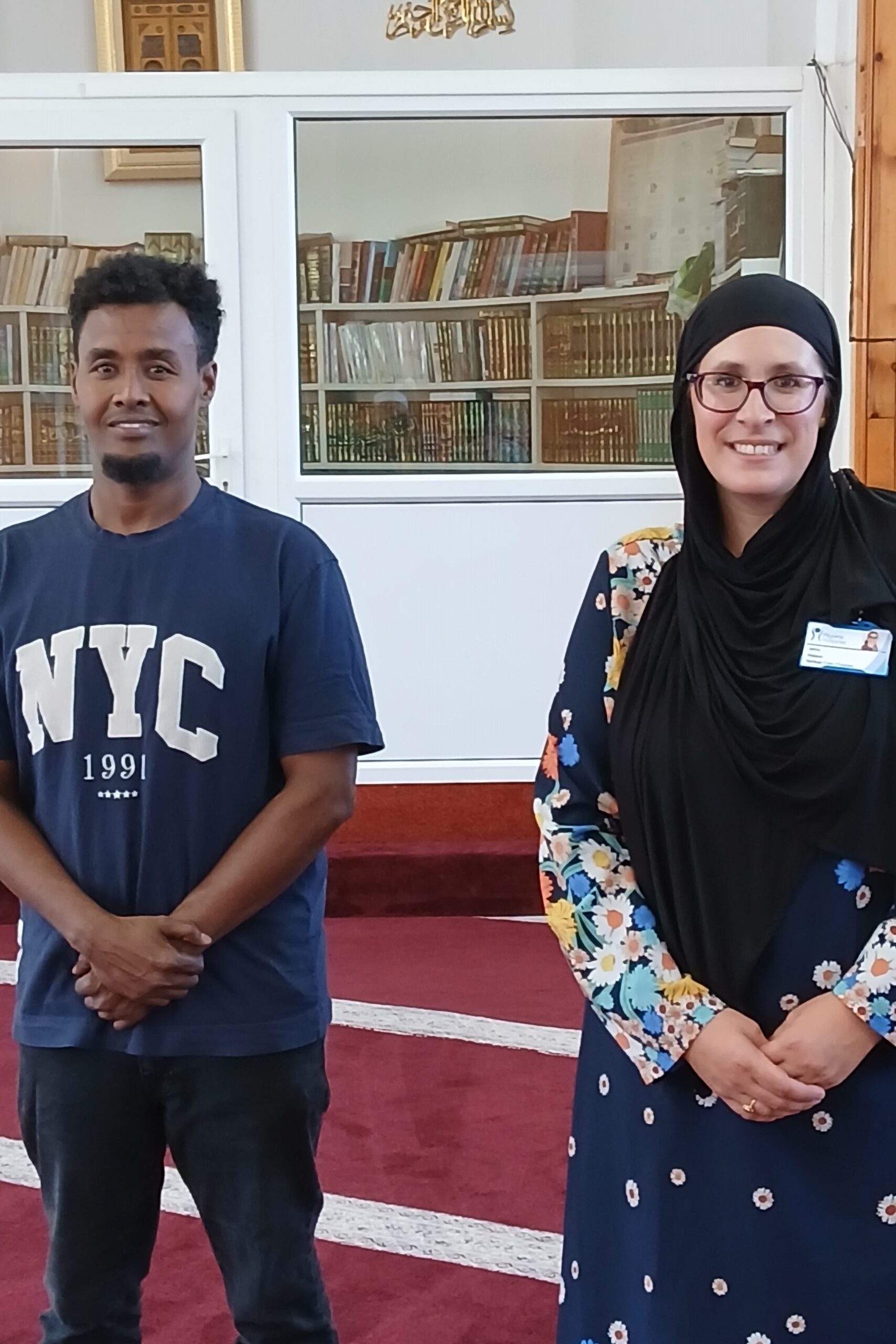
Jen with volunteer Abdulqadir Abdulrahman Muhammad
He explained to me his community’s practices when someone is ill and dies, and how Gore Brothers funeral directors help his team of volunteer‘sisters or brothers’ to administer “ghusl” (ritual washing) to ceremonially clean the deceased.
Many from the community then attend special prayers “Salat al-Janazah”(the Islamic funeral prayer) at the mosque for the person who died, before their burial.
I shared with Imam Ashraf how, at Pilgrims, there is a sanctuary, and within the space there is access to a Quran (the central holy text of Islam), prayer mat, compass and head scarf, and how each Chaplain also has access to a Muslim app on their mobile. The app can audibly play the Quran to patients, before a community member arrives, to support their Declaration of Faith“Shahada”(“There isno god but Allah, and Muhammad is His messenger”),so that it is their final utterance.
Imam Ashraf was grateful for our thoughtful considerations at the hospice for his community.
He added:
“Inter-faith connection is very important to us. It gives people of different faiths the opportunity to know one another, understand each other better, and build relationships based on respect, kindness and cooperation. It also helps our community to contribute positively to the wider society and to work together for the good of everyone. Thank you again for visiting us, and I look forward to staying in touch and welcoming you again in the future.”
I look forward to our connection strengthening.
Jen Watson
Spiritual Care Chaplain, Pilgrims Hospice Thanet
Visitpilgrimshospices.org/cultureto discover how people across the world respond to and mark death and dying within different cultures.
Pilgrims Hospices provides compassionate, specialist care free of charge to thousands of people in east Kent each year who are living with life-limiting conditions. Support is offered in patients’ homes, in the community, and at our three hospice sites in Canterbury, Thanet and Ashford. We also run a 24-hour advice line.
27th October 2025
Pilgrims Hospices helps Margaret to realise musical theatre dreams
Margaret Grand from Wingham grew up in Canterbury. With a keen interest in singing and theatre, she did choral singing at school and sang in choirs later in life – including with Ann Robertson, Pilgrims Hospices’ founder, who Margaret knew from her village community.
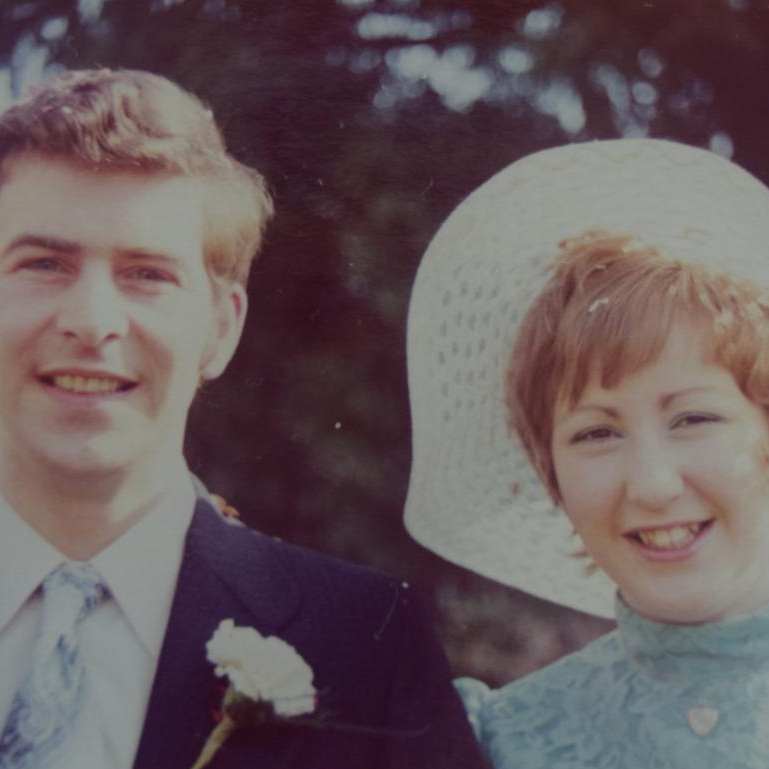
John and Margaret on their wedding day
As a teenager, Margaret was offered the opportunity to study at the prestigious Italia Conti performing arts institution, but her mother wouldn’t let her go; Margaret was an only child, and her mother was afraid she would move away and not return home.
Margaret instead began working at Boots in Canterbury city centre, where she met her husband, John, who was also a musician. Together, they played in bands and performed locally.
In 2021, Margaret was diagnosed with cancer and received a life-limiting prognosis. Since being referred to Pilgrims Hospices, she has had a second chance to flex her theatrical prowess through a project with the Marlowe Theatre – showing how hospice care is not only for those at the end-of-life, but also empowers people to live well, and fully, in the time they have left.
Margaret said:
“I’d had problems with my leg, I kept getting cellulitis; I was going to the GP surgery regularly to have dressings on. The nurse noticed a spot on my leg, which started to change colour, so she asked the doctor to check it and he did an urgent referral. A biopsy at Kent & Canterbury hospital showed that I had Merkel cell carcinoma, a rare type of skin cancer. The nurses explained that I’d need to go to Queen Victoria Hospital in East Grinstead for treatment, and have scans for five years.
“In 2022, I started to get large tumours on my leg, and I got upset every time I had it dressed. I remember the nurse, Bonnie, saying: “Margaret, I can understand why you get upset, because most people don’t see their tumours.” They just got worse and worse. I was sleeping on the sofa at home because I was so uncomfortable.
“Later that year, I went to see Les Miserables at the Marlowe Theatre with my daughter, Michelle. During the interval, I had to leave because I felt so unwell. A week later, I collapsed at home – I was just like a puppet. I called out to John, but he couldn’t get me up, so he phoned for an ambulance. I asked the paramedic to put me on the sofa and assured them I’d be OK, but they took my temperature and it was sky high, so they had to admit me to hospital, where I was diagnosed with sepsis. I was there for about a month, and I also caught COVID!”
Michelle added:
“Mum was discharged shortly before Christmas and was due to see her consultant around this time, but as she had been so unwell, I attended on her behalf. I explained what had happened, and the consultant was concerned. She said: “I can tell how ill your mum must be. I really think she needs palliative care, so I’m going to do a referral.” That was a massive shock; I came out of the appointment shaking. To me, palliative care meant Mum was at the end of life, on a downward spiral. But then things turned around very quickly; she was quite stable, and she started chemotherapy in January 2023.”
Margaret with her daughter, Michelle
Margaret continued: “They told me the chemo would be potent, could potentially make me very ill, and would cause me to lose my hair. On the whole, I was actually quite lucky; l didn’t feel sick at all and I pretty much sailed through the treatment. When I came out of hospital, they gave me a hospital bed at home, which made things a little easier. It was around this time that Pilgrims got in touch with me.”
Alongside pain management and symptom control, Margaret has benefitted from a range of wellbeing services at Pilgrims, including acupuncture and Wellbeing groups, through which she and other patients were involved in a musical theatre project with the Marlowe Theatre.
She also joins regular virtual meet-ups via Zoom, which offer an opportunity to connect with other patients from the comfort of their own homes.
In November 2023, John lost his balance and fell backwards at home, hit the back of his neck, severed his spinal cord and died within a week:
“Just like that. I couldn’t believe it; he’d been out cutting the grass that afternoon. He was 80. Since I’d been diagnosed, we’d always thought it was going to be me who went first – exactly a year before, when I was hospitalised with sepsis, it certainly looked that way.”
Pilgrims supported Margaret’s family through this very difficult time; her granddaughter, Holly, was offered counselling support as she struggled to cope with John’s sudden death.
Margaret was also invited for a Christmas meal at the Ashford hospice, where she could experience the environment in a relaxed, informal way.
She said: “I feel like everyone at Pilgrims is a friend, it’s a lovely community.
“I’ve got nothing but praise for the staff; they must see so many people, but they still know your name.
“Chatting with Palak from the Wellbeing team, I mentioned my love of singing and my interest in theatre, and she told me about a Hamlet-inspired project for patients that Pilgrims was facilitating with the Marlowe.
DSC 5577 01
DSC 5418 01
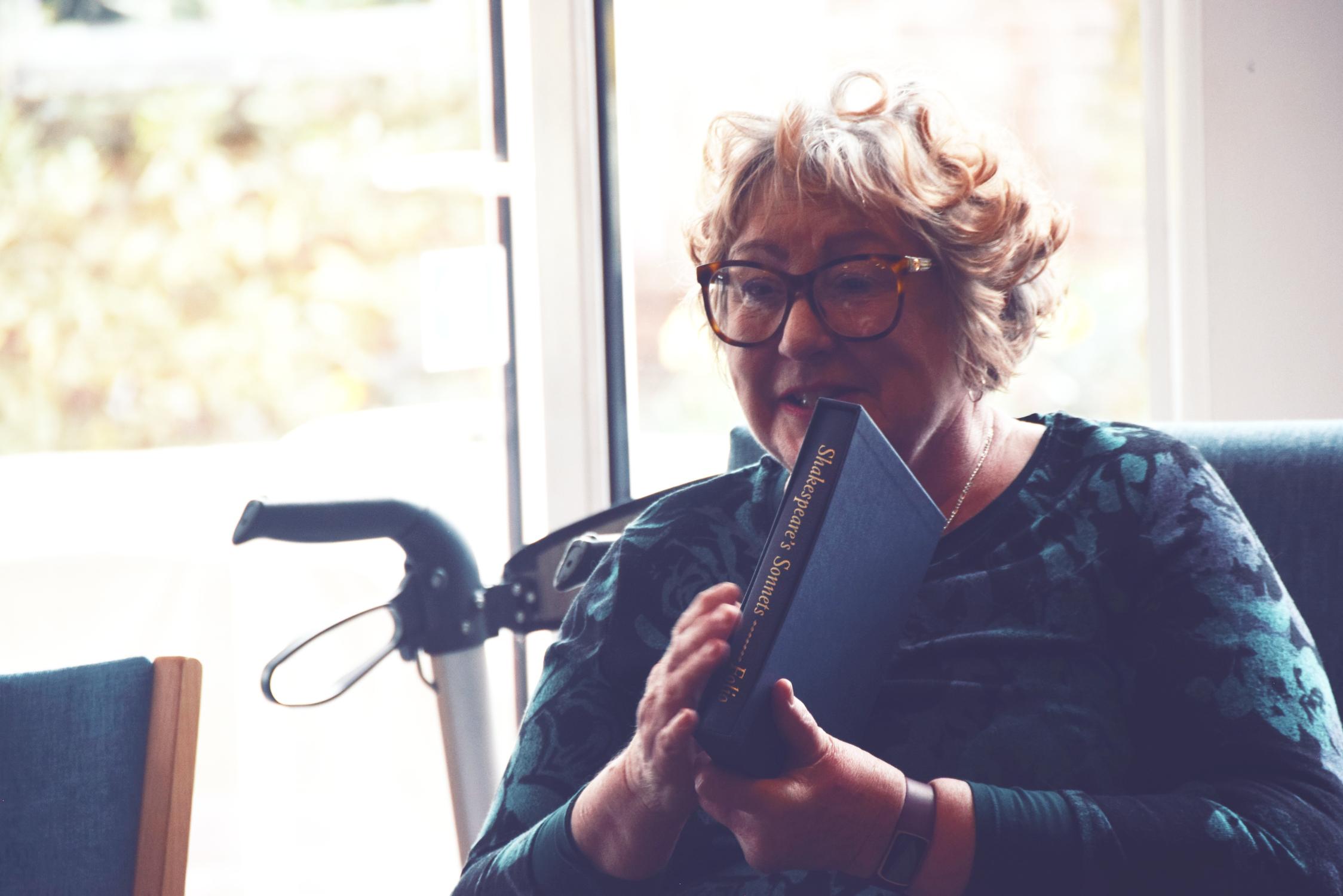
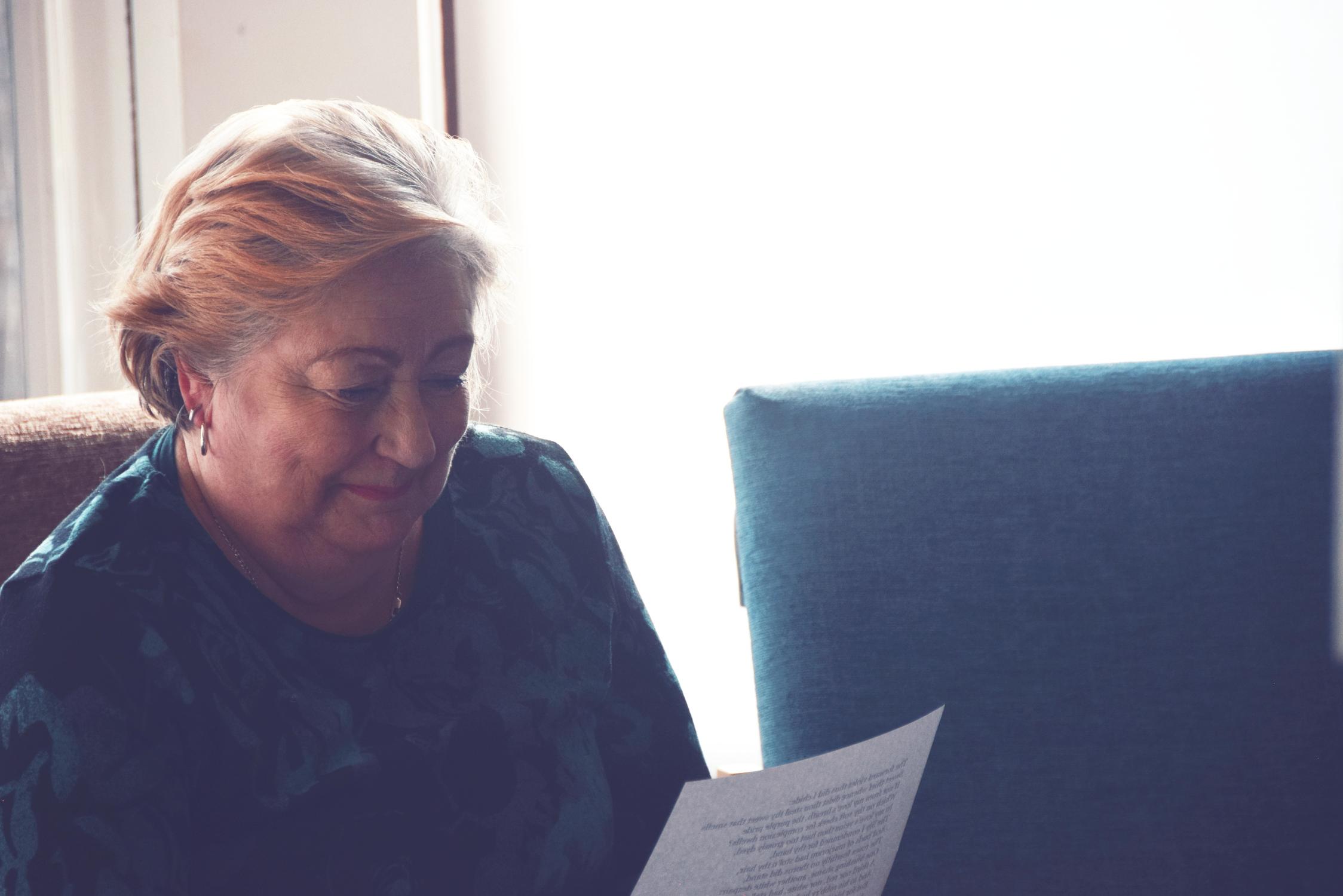
Margaret took part in Hamlet workshops with the Marlowe Theatre at Pilgrims Hospice Canterbury
“When I was at high school, I had a marvellous music teacher – Mr Sellers – who saw my potential. He put me in every single play, and I even sung in Canterbury Cathedral. I was also part of the Young Marlowe Theatre Playgoers; we’d do readings and put on the odd play, but it was more of a training programme. It was completely free to attend, but in return, we would go to the Marlowe and give out refreshments to the actors.
“My best friend, Catherine, was also into the theatre. Her father offered to pay for both of us to go to the Italia Conti performing arts school in London, but my mum wouldn’t let me go. And because I couldn’t go, Catherine wouldn’t go – I messed up her chances, too! I still feel guilty about that!
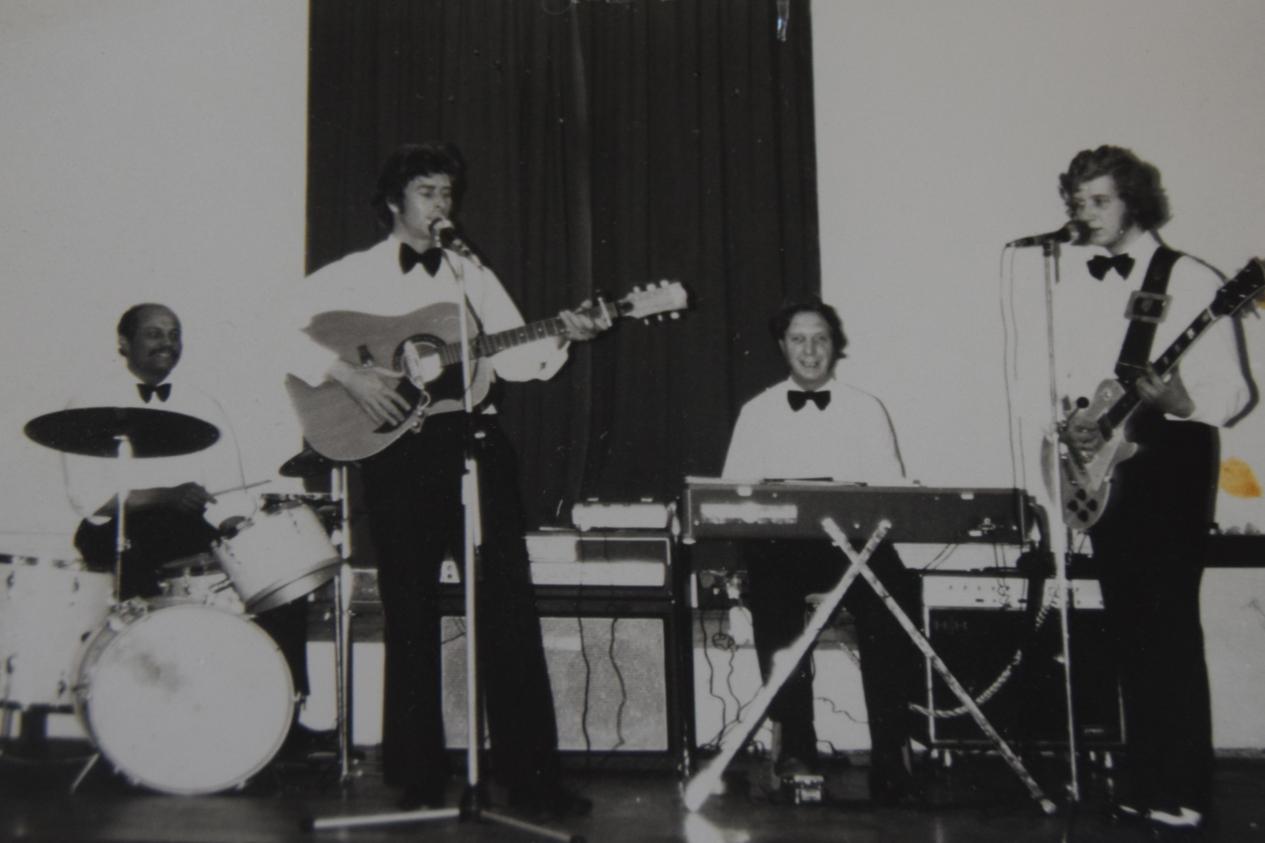
“We used to have village shows in Wingham, and I always took part in those. I also sang in a band with John on guitar and our friend, Dick; we’d go out gigging round the local pubs, we had so much fun. Whenever Michelle and I go to the Marlowe now, I always say to her: “I wish that was me on the stage”.”
Margaret’s husband, John (second from left), playing with the band
In 2024/25, Pilgrims organised a musical theatre project with the Marlowe, open to patients, families, staff and volunteers, which helped Margaret to realise her dream. Workshops were held at the Canterbury hospice Therapy Centre, facilitated by local performers Tom Adams and Lillian Henry, with guest speakers from the Royal Shakespeare Company (RSC).
This culminated in the group writing and performing a song based around Shakespeare’s Hamlet, and a special event at the Marlowe in April 2025.
Margaret read a sonnet on stage and was invited to talk about her history with the theatre. She was also delighted to sit with an RSC representative during the event.
Margaret performing at the Marlowe Theatre in April 2025
She said: “I’m so touched that the RSC, and people like Tom and Lillian, will give their time to Pilgrims to create experiences like this for patients.”
Pilgrims continue to work closely with the Marlowe, and are planning another creative project in the near future.
Margaret added:
“Before I got involved with Pilgrims, I thought a hospice was a place you go to die. Now I know it’s so much more than that, and I tell everyone!
“I remember sitting in the Thanet hospice reception waiting for my acupuncture appointment. It wasn’t until my last session that I spotted the wards, which goes to show that hospices aren’t just beds on a ward.
“It’s totally different to what people think.
“Pilgrims don’t just offer end-of-life care, but also a whole range of wellbeing services and groups. It’s really opened my eyes.”
For more information on Pilgrims Hospices’ Wellbeing Programme:
Call the Pilgrims Hospices Advice Line on 01233 504 133
Each year, Pilgrims Hospices care for thousands of people across east Kent, with services provided from its three hospice sites in Ashford, Canterbury, and Thanet, as well as in patients’ own homes. It costs over £17.2 million annually to run these services, much of which comes from the generous support of the local community.
Each year, Pilgrims Hospices support thousands of people across east Kent who are living with life-limiting conditions.
Although hospice care is often associated with beds on in-patient wards, much of Pilgrims’ care takes place in the community – in people’s own homes, and in care homes.
Thanks to skilled, compassionate and dedicated community teams, Pilgrims is able to bring hospice care directly to patients who wish to remain at home, or in familiar surroundings, rather than be on a ward. This includes Hospice at Home, a team of Healthcare Assistants (HCAs) who attend to patients who are at the very end of their life and/or who have suddenly, rapidly deteriorated.
Jo Cottam, a retired NHS Senior Manager turned holiday let owner from Tenterden, experienced Pilgrims’ community care after her mum, Patricia Edwards, was diagnosed with vascular dementia. She shares how Pilgrims supported her mum and their family at the end of Patricia’s life.
Jo shares her story:
“In 2019, my mother was diagnosed with vascular dementia. She lived in a charming cottage on our property, spending her days with us in the main house and returning to her cottage at night.
In early July 2025, Mum’s health took a concerning turn. She stopped eating for about a week, drank less than we hoped, and lost her mobility, making walking (especially navigating steps between our house and her cottage) extremely difficult and distressing for her. My husband, Simon, and her carer, Steve, provided essential support, but we grew increasingly worried.
We decided to keep Mum in her cottage full-time, as moving her was too challenging. This meant constant supervision, as she couldn’t be left alone. Encouraging her to take fluids was a slow, painstaking process of syringing small amounts into her mouth. On 10 July, we called our GP, who visited promptly. He prescribed antibiotics for a possible UTI, end-of-life medications, and arranged a referral to Pilgrims’ Hospice at Home team.
Jo’s mum, Patricia
After a three-day course of antibiotics, Mum began to improve, slowly resuming eating and drinking.
Soon after, I received a call offering additional care support, which we desperately needed. Mum required physical assistance to move between her bed and sofa, constant prompting to eat and drink, and round-the-clock supervision.
Unfortunately, the caller later informed us that no additional care could be arranged immediately, though an equipment assessment was scheduled for the next day.
To our surprise and relief, that evening, two wonderful Hospice at Home carers, Jo and Sandra, arrived and said they would visit Mum twice daily. I was initially apprehensive, as Mum was used to familiar faces, but Jo and Sandra’s warmth and gentle introductions put her at ease. Mum smiled and co-operated fully, a testament to their kind and professional approach.
Over the next few weeks, every pair of hospice carers who visited showed the same compassion, treating Mum with dignity and respect.
They also supported our family, offering practical advice and emotional reassurance in overwhelming moments.
As a former Senior NHS Manager with over 25 years of experience, and with my husband, a retired Consultant Anaesthetist, we both recognise exceptional care when we see it. The hospice carers delivered first-class service.
We were astonished to learn they travelled significant distances to reach us in Tenterden, covering a vast geographical area. The team, led by the remarkable Mandy Hilden, exemplified dedication. Mandy’s hands-on leadership was inspiring – she never asked her team to do anything she wouldn’t do herself.
The carers went above and beyond, ensuring Mum was clean, dressed in her preferred clothes, and had her hair washed and styled. They made her laugh and calmed her anxieties, especially when she became distressed during repositioning, gently reassuring her even when she grabbed them in fear.
The rapport we built with the hospice carers in such a short time was extraordinary.
On 24 July 2025, Caitlin, a Palliative Specialist Care Nurse from Pilgrims, visited to assess Mum for potential future hospice care. Caitlin’s professional yet friendly demeanour brought smiles to Mum’s face. She patiently explained everything and answered our questions thoroughly. At the time, Caitlin was optimistic about Mum’s condition, believing hospice care wouldn’t be needed soon.
Tragically, on 29 July 2025, Mum passed away suddenly and peacefully at home, with us by her side, holding her hand. Caitlin, upon hearing the news, called to offer her condolences and support. Her kindness, taking the time to listen and guide me toward the hospice’s counselling services, meant the world during such a shocking and painful moment.
Pilgrims is an exceptional organisation, dedicated to supporting individuals with terminal illnesses, offering compassionate care in both community settings and specialised units. They prioritise the needs and dignity of each person, ensuring the highest quality of care during their final days.
Additionally, Pilgrims provides a nurturing environment for families, fostering support and understanding throughout the process.
The hospice team’s communication, care, and support for both Mum and our family were exceptional. We are immensely grateful for this vital service, which relies so heavily on charitable donations. Their compassion and professionalism made an unbearable time more bearable, and we cannot thank them enough.”
Pilgrims Hospices provides compassionate, specialist care free of charge to thousands of people in east Kent each year who are living with life-limiting conditions. Support is offered in patients’ homes, in the community, and at our three hospice sites in Canterbury, Thanet and Ashford. We also run a 24-hour advice line.
8th October 2025
Caring in the community: Stephen and Heather’s Hospice at Home story
When Stephen Coles looks back on the care his wife, Heather, received in her final months, he speaks with deep gratitude for the compassion and tenderness shown by the Pilgrims Hospices Hospice at Home team.
Heather, aged 64, had been living with Parkinson’s and Lewy Body Dementia. She died peacefully at home on 29 July 2025, with her husband by her side.
Heather
Heather had enjoyed a long and dedicated career at Benenden Hospital, where she worked for more than 25 years, most recently as Director of Infection Control, before retiring early due to ill health.
Stephen, who also worked at Benenden, cared for Heather at home in Ashford throughout her last year of life. As Heather became more frail and her needs increased, they were supported first by the Pilgrims community team, and later by the Pilgrims Hospice at Home carers.
Stephen and Heather met online in 2011, and their love story began soon after. They shared their first date at The Tickled Trout in Wye and, as Stephen fondly recalls, they both ordered the same meal of liver and bacon.
“I knew straight away she was the one for me,” he said.
As Heather’s condition progressed, their home was adapted to make caring for her easier, with a hospital bed moved into the downstairs room. Stephen stayed close by her side, sleeping nearby to offer reassurance and comfort.
Stephen and Hannah
Heather’s daughter, Hannah, was also a great support to both her mum and stepdad.
When the Hospice at Home team began visiting, Stephen immediately felt the difference their presence made:
“They didn’t just wash and care for Heather,” he explained. “They did so much more than I expected – washing her hair, tending to her so gently and with such kindness. I found their support really helpful for me, too. The level of care and commitment they showed was exceptional.”
The Hospice at Home team specialises in supporting patients and families at the very end of life, providing comfort, dignity, and peace at home.
Mandy Hilden, Team Lead, said:
“We know this is such a difficult time for those we visit, so we make sure we arrive with the right mindset to help both our patient and their family. We can’t make them better, so let’s make it the best end of life that we can.”
Hannah, a yoga teacher, added her own reflections:
“At first, there was an element of disappointment when we realised Mum was too poorly to be moved to the hospice. But we soon saw what the Hospice at Home team could achieve at home – it was extraordinary. The personalised, gentle care made such a difference. We all felt safe, like a weight had been lifted. There was no rush, just calm, attentive support.”
For Stephen, having the Hospice at Home team alongside them made Heather’s wish to remain in her own home possible, surrounded by love.
“After a difficult and tiring year, we were so pleased to have their support,” he said. “They cared for Heather so tenderly and were there until the very end. It gave us the chance to be with her at home, just as she wanted.”
He added: “Both Heather’s and my own children have been a tower of strength during these early weeks after Heather died. It has been a difficult time for us all, but I’ve felt it important to share the message about this very special element of Pilgrims Hospices care. The Hospice at Home team made Heather’s end-of-life journey as comfortable as possible, and we will always be grateful.”
Heather’s family chose a green burial with close family and friends, followed by a celebration of her life at Eastwell Manor, where Hannah teaches yoga. Almost 200 family, friends and colleagues came together that day to remember Heather and celebrate the life of a much-loved wife, mum and friend.
“It was a joy to be surrounded by so much love,” Stephen shared.
In Heather’s memory, the family set up a Facebook fundraising page, which has raised more than £1,400 so far, to be shared between Pilgrims Hospices and the Lewy Body Dementia support group – a lasting tribute to Heather’s life and legacy.
Each year, Pilgrims Hospices care for thousands of people across east Kent, with services provided from its three hospice sites in Ashford, Canterbury, and Thanet, as well as in patients’ own homes. It costs over £17.2 million annually to run these services, much of which comes from the generous support of the local community.
12th September 2025
“I can’t praise the hospice highly enough”: Why David is leaving a gift to Pilgrims in his Will
Pilgrims Hospices cared for David’s wife, Dawn, at the end of her life.
Here, David shares why he has chosen to leave a gift in his Will to Pilgrims.
“My wife, Dawn, battled cancer for 14 years and sadly passed away on 23 July 2024. The service and support that the Pilgrims team provided from the Margate hospice as part of Dawn’s Hospice at Home care package was exemplary. At a time when I was very stressed and highly emotional, the help and understanding that these very kind people gave me was very comforting. My wife was very well cared for and had a perfectly dignified passing and for that I shall be eternally grateful to you.
I would strongly recommend that people should consider leaving something in their Will to Pilgrims Hospices, however small. Pilgrims is a charity, and whilst they do provide a free service to those people who need their help and support at such an emotional time, it shouldn’t be forgotten that it does cost money to actually provide that help and support. They need to continually raise money to continue financing that service.
A personal big thank you for all the help and support that I received from the Pilgrims team. I couldn’t have got through my Dawn’s end-of-life without it. I can’t praise the hospice highly enough.”
–David, Dawn’s husband
Pilgrims Hospices provides compassionate, specialist care free of charge to more than 3,000 people in east Kent each year who are living with life-limiting conditions. Support is offered in patients’ homes, in the community, and at our three hospice sites in Canterbury, Thanet and Ashford. We also run a 24-hour advice line.